


Fungal Proteins for Invading Multiple Plants
The Plant Cell: In a NutshellRedkar et al. demonstrate that the wilt-inducing fungus Fusarium oxysporum secretes a set of proteins that allow it to colonize the roots of a wide array of plant species. The Plant Cell (2022).
By Amey Redkar1 and Antonio Di Pietro2. Illustration by Dr. Lindsay Erndwein
1Department of Botany,…

How to maximize the moment as a junior faculty
Plant Science Research WeeklyOn the academic job hunt? Bookmark this article, which provides valuable information about what to do when your search is successful. The time between getting an offer and accepting it is the most critical time for you to negotiate to get the resources you need, such as space, equipment, institutional…

Interactions of plant RETINOBLASTOMA RELATED PROTEINS
Plant Science Research WeeklyRETINOBLASTOMA-RELATED (RBR) is the plant homolog of the metazoan Retinoblastoma protein (pRB) tumor suppressor and is a conserved cell cycle regulator. RBR has been linked to several multicellularity-related processes, such as controlled cell proliferation, stem cell regulation, and asymmetric cell…
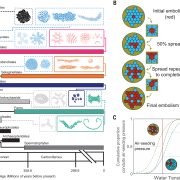
Hydraulic failure as a primary driver of xylem network evolution in early vascular plants (Science)
Plant Science Research WeeklyThe earliest terrestrial plants had relatively small, simple forms. The evolution of water-conducting cells provided opportunities for increased size. However, water movement by tension (driven by evaporation) can fail when the water column breaks and is blocked by an air bubble called an embolism. Looking…
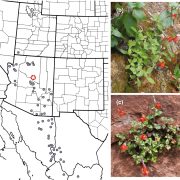
To stripe or not to stripe in monkeyflower leaves
Plant Science Research WeeklyIn biology nothing makes sense but in the light of evolution. However, understanding how new traits can appear through modification of pre-existing elements has been a complex question in evolutionary biology. LaFountain et al. studied a population of a species of monkeyflower (Mimulus verbenaceus) which…

Increading Fe and Zn concentrations in wheat flour
Plant Science Research WeeklyHuman malnutrition results from the lack of essential mineral micronutrients. In particular, iron deficiency might cause anaemia and stunted development in children, while zinc deficiency might reduce immunity to infectious diseases. In bread wheat, iron and zinc are located in the embryo and aleurone.…

Preferential egg cell fertilization Arabidopsis double fertilization
Plant Science Research WeeklyDouble fertilization, in which one sperm cell fertilizes the egg cell to form the embryo, and another sperm cell fertilizes the diploid central cell to produce the triploid endosperm, is a hallmark of angiosperms. Li et al. addressed a long-standing question: if only one sperm cell were present, would…

Simulated climate warming decreases fruit number but increases seed mass
Plant Science Research WeeklyThere is a growing number of studies showing the effects of rising temperatures on different aspects of plant life cycles and ecological dynamics. However, little is known about how a warmer world would affect plants' reproductive performance; in other words, how many resources they invest in reproduction…
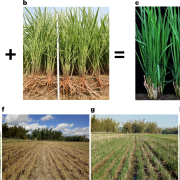
Productivity and agronomic potential of perennial rice
Plant Science Research WeeklyModern rice is descended from a perennial grass, which through millennia of selection evolved into an annual “one-sow, one-harvest” crop. However, it has become apparent that perennial grains have the potential to decrease soil erosion and competition, as well as lower the labor required to produce…