


Umidjon Shapulatov: Plant Physiology First Author
Plant Physiology: Author Profiles
Umidjon Shapulatov, first author of "The Mediator complex subunit MED25 interacts with HDA9 and PIF4 to regulate thermomorphogenesis"
Current Position: Post-Doctoral Fellow at Temasek Life Science Laboratory, National University of Singapore, Singapore.
Education: BSc in Biology, Gulistan state…
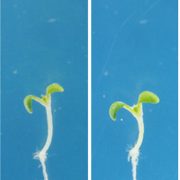
A new player in photomorphogenesis
The Plant Cell: In a NutshellLi et al. discover a regulator of alternative splicing during light-regulated plant growth and development https://doi.org/10.1093/plcell/koac235
By Yang Li and Rongcheng Lin
Background: Light is one of the most important environmental factors affecting plant growth and developmental processes,…
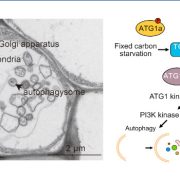
Type one protein phosphatase regulates fixed-carbon starvation-induced autophagy in Arabidopsis
The Plant Cell: In a NutshellWang et al. demonstrate that TOPP regulates autophagy through ATG1a-ATG13a complex. The Plant Cell (2022). https://doi.org/10.1093/plcell/koac251
By Qiuling Wang, Qianqian Qin, Meifei Su, Na li, Jing Zhang, Yang Liu, Longfeng Yan, and Suiwen Hou
Key Laboratory of Cell Activities and Stress Adaptations,…
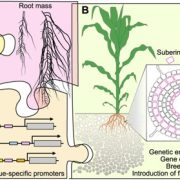
Plant Cell Focus Issue on climate change and plant abiotic stress biology
Plant Science Research WeeklyThe January 2023 issue of The Plant Cell includes a focus issue on “Climate change and plant stress: From genes to ecosystems”. This timely focus issue has in it commentaries, reviews, and research articles on the topic. I particularly enjoyed reading the two reviews that include short perspectives…
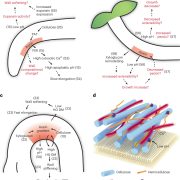
Perspective: Multiple mechanism behind plant bending
Plant Science Research WeeklyBending or folding in plants is influenced by different factors such as environmental conditions (nutrient, water, light, gravity), abiotic or biotic stress, cell wall properties, and cell differential growth. Jonsson et al. explain how bending is achieved by considering molecular mechanisms, mathematical…
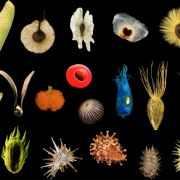
Review: The establishment of plants following long-distance dispersal
Plant Science Research WeeklySeed dispersal is a critical ecological process with far-reaching implications. On rare occasions, seeds can be dispersed over vast distances, far beyond the range of the species. These events, known as long-distance dispersal, have profound evolutionary implications by expanding species distribution…
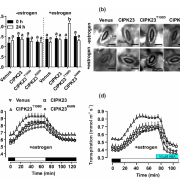
Control of guard cell aperture by protein kinase CIPK23
Plant Science Research WeeklyGuard cells are responsible for the opening and closing of stomata through changes in osmotic content and turgor pressure. These changes occur in response to activation or inactivation of ion transport proteins that are in turn regulated by protein kinase and phosphatase networks. The kinase network…
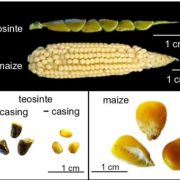
Contribution of strigolactones to maize kernel domesticated phenotype
Plant Science Research WeeklyWe’ve all seen striking photographs comparing the modern maize (Zea mays spp. mays L.) ear to the seed head of its wild-grass ancestor teosinte (Zea mays spp. parviglumis). Besides the huge increase in size, one of the features that allows us to munch on “corn on the cob” is the absence of the…
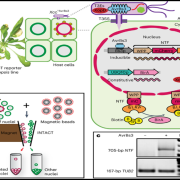
eINTACT – An effective system for isolating effector-recipient cells in plant tissues
Plant Science Research WeeklyBacteria can cause plant diseases by secreting small molecules called effectors. Studies of these effectors on host plants mostly have not accounted for the cellular complexity of plant tissues. The difficulty of detecting and isolating effector-recipient cells means that scientists mostly use bulk-infected…