

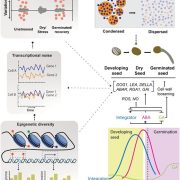
Review: Why don't genetically identical seeds germinate at the same time?
Plant Science Research WeeklyIf you've ever conducted a germination experiment, you've probably asked yourself: what causes seeds to germinate at different times? The most obvious answer would be to point to genetic differences, but this phenomenon also occurs in genetically identical seeds. In this exciting paper, Sharma and Majee…
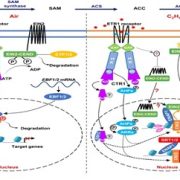
Review: The role of ethylene in plant temperature stress response
Plant Science Research WeeklyThe phytohormone ethylene is known for its importance in plant development and mostly for its role in fruit ripening. However, in this review Huang et al. summarize recent findings on ethylene’s role in temperature (hot and cold) stress response and ethylene crosstalk with other hormones. Interestingly,…
SSR markers are useful tools in wheat varietal purity and genetic diversity assessment
Plant Science Research WeeklyDifferent breeding programs worldwide have developed various cultivars that can cope with changing and increasingly unpredictable environments while meeting market needs. These developments have brought a new challenge: creating tools to distinguish such varieties and trace their genetic purity. Using…

A unique photoinhibition protection mechanism in Chlorella ohadii that thrives in extreme high-light intensities
Plant Science Research WeeklyIn plants and algae, excessive light can damage the photosystem and lead to a decrease in photosynthetic capacity, a process called photoinhibition (PI). Levin et al. showed that Chlorella ohadii isolated from the Negev desert in Israel lacks or has limited capability of the usual photoprotection mechanisms…
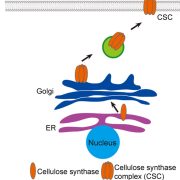
Point mutations in the catalytic domain disrupt cellulose synthase vesicle trafficking and protein dynamics
Plant Science Research WeeklyCellulose is an important and useful biopolymer, present in plant cell walls and synthesized at the plasma membrane by protein complexes called cellulose synthase complexes (CSCs) composed of multimers of cellulose synthase (CESA). CESAs are embedded in the membrane and move along the membrane as they…
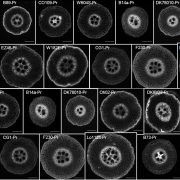
Natural variation of maize root hydraulic architecture underlies highly diverse water uptake capacities
Plant Science Research WeeklyWater uptake by roots is controlled by two factors: the architecture of the root system, and its hydraulic capacity. The later property is largely determined by the anatomical and physiological properties of the root cells, which include things like suberization and the presence of aquaporins (regulated…
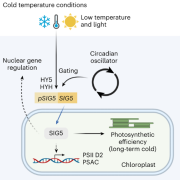
SIGMA FACTOR5 protects freezing plants
Plant Science Research WeeklyLow temperatures quickly and reversibly inhibit photosynthesis, which is assumed to shield the photosynthetic system from a drop in metabolic activity brought about by cold. In a recent study, Cano-Ramirez et al. found that in Arabidopsis, a nuclear-encoded sigma factor (SIG5) controls chloroplast transcription…
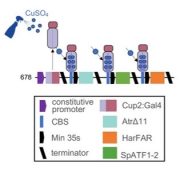
Regulated and optimized control of insect pheromone biosynthesis in plants
Plant Science Research WeeklyInsect sex pheromones, volatile molecules used to attract mates, are used commercially to disrupt breeding behavior of insect pests and can be a good alternative to harmful pesticides. These pheromones have been produced in plants at a low amount and shown to be released as volatiles, but their production…
Plant Science Research Weekly: April 28, 2023
WWR Full PostReview: Resolving metabolic interaction mechanisms in plant microbiomes
Life is spurred forward by the power of metabolic interactions. Within the plant microbiome, microbial communities use diverse mechanisms to thrive, survive, and multiply. In this review, Pacheco & Vorholt describe the interplay…