


Sweet or Sour? Important Link between Nitrate Signalling and Malate Accumulation Identified in Apple
Blog, Plant Physiology, Plant Physiology: News and Views, ResearchAuthor: Stefanie Wege
[email protected]
ORCID: 0000-0002-7232-5889
Affiliation: ARC Centre of Excellence in Plant Energy Biology, Plant Research Centre,
School of Agriculture, Food and Wine, Waite Research Institute, University of Adelaide, Waite Campus, Glen Osmond 5064, South…

Membrane tethering proteins cooperate in lipid droplet formation
Blog, Research, The Plant Cell, The Plant Cell: In a NutshellGreer et al. explore the role of SEIPIN in packaging oils into lipid droplets.
Plant Cell https://doi.org/10.1105/tpc.19.00771
By Yingqi Cai, Brookhaven National Laboratory, Department of Biology, Upton, NY 11973
Kent D. Chapman, University of North Texas, BioDiscovery Institute, Denton, TX…

To grow or defend? More on the plant cornelian dilemma
Blog, Plant Physiology, Plant Physiology: News and Views, ResearchAuthor
Anne-Sophie Fiorucci
[email protected]
Affiliation
Centre for Integrative Genomics, Faculty of Biology and Medicine, Génopode Building, University of Lausanne, CH-1015 Lausanne, Switzerland.
ORCID number
0000-0002-3254-5967
Growth and defense are usually opposed…

Feasting While Fasting: How Autophagy Helps Maize Survive Carbon Starvation
Blog, Research, The Plant Cell, The Plant Cell: In BriefMost macro-molecular components of plant cells (e.g., proteins, lipids, and even entire organelles) are subject to an ongoing process of recycling to both rejuvenate aging structures and optimize the allocation of cellular nutrients. A major recycling route is autophagy, which occurs under normal conditions…

Plant Physiology is recruiting Assistant Features Editors for 2021
Blog, Plant Physiology, Plant Physiology: Editorials, Pubs Pages8 Comments
/
By Michael R. Blatt and Mary Williams
This past January, Plant Physiology welcomed 24 new Assistant Features Editors to the editorial board. Together with Assistant Features Editors recruited in 2018, these young scientists have brought their passion for science to the journal, communicating to…

Curious about ASPB’s Partnership with OUP?
Blog, Pubs PagesThe American Society of Plant Biologists (ASPB) is delighted to announce that it will partner with Oxford University Press (OUP) to produce and disseminate the ASPB journals Plant Physiology® and The Plant Cell beginning January 2021. But what does this partnership mean for you – as a member, an author,…
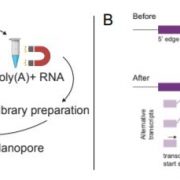
In the Transcripts: Long-read Transcriptomics Enables a Novel Type of Transposable Element Annotation in Plants
Blog, Research, The Plant Cell, The Plant Cell: In BriefTransposable Elements (TEs) are mobile genetic elements and major constituents of eukaryotic chromosomes. TEs promote genetic and epigenetic variation within genomes and are a major source of evolutionary novelty and adaptation (Lisch, 2013). In plants, TEs represent from 20% of the genomic content in…

Remorins: essential regulators in plant–microbe interaction and cell death induction
Blog, Plant Physiology, Plant Physiology: News and Views, ResearchProgrammed cell death (PCD) is a genetically controlled process triggered by developmental or environmental cues. Plant–microbe interactions often lead to PCD in plant host cells, triggered by the hypersensitive response. Plants may recognize microbes through receptor-like kinases in the plasma membrane,…

Karrikins and Strigolactone Signaling in Monocots
Blog, Research, The Plant Cell, The Plant Cell: In a NutshellZheng et al. demonstrate how monocot plants sense karrikin, a smoke-derived chemical. Plant Cell https://doi.org/10.1105/tpc.20.00123
By J Zheng, K Hong, L Zeng, S Kang and G Xiong
Background: Seedling emergence in rice depends mainly on mesocotyl elongation, which is precisely regulated by the…