

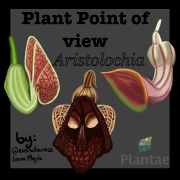
Plant point of view: Aristolochia gigantea
BlogThis series is the exploration of plants that are notable for various reasons: e.g., by producing specialized metabolites, by illuminating evolution, by serving as genetic models, or by their contributions towards practical applications.
Aristolochia gigantea
Aristolochia gigantea, also known as…
How to make an extraordinary machine: SMALL ORGAN 4 regulates ribosome biogenesis in plants
Blog, Plant Physiology, Plant Physiology: News and Views, ResearchRibosomes are essential molecular machines in the cell that translate mRNA sequences into proteins. Growing parts of an organism produce many ribosomes, so that after each cell division both daughter cells have enough to translate the proteins necessary for growth and development. Defects in ribosomes…
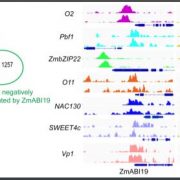
A Hub of Hubs: The Central Role of ZmABI19 in the Regulatory Network of Maize Grain Filling
Blog, The Plant Cell, The Plant Cell: In BriefCereal grains accumulate large amounts of proteins and starch and are a major source of dietary calories for humans and animals. In maize (Zea mays), most of the storage compounds are synthesized during the grain-filling period of kernel development. Several key transcription factors (TFs) that regulate…
Expanded function of the P-type pentatricopeptide repeat protein ATP4 in RNA editing
Blog, Plant Physiology, Plant Physiology: News and Views, ResearchTianhu Sun
ORCID ID: 0000-0002-2513-1387
Plant Breeding and Genetics Section, School of Integrative Plant Science, Cornell University, Ithaca, New York 14853
[email protected]
Chloroplasts are semi-autonomous organelles that retain their own genomes derived from their cyanobacterial ancestors,…
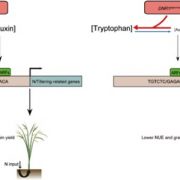
Natural Allelic Variation Improves Nitrogen Use Efficiency in Rice
Blog, Research, The Plant Cell, The Plant Cell: In a NutshellZhang, Zhu, Shen, Ji et al. discover a way to enhance nitrogen use efficiency and grain yield in rice. The Plant Cell (2020) https://bit.ly/3s3bLb3
Background: Nitrogen (N), an essential element for crop growth, is provided to plants by external fertilizer application. However, the excessive use…
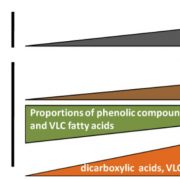
The fat of the land: cuticle formation in terrestrial plants
Blog, Plant Physiology, Plant Physiology: News and Views, ResearchMadeleine Seale
Department of Plant Sciences, University of Oxford, South Parks Road, Oxford, OX1 3RB, United Kingdom
[email protected]
ORCID: 0000-0002-8924-3943
In a world surrounded by a vast expanse of gaseous air, water is constantly evaporating from aqueous sources…
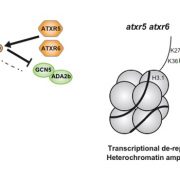
The Battle Between Modifications on Chromatin
Blog, Research, The Plant Cell, The Plant Cell: In a NutshellDong, LeBlanc, Poulet et al. investigate genomic stability in Arabidopsis. The Plant Cell (2020) https://bit.ly/3nhgdQ5
By Jie Dong, Chantal LeBlanc, Axel Poulet, and Yannick Jacob
Background: DNA is the genetic material used by all living organisms on Earth. The faithful replication of DNA…

The Role of Ethylene and Ethylene Response Factors in the Heat Stress Response
Blog, Research, The Plant Cell, The Plant Cell: In a NutshellSummary: Huang et al. elucidate a link between ethylene signaling and heat stress responses. Plant Cell https://bit.ly/3pTjNBK
By Jianyan Huang, Xiaobo Zhao, Marco Bürger, Yurong Wang, Joanne Chory
Background: Temperature is an environmental factor that has one of the most dramatic effects on…

Plant point of view: Papaver somniferum
BlogThis series is the exploration of plants that are notable for various reasons: e.g., by producing specialized metabolites, by illuminating evolution, by serving as genetic models, or by their contributions towards practical applications.
Papaver somniferum
Papaver somniferum (opium poppy) is a plant…