

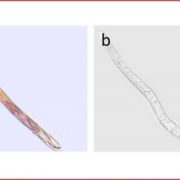
Heterodera schachtii tyrosinase-like protein - a novel nematode effector modulating plant hormone homeostasis
Blog, Plant Science Research Weekly, Research, Research Blog0 Comments
/
The nematode Heterodera schachtii is a parasite of the sugar beet. Understanding how H. schachtii parasitizes the plant is crucial to develop tools to minimize infestation and crop losses. From the H. schachtii transcriptome, the authors identified the sequence of a putative secreted effector protein…

What We're Reading: August 18th
Blog, Research, Research BlogEditorial: Introducing Plant Direct
Editor-in-Chief Ivan Baxter introduces the new journal Plant Direct, “a new journal from Wiley and the societies behind Plant Physiology, The Plant Journal, and The Plant Cell” [that is, the American Society of Plant Biologists (ASPB) and Society for Experimental…
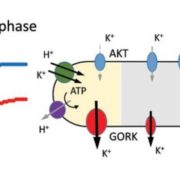
Viewpoint: Signalling by potassium: another second messenger to add to the list?
Blog, Plant Science Research Weekly, Research, Research BlogPotassium (K+) retention in the roots and shoots is correlated with increased tolerance to salinity and drought. However, in response to salt stress, K+ efflux from roots is induced. Shabala investigates three possible reasons for this stress-induced K+ efflux: K+ could leave to charge-balance the…

Editorial: Introducing Plant Direct
Blog, Plant Science Research Weekly, Research, Research BlogEditor-in-Chief Ivan Baxter introduces the new journal Plant Direct, “a new journal from Wiley and the societies behind Plant Physiology, The Plant Journal, and The Plant Cell” [that is, the American Society of Plant Biologists (ASPB) and Society for Experimental Biology (SEB)]. This new Open Access…
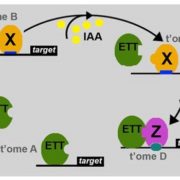
A Genome-wide Approach to Understanding a Non-Canonical ARF
Blog, Research, Research Blog, The Plant Cell, The Plant Cell: In BriefThe canonical auxin-response pathway in plants begins with auxin sensing by F-box proteins, triggering degradation of AUX/IAA proteins that act as transcriptional repressors via their interaction with sequence-specific DNA-binding AUXIN RESPONSE FACTORS (ARFs; reviewed in Weijers and Wagner, 2016). Recently,…

Bored reading science? Let's change how scientists write
BlogZZZZZZ…even the smartest scientists struggle to follow very dense science writing.
Choksawatdikorn/shutterstock
Zoe Doubleday, University of Adelaide
As research scientists, we read a lot of scientific papers.
But it may surprise you to learn that a lot of the time we – yes, we scientists…

Taproot Podcast S1E5: Finding GLOry- The Power of New Technology to Spur Innovation with José Dinneny
Blog, The Taproot Season 1, The-TaprootIn this episode, Ivan and Liz talk with José Dinneny, a staff member at the Carnegie Institute for Sciences in Palo Alto, CA. José went to UC San Diego to get his PhD working in the labs of Detlef Weigel at the Salk Institute for Biological Science and Martin Yanofsky in the Division of Biology, UCSD.…

Recognizing featured Plant Cell first authors, July 2017
Blog, Careers, Profiles of Plant Scientists, Research, Research Blog, The Plant Cell, The Plant Cell: Author ProfilesElizabeth Henry, featured first author of Direct and Indirect Visualization of Bacterial Effector Delivery into Diverse Plant Cell Types During Infection
Current Position: Postdoctoral Scholar, Discovery and Project Support in Crop Efficiency and Seed Growth, Biologics R&D at Bayer Crop Science.
Education:…
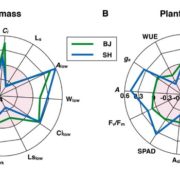
Leaf Photosynthesis and Biomass Accumulation
Blog, Plant Physiology, Plant Physiology: On The Inside, Research, Research BlogImproving photosynthetic efficiency is a major target for increasing crop biomass production and yield potential. The canopy photosynthetic efficiency, which is determined by leaf area index, canopy architecture, and leaf photosynthetic properties, plays an important role in determining biomass accumulation.…