


What we're reading: November 24th
Blog, Research, WWR Full PostA special "thank you" too the many people who have contributed to What We're Reading over the past year! And don't forget you can sign up to receive email alerts - click here then "Notify me of new content".
Review: Plant systems biology at the single-cell level
The establishment and enormous…

Guarding the Gates: How PROCERA Helps Keep Tomato Plants From Wilting
Blog, Research, Research Blog, The Plant Cell, The Plant Cell: In BriefPlants have two major ways of dealing with drought stress. First, when water levels are low, the phytohormone abscisic acid (ABA) induces stomatal closure. Soon after, growth, flowering, and fruit development take a back seat to plant survival. This suppressed growth is mediated by decreased activity…
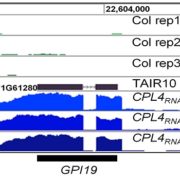
Granting an Extension: mRNAs Produced by Read-through from Small Nuclear RNAs
Blog, Research, Research Blog, The Plant Cell, The Plant Cell: In BriefThe C-terminal domain (CTD) of RNA polymerase II (Pol II) extends from the catalytic core and consists of repeats of a seven-amino acid motif. The CTD functions in the regulation of Pol II function and is subject to just about every protein modification you can think of, including methylation, acetylation,…

Thank you
BlogThis past year at ASPB we've been thinking a lot about how we can support early-career researchers no matter their career goals. One of the motivations for developing the Plantae platform has been to provide an online home for plant scientists across the globe and career spectrum, to allow informal communities…
Funding Opportunity: DOE Releases Solicitation Environmental Systems Research
Blog, Funding OpportunitiesLewis-Burke Associates LLC – November 21, 2017
The Office of Biological and Environmental Research (BER) of the U.S. Department of Energy (DOE) Office of Science has released a Funding Opportunity Announcement (FOA) soliciting proposals from single investigators or multi-investigator teams to conduct…
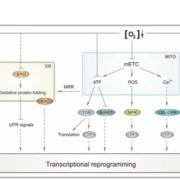
Update: Oxygen sensing and integrative stress signaling in plants
Blog, Plant Physiology, Plant Physiology: Updates, Research, Research BlogBy Romy Schmidt, Daan A Weits, Claudio FJ Feulner, Joost T. van Dongen
Plants grow in a dynamic environment and continuously face numerous stress conditions in parallel. This fluctuating environment pushed the evolution of extensive metabolic flexibility (Sweetlove et al., 2010; van Dongen et al.,…

Update: Cytoplasmic mRNA dynamics
Blog, Plant Physiology: Updates, Research, Research BlogBy Thanin Chantarachot and Julia Bailey-Serres
The export of an mRNA from the nucleus to the cytoplasm begins an odyssey of dynamic regulation that determines the location, longevity and use of the transcript in the production of polypeptides by ribosomes in plant cells. Recent leveraging of mutants,…
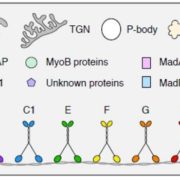
Update on Myosin Motors: Molecular Mechanisms and Physiological Functions
Blog, Plant Physiology, Plant Physiology: Updates, Research, Research Blog By Jennifer M Ryan and Andreas Nebenfuehr
The cytoskeleton is the main organizing principle that defines not only the distribution of cellular components within cells but also the overall shape and growth pattern of cells and entire multicellular organisms. This function is particularly evident in…
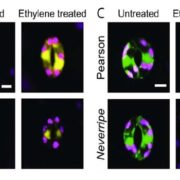
Flavonols Modulate ROS in Tomato Guard Cells
Blog, Plant Physiology, Plant Physiology: On The Inside, Research, Research BlogAlthough reactive oxygen species (ROS) have historically been considered damaging agents within cells, recent studies have demonstrated that these molecules also serve as second messengers in signaling pathways. The reactive nature of ROS allows these compounds to function as signaling molecules by reversibly…