

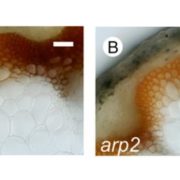
Arabidopsis thaliana plants lacking the ARP2/3 complex show defects in cell wall assembly and auxin distribution
Blog, Plant Science Research Weekly, Research, Research BlogThe plant cytoskeleton determines cell shape and integrity by delivering cellulose microfibrils and other cell wall components to the plasma membrane and cell wall. Auxin is involved in establishing the polarity of cell expansion and auxin distribution is partly regulated by actin. Sahi et al. examine…
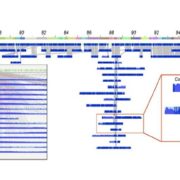
Commentary: Is it ordered correctly? Validating genome assemblies by optical mapping
Blog, Plant Science Research Weekly, Research, Research BlogOne of the hardest parts of any sequencing project is putting the pieces together. Physical sequence alignments can be cross checked against genetic linkage maps when they are available, but what about for species without genetic linkage data? Udall and Dawe describe the use of optical mapping, using…
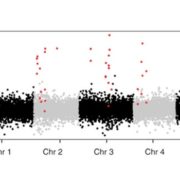
Evolution of transposon-encoded anti-silencing factors in Arabidopsis ($)
Blog, Plant Science Research Weekly, Research, Research BlogTransposable elements (TEs) are a major component of eukaryotic genomes. Their activity is silenced by epigenetic mechanisms such as chromatin modifications and DNA methylation in order to avoid deleterious effects on host genome stability. Nevertheless, how TEs overcome silencing by the host and propagate…
What We're Reading: January 5th
Blog, Research, Research Blog, WWR Full PostGuest Editor: Alecia Biel
Alecia is a graduate student at The Ohio State University in the US and has been a Plantae Fellow since September 2017. Her research focuses on elucidating hormone signaling pathways and the role of the nucleus during this process, particularly throughout plant abiotic…

KNS4/UPEX1: A Type II Arabinogalactan β-(1,3)-Galactosyltransferase Required for Pollen Exine Development
Blog, Plant Science Research Weekly, Research, Research BlogPollen is an essential component in angiosperm reproduction. Pollen grains are surrounded by a highly resistant wall called exine which enables survival of the male gametes in adverse environmental conditions. Suzuki et al. examined the contribution of an Arabinogalactan β-(1,3)-Galactosyltransferase…
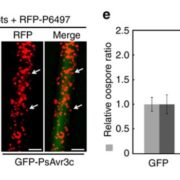
An oomycete plant pathogen reprograms host pre-mRNA splicing to subvert immunity
Blog, Plant Science Research Weekly, Research, Research BlogPhytopthora sojae poses a serious threat to soybean production world-wide. This oomycete pathogen has a wide arsenal of effector proteins, some of which have been functionally characterized for their virulence role. Huang et al. characterized and demonstrated the functional role of an avirulence effector…
Oh, the places they’ll go! A survey of phytopathogen effectors and their host targets ($)
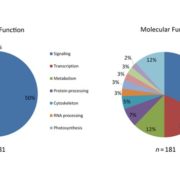
Blog, Plant Science Research Weekly, Research, Research BlogAll phytopathogens encode for a toolbox of secreted proteins called ‘effectors’ that promote disease formation in the best possible way. Effectors are either acting in the apoplastic space or are translocated to the host cell to target diverse processes and modulate the host using enzymatic activities.…
Arabidopsis pollen tube integrity and sperm release are regulated by RALF-mediated signaling
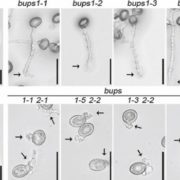
Blog, Plant Science Research Weekly, Research, Research BlogSuccessful fertilization in plants requires sperm cells (SCs) to be carried along the growing pollen tube (PT) until reaching the female gametophyte where the PT then bursts to release the SCs. One challenge PTs must overcome in order to achieve fertilization is deciding to rupture or not to rupture.…

Highlights of plant science 2017. Nov-Dec
Blog, Research, Research BlogThe last week of the year is the time to look back and reflect. We like to take this opportunity to recognize the good work done by the plant science community. During this final week of 2017 we've been reminding you of some of the big stories and successes that came from our community. These stories…