


Releasing the Cytokinin Brakes on Root Growth
Blog, Plant Physiology, Plant Physiology: News and ViewsRoots explore the soil for available water and nutrients, with deep roots providing water from the lower soil layers (Uga et al., 2015) and highly branched roots searching the soil for less-mobile nutrients such as phosphate, zinc, and manganese. Root architecture results from plant developmental programs,…
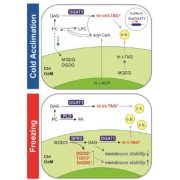
A Lipid Synthesis Enzyme Confers Freezing Tolerance
Blog, Plant Physiology, Plant Physiology: On The InsideDespite major advances in understanding cold signaling, cold acclimation, and freezing protection in model and crop species, and extensive studies of natural variation in freezing tolerance in Arabidopsis accessions, the question of which genes and mechanisms underlie freezing tolerance of wild species…
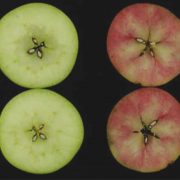
How Ethylene Reddens Apples
Blog, Plant Physiology, Plant Physiology: On The InsideEthylene is essential for the ripening of climacteric fruits, and a rapid burst of ethylene production and a rise in respiration occur at the transition to ripening. In ripening apple (Malus domestica) fruits, the accumulation of anthocyanins that is responsible for reddening is correlated with ethylene…
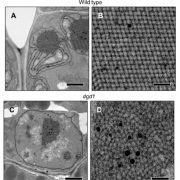
Etioplasts: The Role of Digalactosyldiacylglycerol
Blog, Plant Physiology, Plant Physiology: On The InsideIn dark-grown plants, the plastids of cotyledon cells develop as etioplasts. Etioplasts contain unique internal lattice membrane structures called prolamellar bodies (PLBs) and lamellar prothylakoids (PTs). PLBs accumulate protochlorophyllide (Pchlide), a chlorophyll intermediate, in a complex with NADPH…

Singlet Oxygen and Osmotic Stress
Blog, Plant Physiology, Plant Physiology: On The InsideSome experimental systems aimed at understanding the effects of drought on plants have incorporated cell-impermeable high molecular weight polyethylene glycol (PEG) to mimic the osmotic component of drought stress. The use of PEG showed that drought stress response could be separated into components…

A Tonoplast Calcineurin B-Like Protein and Stomatal Movement
Blog, Plant Physiology, Plant Physiology: On The InsideAbscisic acid (ABA) promotes stomatal closure and inhibits light-induced stomatal opening. An early event in ABA signaling is an influx Ca2+ ions across the plasma membrane and an increase of cytoplasmic calcium ([Ca2+]cyt). ABA-induced stomatal closure involves an outward K+ flux and dynamic vacuolar…

Jasmonic Acid Inhibits Lateral Root Formation
Blog, Plant Physiology, Plant Physiology: On The InsideArchitectural modifications of plant root systems enable plants to survive adverse conditions. Lateral roots, for example, help anchor the plant in the soil, and facilitate the uptake of water and nutrients from the soil. Auxin is a plant hormone essential to root development including the elongation…

Profiles of Plant Physiology first authors: Yuanyuan Zhang
Blog, Plant Physiology, Plant Physiology: Author ProfilesYuanyuan Zhang, first author of OsATX1 Interacts with Heavy Metal P1B-type ATPases and Affects Cu Transport and Distribution in Rice
Current Position: PhD student in the National Key Laboratory of Crop Genetic Improvement, Huazhong Agricultural University, China.
Education: PhD in Biochemistry…
Toca Lab: Plants, a great app to teach kids about plant biology
Blog0 Comments
/
By Daniel Czerny
Toca Lab: Plants is an app designed to introduce primary school-aged kids to plant biology. In the app, kids can apply fertilizer, water, and light to different species of plants.
The correct treatment unlocks new plant characters for the game, and the game teaches the binomial…