


Recognizing Plant Physiology first authors: Kevin Magne
Blog, Plant Physiology, Plant Physiology: Author ProfilesKévin Magne, first author of MtNODULE ROOT1 and MtNODULE ROOT2 are essential for Medicago truncatula indeterminate nodule identity
Current Position: Post doc, Laboratory of Molecular Biology, Department of Plant Sciences, Wageningen University & Research
Education: Ph.D., Biology, University…

Recognizing Plant Physiology first authors: Said Hafidh
Blog, Plant Physiology, Plant Physiology: Author ProfilesSaid Hafidh, first author of Dynamics of Nicotiana tabacum pollen sequestrome defined by subcellular coupled omics
Current Position: Research fellow, Institute of Experimental Botany (IEB), Prague
Education: BSc and PhD at the University of Leicester (2002-2009)
Non-scientific Interests: Cycling,…

Recognizing Plant Physiology first authors: Jing Wang
Blog, Plant Physiology, Plant Physiology: Author ProfilesJing Wang, first author of AnnAt1 and AnnAt2 regulate Arabidopsis primary root growth in response to sugar
Current Position: Ph.D candidate in University of Texas
Education: Master of Science in Shandong University, China
Non-scientific Interests: Cooking, hiking and traveling
Brief bio:…

Recognizing Plant Cell first authors: Lin Zhang
Blog, The Plant Cell, The Plant Cell: Author ProfilesLin Zhang, first author of Nucleus-encoded Protein BFA1 Promotes Efficient Assembly of the Chloroplast ATP Synthase Coupling Factor 1
Current Position: Postdoctoral fellow, College of Life and Environmental Sciences, Shanghai Normal University, Shanghai, China.
Education: PhD in Developmental Biology…

Alternate careers after PhD
BlogPart of the "Self Reflection" series by and for early-career researchers
These chapter of the “Self-reflection Series” was conceived to provide an insight for early-career scientist into options after defending their PhD dissertation, especially because many natural science degrees are (almost)…

Cellulose Synthase Stoichiometry Varies among Species and Tissues
Blog, Plant Physiology, Plant Physiology: News and ViewsCellulose, the most abundant biopolymer on earth, is an important structural component of the primary and secondary cell wall of plant cells. It is also found in animals (tunicates), oomycetes, and bacteria (Kumar and Turner, 2015). Besides providing support and rigidity in living organisms, cellulose…
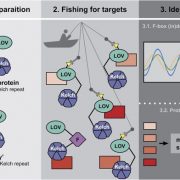
Save Time and Fish for the Clock
Blog, Plant Physiology, Plant Physiology: News and ViewsPlants live by the clock. It helps them to predict day and night as well as upcoming seasons, and to decide when it’s time for reproduction. These predictions depend on oscillating processes that involve gene transcription and protein stability, cycling in a period of, for example, 24 h. Environmental…
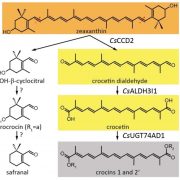
Subcellular Spice Trade Routes: Crocin Biosynthesis in the Saffron Crocus (Crocus sativus)
Blog, Plant Physiology, Plant Physiology: News and ViewsCommentary by Trevor H. Yeats and Raimund Nagel
Saffron is produced from the stigmas and styles of Crocus sativus flowers and is one of the most expensive spices. In C. sativus, both stigma and style are intensely crimson red in color due to the presence of three major classes of apocarotenoids: crocins,…
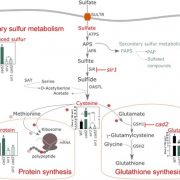
Managing Competing Interests: Partitioning S between Glutathione and Protein Synthesis
Blog, Plant Physiology, Plant Physiology: News and ViewsSulfur (S) is an essential element for cell function and responses to the environment. The primary S source is sulfate, which, following uptake by specific transporters, is reduced and incorporated into the amino acids Cysteine (Cys) and Methionine, and thereafter into proteins and peptides, including…