

American Society of Plant Biologists Northeast Meeting 2026
UncategorizedThe College of New Jersey | April 25–26, 2026 Written by: NE Section ASPB Ambassadors Edited by: Shoshana Kronfield, Sarah Black, Jayson Padilla This spring, the Northeast Section of the American Society of Plant Biologists gathered at The College of New Jersey for a meeting that felt as much about…

The Unwritten CV of a Plant Scientist
Blog, CommunityThere is a particular look people give when you say you are a plant scientist. It falls somewhere between “Oh, that’s… nice” and the polite expression usually reserved for someone who has just confessed to collecting vintage doorknobs. Once, someone replied, “Ah, I love gardening too,” and…

When Disciplines Meet: Opportunities and Obstacles in Multidisciplinary Collaborations
Blog, CareersImportance of collaboration
Collaboration has become central to contemporary science. The 2024 Physiology Nobel laureate Victor Ambrose remarked that “two people talking about something they’re really interested in is more than just twice one person. Because the exchange of ideas can be catalytic.”…

A Guide for Poster Making: Tips to Master PowerPoint and Inkscape
Blog, EducationThe end of the semester is fast approaching, meaning many conferences, such as ASPB’s PlantBiology 2026, are on the horizon. These opportunities are a perfect chance to share your results and conclusions with your peers, solicit feedback on your ideas, and develop possible collaborations with others.…
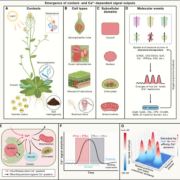
Review: Plants calcium signaling is both conserved and plant-specific
Plant Science Research WeeklyAlthough calcium ions are universal second messengers, plants employ both conserved and unique strategies to decode Ca²⁺ signals. In a new review in Cell, Sheng Luan reviews the molecular tools used to study calcium signaling in plants and the mechanisms that govern this process. Like other cells,…
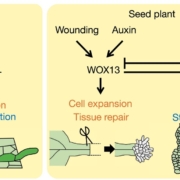
Review: How WOXs regulate regeneration in land plants
Plant Science Research WeeklyPlants cannot escape a bite from herbivore or being cut by a lawn mower, but they can regrow new leaves or even entire stems after damage. From simple mosses to giant sequoia trees, the process of building a new organ after wounding may be more similar than we previously thought. Key players in this…
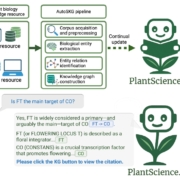
Unveiling PlantScience.ai: A niche LLM to power your plant science research
Plant Science Research WeeklyYou ask a plant science specific question to a general-purpose large language model (LLM) and it puts out vague answers. Sometimes you wonder if the answer is valid or if the LLM is pulling you into a hallucination trap! Does this sound familiar? To tackle this problem, PlantScience.ai, a virtual scientist…

Close, but not random: how plant receptors find their partners.
Plant Science Research WeeklyNanodomains, also known as lipid rafts, temporarily group proteins within the plasma membrane, to efficiently perform cellular processes such as extracellular sensing. This study examines the unclear association dynamic of a very important plant plasma membrane receptor family, the Leucine-Rich Repeat…
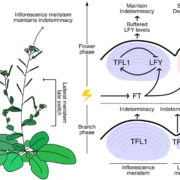
Floral indeterminacy is mediated by a negative feedback loop
Plant Science Research WeeklyScientists have been curious as to how the shoot meristem maintains two adjacent cell populations that respond oppositely to the same systemic flowering signal. In this study by Huang et al., the authors reveal that LEAFY (LFY) transcription factor directly binds to the DNA of TERMINAL FLOWER1 (TFL1)…