


A bacterial effector targets the master immune regulator NPR1 ($)
Blog, Plant Science Research Weekly, Research, Research BlogPathogenic microbes translocate effector molecules into plant cells that subvert host immune responses and promote disease. In a recent article published in Cell Host & Microbe, Chen et al. (2017) describe an exciting new interaction between the Pseudomonas syringae effector AvrPtoB and its cognate…

Plant-to-plant communication triggered by systemin primes anti-herbivore resistance in tomato
Blog, Plant Science Research Weekly, Research, Research BlogPlant-to-plant communication allows plant neighbors to be warned by plant peers of stresses such as herbivory activity, sometimes by triggering priming processes. Systemin is an 18-amino acid hormone, firstly identified in tomato as a inducer of the wound response. Coppola et al. report the role of systemin…

The Medicago truncatula GRAS protein RAD1 supports arbuscular mycorrhiza symbiosis and Phytophthora palmivora susceptibility
Blog, Plant Science Research Weekly, Research, Research BlogWithin the same species, plant responses to pathogens vary depending on the plant genotype. The correlation between phenotypic and genetic variation is a great resource for finding genes involved in plant-pathogen interactions. By using a set of natural accessions of Medicago truncatula (HapMap population)…

Pollen magnetofection for genetic modification with magnetic nanoparticles as gene carriers
Blog, Plant Science Research Weekly, Research, Research BlogThe ability to generate transgenic plants has revolutionised plant science research. However, many species and genotypes remain challenging and time-consuming to transform. Zhao et al. provide a novel and potentially ground-breaking method of transgene delivery. In the presence of a magnetic field,…

Development of gene expression system in egg cells and zygotes isolated from rice and maize
Blog, Plant Science Research Weekly, Research, Research BlogAssessing the function of genes active in zygotes and egg cells is difficult due to the inaccessibility of the target tissues. Koiso et al. isolated rice egg cells and maize zygotes using a method similar to that for extracting leaf protoplasts. They then optimized a PEG-Ca2+ transfection protocol…

Review. Katanin: A sword that cuts microtubules for cellular, developmental, and physiological purposes
Blog, Plant Science Research Weekly, Research, Research BlogKATANIN is a AAA ATPase protein which, according to the most recent models, is able to track along microtubules (MTs) and sever emergent γ-TUBULIN and AUGMIN-nucleated MTs. This severing event occurs at MT cross-over areas, particularly where there are MT lattice defects, promoting disassembly of unfavorable…

Whole-genome sequencing reveals the extent of GC-biased gene conversion in plants and fungi ($)
Blog, Plant Science Research Weekly, Research, Research BlogGene conversion, a mechanism involving the unidirectional exchange of DNA from a donor to an acceptor sequence through homologous recombination, is a major driver of genome evolution. It has been speculated that gene conversion may be biased towards GC alleles, and thus favours accumulation of GC in…
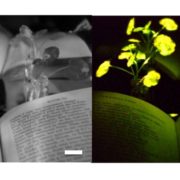
A nanobionic light emitting plant ($)
Blog, Plant Science Research Weekly, Research, Research BlogReading books by the light of nanobionic plants sounds like something out of a scifi book. However, scientists have been working for many years on engineering light-emitting plants based on the luciferase enzyme. This work has been limited largely by the need to overcome the toxicity of adding to much…
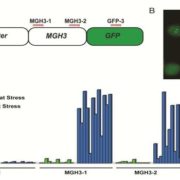
Increased efficiency of targeted mutagenesis by CRISPR/Cas9 in plants using heat stress ($)
Blog, Plant Science Research Weekly, Research, Research BlogCRISPR/Cas9 genome editing has rapidly become a powerful tool in modern plant science research. However, issues of low editing efficiencies and off-target mutations remain. LeBlanc et al. hypothesised that subjecting plants to high temperature stress, mimicking the optimal operating temperature of…