


Recognizing featured Plant Cell first authors: Diana Bellin
Blog, Research, Research Blog, The Plant Cell, The Plant Cell: Author ProfilesDiana Bellin is featured author of Host-mediated S-nitrosylation disarms the bacterial effector HopAI1 to re-establish immunity
Current Position: Postdoctoral fellow, Plant Systems Engineering Research Center, Korea Research Institute of Bioscience & Biotechnology, Daejeon, South Korea.
Education: PhD,…

Update: The impacts of fluctuating light on crop performance
Blog, Plant Physiology, Plant Physiology: Updates, Research, Research BlogBy Rebecca A Slattery, Berkley J Walker, Andreas P.M. Weber, Donald R. Ort
Abstract
Rapidly changing light conditions can reduce carbon gain and productivity in field crops because photosynthetic responses to light fluctuations are not instantaneous. Plant responses to fluctuating light occur across…

TAIR’s Top Twenty Arabidopsis Genes of All Time
Blog, Research, Research BlogAfter reading about “Top Ten Human Genes” in Nature, we, and the twitterverse wondered, what are the most popular or well-studied genes of all time in plants? What would a similar list would look like for Arabidopsis?
Fortunately, at TAIR (The Arabidopsis Information Resource: https://www.arabidopsis.org/) …
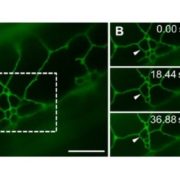
Update: Advances in imaging plant cell dynamics
Blog, Plant Science Research Weekly, Research, Research BlogSince the days of Robert Hooke, microscopy has been one of the biologist’s most important tools, and continues to become ever more powerful. Komis et al. review recent advances in superresolution microscopy, particularly as they pertain to the dynamics of plant cells. Dynamic systems demand fast imaging,…

Perspectives: Plastics from plants, plastic recycling and plastic degradation
Blog, Plant Science Research Weekly, Research, Research Blog“If the current trend continues, there could be more plastic than fish by weight in the oceans by 2050” writes MacArthur in her Editorial, “Beyond plastic waste” (10.1126/science.aao6749). In three Perspective articles, challenges and opportunities to reduce plastic waste and improve its production…
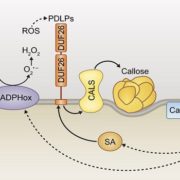
Review: Plasmodesmal regulation during plant- pathogen interactions
Blog, Plant Science Research Weekly, Research, Research BlogPlasmodesmata are plasma membrane-enclosed pores between cells that were initially described by Tangl in 1879 as ‘open communications’ between protoplasts of endosperm cells. These structures are regulated by callose deposition from the apoplast and play an important regulatory role in stress and…
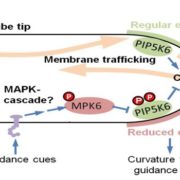
MAPKs influence pollen-tube growth via phosphorylation of PIP5K6, affecting PtdIns(4,5)P2 formation
Blog, Plant Science Research Weekly, Research, Research BlogPollen tubes exhibit unidirectional, polar growth because vesicles carrying compounds required for growth are selectively transported to the growing apex. The phosphoinositide PtdIns(4,5)P2 accumulates at the apex and is thought to help with vesicle targeting. Helpel et al. showed that the lipid…
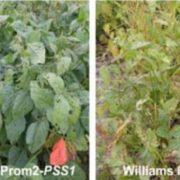
An Arabidopsis glycine-rich plasma membrane protein enhances disease resistance in soybean
Blog, Plant Science Research Weekly, Research, Research BlogPreviously, the authors identified an Arabidopsis mutant that shows resistance to a widespread oomycete pathogen. In this new work, Wang et al. identified the Phytophthora sojae susceptible gene locus, PSS1, which encodes a plasma-membrane localized glycine-rich protein. When introduced into soybean…

ANXUR receptor-like kinases contribute to both PRR- and NLR-mediated immunity ($)
Blog, Plant Science Research Weekly, Research, Research BlogThe plant immune system is often described as having two parts, one which recognizes extracellular conserved microbial signals (pattern-triggered immunity: PTI) and one which is stimulated by the presence of specific microbial effectors (effector-triggered immunity: ETI). Through a forward-genetic…