
Win-win underground relationship of crops and arbuscular mycorrhizal fungi
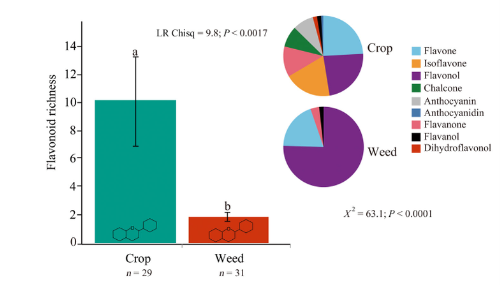
Community and ecosystem ecology are the main pillars of agroecology. Plants exude various chemicals from their roots to communicate with belowground microorganisms to boost productivity. This article by Urcelay et al. offers a new perspective to understand the interaction between plants and arbuscular mycorrhizal fungi (AMF) and highlights how flavonoids (FLVs) and strigolactones (SLs) act as key players to lead these interactions. Urcelay and colleagues suggested that the plant-AMF community structure and dynamics are determined by the composition and diversity of root exudates containing FLVs and SLs. They proposed that cultivated crops and weeds are very different from each other when it comes to the concentration of these signaling molecules. Their hypothesis predicts that every plant phylogenetic group has a different composition of FLV and SL in root exudates. Crops show more chemical diversity than weeds and different subclasses of these chemicals act differently to influence AMF activity. The authors propose that crop plants, selected for size and growth rate, benefit more from AMF associations than weeds, leading to their enhanced diversity and production of FLVs and SLs. This viewpoint gives us a new understanding of the biochemistry behind plant-AMF interactions and opens new avenues to promote beneficial microbial communities, improve soil health and sustainable agriculture practices. (Summary by Kavita Joshi @JoshiKvita) New Phytologist 10.1038/s44160-025-00800-z