


Plant Science Research Weekly: May 1, 2026
Review. Beyond elite crops: Designing resilient agriculture from wild plant diversity
 When looking at the foods that fill our supermarkets, it can be hard to imagine we are relying on just a handful of domesticated plant species. Thousands of wild plants, each with its own unique strengths, remain overlooked and underused. For years, plant breeders have tried to borrow these unique traits by crossbreeding wild relatives with familiar crops, but the process is often painfully slow due to genetic hurdles. Meliá and Cárdenas proposed a new idea: instead of squeezing a few wild traits into existing crops, why not domesticate some of these wild plants directly? Thanks to advances in genomics sequencing and drone-based crop monitoring, we can now study and select wild plants with greater precision than ever before, speeding up the journey from the wild to staple food. We are already seeing the successful cases. Salicornia, a halophyte, is being developed as a promising crop for coastal farms where salty soils make traditional agriculture impossible. Another wild plant, Chenopodium album, is showing potential as a highly nutritious food that can grow in temperate climates. These examples signal a major shift in how we think about the future of farming. By combining ecological knowledge with scientific advances, we can build more resilient, diverse, and sustainable food systems that use valuable local wild varieties. (Summary by Ching Chan @ntnuchanlab @ntnuchanlab.bsky.social) Plants, People, Planet 10.1002/ppp3.70209
Review. How food production impacts the environment, and vice versa
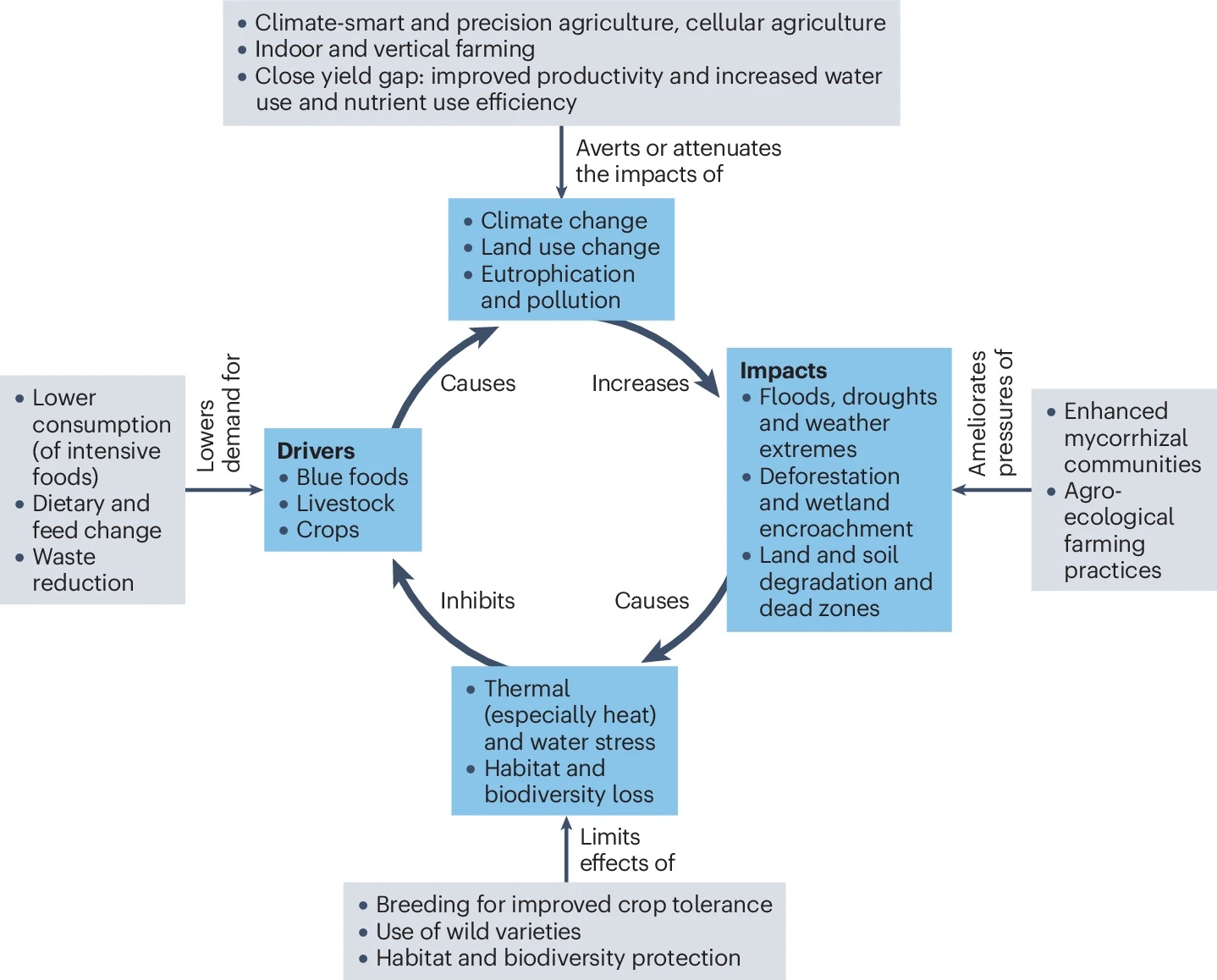 This comprehensive review by Mogollón et al. would be a great starting point to help students think about the pressing challenge of feeding growing numbers of people in the face of climate change. The article begins with the impact of food production on the environment; the release of greenhouse gasses, land use changes, soil erosion, pesticide usage, nutrient runoff and eutrophication, watershed depletion, and of course the loss of biodiversity. It then turns things around and addresses how these environmental challenges affect our ability to produce food; for example, heat, drought, flooding, and pollinator declines all affect plant productivity, with knock-on effects onto production of animal- and fish-derived foods. It concludes with some recommendations, ranging from breeding for heat tolerance, agroecology, and dietary changes. The importance of addressing the impacts of the food production system is summed up thusly: “Modern food systems now use over one-third of global land area, drive roughly a quarter to one-third of total anthropogenic GHG emissions and account for most anthropogenic demand for freshwater.” (Summary by Mary Williams @PlantTeaching.bsky.social) Nat Rev Earth Environ 10.1038/s43017-026-00778-y
Review: Apoplastic signaling during arbuscular mycorrhizal symbiosis
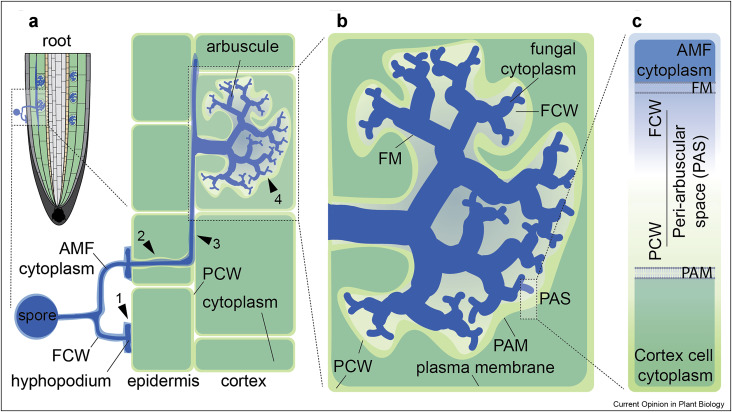 Plants rely on microbes to aid their uptake of nutrients. Most plants from an intimate association with mycorrhizal fungi, in which both partners benefit through the exchange of nutrients and photosynthate. In the most common form, arbuscular mycorrhizal symbiosis, the fungus forms branched structures within the plant cell, providing a specialized surface area for this exchange. As many fungi are pathogenic to plants, the formation of these exchange sites is tightly controlled by the plant and requires extensive communication between the partners. Recently, Rodriguez-Garcia and Müller reviewed our current understanding of the mechanisms of this communication as it takes place at the interface between the two partners, the peri-arbuscular space. As described in the review, this apoplastic space hosts a rich inter-kingdom dialogue that involves receptors, signaling peptides, and extracellular vesicles, working together to ensure that both partners benefit from the symbiosis. (Summary by Mary Williams @PlantTeaching.bsky.social) Curr. Opin. Plant Biol. 10.1016/j.pbi.2025.102849
The biosynthetic gene cluster for the active compound of a widely used medicinal plant, ashwagandha
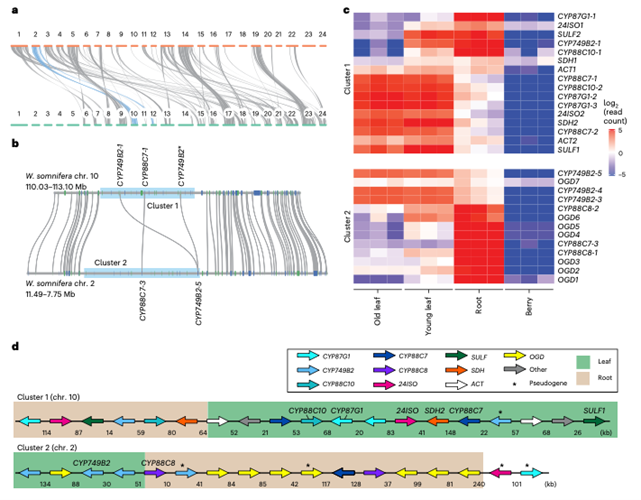 Withania somnifera (ashwagandha) is popularly known for its most prominent bioactive compound called withanolide. This natural product has enormous medicinal potential and has traditionally been used in the Indian Ayurvedic system for more than 3000 years to treat various illnesses. However, the industrial production of withanolide remains a bottleneck due to the complex pathway and expensive extraction process. To address this gap, Reynolds and co-workers have used metabolic engineering to convert yeast into a bio-factory for withanolide biosynthesis and adopted a learning-by-building strategy to reconstruct all the stepwise pathways. First, they generated the genetic blueprint of ashwagandha and identified two large Biosynthetic Gene Clusters (BGCs) responsible for withanolide synthesis. These clusters are among the largest BGCs known to date. Co-expression analysis reveals that these clusters show segmented behavior and are expressed differentially in both root and leaf tissues. Furthermore, they detected P450s, SDH2, SULF1 as the main enzymes of the withanolide core structure, which is crucial for the biosynthesis and bioactivity of withanolides. To scale up the withanolide production, the authors re-engineered yeast and further validated the system in Nicotiana benthamiana. This research provides a genetic map of withanolide biosynthesis in W. somnifera and provides a future path for its industrial production to make cost-effective medicine to treat various diseases. (summary by Kavita Joshi @JoshiKvita) Nature Plants 10.1038/s41477-026-02220-z
The last piece of the nicotine puzzle
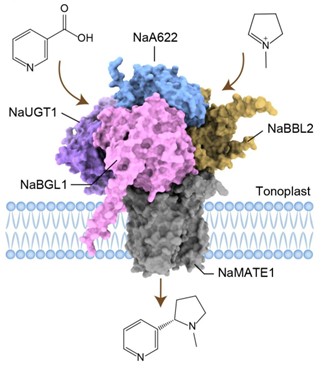 No other alkaloid has received as much scientific attention as nicotine. For better or for worse, tobacco has been used by humans for at least 12,000 years, yet the final steps of nicotine biosynthesis have remained stubbornly unresolved until now. A new paper in Cell by Chang et al. (2026) reveals that the key missing piece is a hidden sugar. Before the two rings of nicotine can be joined together, nicotinic acid must first be tagged with a glucose group. This cryptic glycosylation step, catalysed by a UDP-glycosyltransferase (NaUGT1), had been overlooked for decades because earlier labelling experiments misidentified the intermediate as a metabolic dead end. In fact, this modification acts as a chemical activating group, making the molecule reactive enough to be reduced and stereoselectively coupled to form nicotine’s distinctive bicyclic scaffold. The glucose is then removed at the end. Equally notable is where this chemistry happens. All five enzymes responsible for the final biosynthetic and transport steps, NaUGT1, NaA622, NaBBL1/2, NaBGL1/2, and the MATE transporter NaMATE1, assemble into a dynamic metabolon on the tonoplast membrane. This architecture channels reactive intermediates directly into the vacuole, solving the autotoxicity problem that a compound as potent as nicotine would otherwise pose to the producing cell. The team demonstrated that transplanting this metabolon into tomato, aubergine, and pea confers genuine pest resistance, pointing towards a tractable route for engineering natural insect defences into crops. (Summary by Charlay Wood) Cell 10.1016/j.cell.2026.03.034
Elevated mutation rates in tissue-culture derived plant tissues
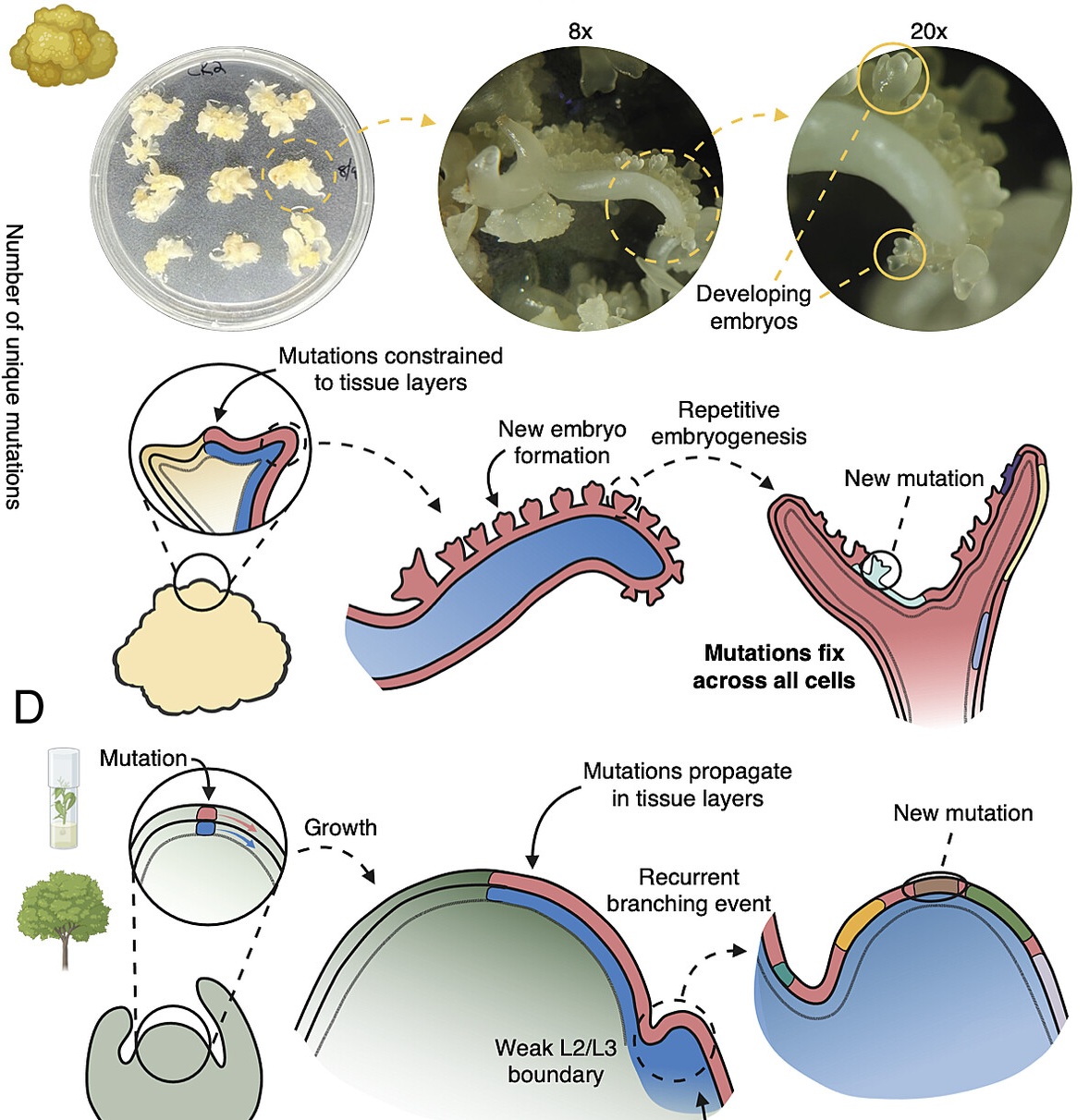 The totipotency of plant tissues makes them very amenable to propagation through somatic tissues. Tissue culture propagation is used to regenerate gene edited plants from single cells and to cultivate plants that are difficult to propagate sexually. In a recent paper, Davis et al. investigated the genomic impact of tissue culture, using propagated walnut lines. They carried out telomere-to-telomere sequencing of trees as well as shoot cultures and somatic embryo cultures derived from these trees. The somatic embryo tissues showed dramatically increased numbers of mutations as compared to both the cultured shoots and trees. These changes included chromosome-level duplications and recombinations, increased transposon activites, and de novo point mutations. Similarly, such genomic instabilities have been observed in cultured animal tissues as well as human cancer cell lines. Given the importance of tissue culture methods for plant biotechnology, the authors advocate for sequencing the regenerated tissues to avoid propagating suboptimal clones. The authors do however point out that tissue-culture propagated materials are “exceedingly unlikely to have adverse effects if consumed.” (Summary by Mary Williams @PlantTeaching.bsky.social) Proc. Natl. Acad. Sci. USA 10.1073/pnas.2530182123
Arabidopsis is not always enough: What a succulent taught us about stomatal development
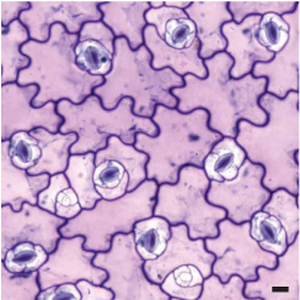 Some species are more studied than others, and it is common to assume that what happens in a model plant like Arabidopsis applies to all other plant species. This is far from true. Recently, Cheng et al. explored stomatal development in the CAM succulent Kalanchoë laxiflora. Stomata are epidermal pores that control gas exchange and water loss in leaves and vary in structure among plants. In Arabidopsis, guard cells (GCs) that form the epidermal pore gates are surrounded by non-specialized cells, whereas in K. laxiflora, guard cells are surrounded by three subsidiary cells (SCs) that are auxiliary in opening and closing stomata through turgor control of the guard cells via potassium mobilization. The authors also found that two transcription factors, KlaxMUTE1 and KlaxMUTE2, promote additional rounds of asymmetric cell division, which generate these subsidiary cells before guard cell differentiation. This contrasts with AtMUTE in Arabidopsis, which stops asymmetrical cell division and promotes guard mother cell formation. Grasses also form subsidiary cells, but through a different development pathway. There, MUTE acts in neighboring cells. which give rise to subsidiary cells from a different lineage from that leading to guard cells (perigene), whereas in Kalanchoe, subsidiary cells arise from the same lineage as guard cells (mesogene). The fact that divergent plant groups use the same transcription factor to develop functional subsidiary cells from different cell lineages is a clear case of evolutionary convergence at the level of regulatory networks. (Summary by Montserrat López-Coria). Science Advances. 10.1126/sciadv.aeb8145
A mobile transcription factor regulates wood abundance and quality in Populus trichocarpa
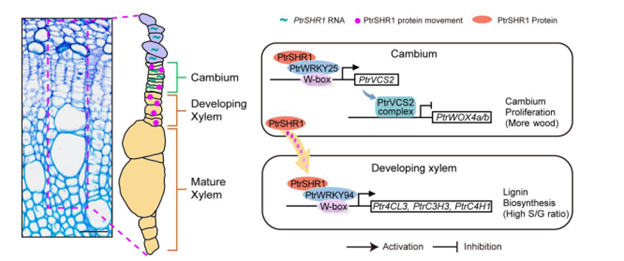 Wood is a major source of biomass on Earth and is valuable feedstock for multiple industries. Wood formation includes vascular cambium cell division and the maturation of the resulting stem-differentiating xylem (SDX) cells into mature xylem. Zhao et al. furthers our understanding of these processes by identifying and characterizing the function of PtrSHR1, a transcription factor (TF). Staining of Populus trichocarpa cross-sections demonstrated that PtrSHR1 protein is present in both vascular cambium and SDX cells, despite being transcribed only in the former, indicating intercellular mobility of the protein. Transgenic poplar overexpressing PtrSHR1 produced a truncated vascular cambium, leading to less woody biomass, while PtrSHR1 loss-of-function mutants exhibited an increased level of wood production. Functional analysis showed that PtrSHR1 operates via dimerization with the TF PtrWRKY25, forming a protein complex that can then promote PtrVCS2 expression. PtrVCS2 expression then reduces vascular cambium proliferation by repressing PtrWOX4a/b, which has been previously shown to reduce cambium growth. Analysis of wood samples in overexpressing and loss-of-function mutants demonstrated that PtrSHR1 expression can influence lignin deposition and cellulose levels, which are key metrics related to wood quality. This effect arises from the function of PtrSHR1 in SDX cells, where it dimerizes with the TF PtrWRKY94 to promote expression of three monolignol biosynthesis genes. This work by Zhao et al. provides insights into a novel TF that can regulate both wood quantity and quality. (Summary by Reed Arneson @Reed_Arneson) Plant Cell 10.1093/plcell/koag091
Win-win underground relationship of crops and arbuscular mycorrhizal fungi
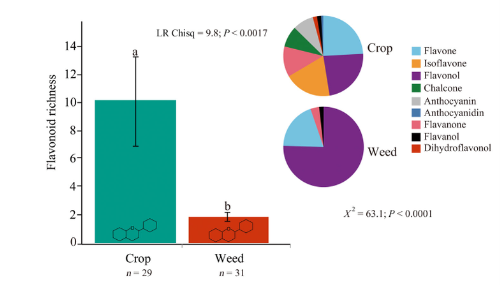 Community and ecosystem ecology are the main pillars of agroecology. Plants exude various chemicals from their roots to communicate with belowground microorganisms to boost productivity. This article by Urcelay et al. offers a new perspective to understand the interaction between plants and arbuscular mycorrhizal fungi (AMF) and highlights how flavonoids (FLVs) and strigolactones (SLs) act as key players to lead these interactions. Urcelay and colleagues suggested that the plant-AMF community structure and dynamics are determined by the composition and diversity of root exudates containing FLVs and SLs. They proposed that cultivated crops and weeds are very different from each other when it comes to the concentration of these signaling molecules. Their hypothesis predicts that every plant phylogenetic group has a different composition of FLV and SL in root exudates. Crops show more chemical diversity than weeds and different subclasses of these chemicals act differently to influence AMF activity. The authors propose that crop plants, selected for size and growth rate, benefit more from AMF associations than weeds, leading to their enhanced diversity and production of FLVs and SLs. This viewpoint gives us a new understanding of the biochemistry behind plant-AMF interactions and opens new avenues to promote beneficial microbial communities, improve soil health and sustainable agriculture practices. (Summary by Kavita Joshi @JoshiKvita) New Phytologist 10.1038/s44160-025-00800-z
