
The Plant Cell Features November and December 2025 First Authors
Behind the manuscripts are researchers, professors, professionals, and students dedicated to advancing the field of plant science. You’ve seen our First Authors on Bluesky, X and Facebook— now, read more about why they chose to pursue plant sciences and click on the links to read their articles.
 Xiangyun Yang
Xiangyun Yang is the First Author of NUP5°c defines a conserved nuclear basket module with NUP82 and NUP136 to mediate mRNA export and gene regulation in plants published 06 November 2025.Yang is a Ph.D. student in the School of Agriculture and Biology at Shanghai Jiao Tong University. Education background includes: 2022 MSc Genetics at Tianjin Normal University; 2019 BSc Biology at Tianjin Normal University. Research interests include Plant nuclear, Plant nucleus calcium signal. Personal interests include Running, Reading.
“My passion for plant science originates from my deep admiration for plants. When animals encounter adversity and danger, they have the option to flee, whereas plants lack the ability to escape. They must either strive to adapt to their environment by transforming themselves to survive or face death. Most plants opt for the former—adapting to their surroundings through self-transformation in order to live. I am curious to understand why plants exhibit such remarkable courage and resilience.”
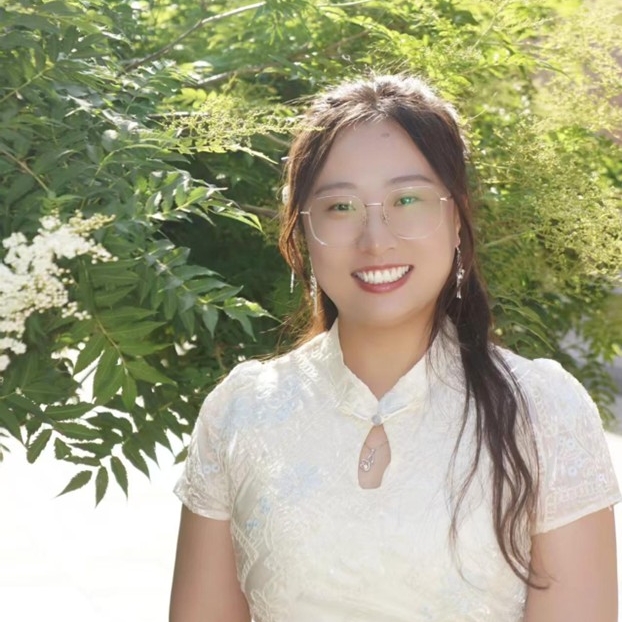 Liu Wenwen
Liu Wenwen(she/her) is the First Author of The peptide CmGAST1 integrates calcium and gibberellin signaling to regulate flowering in chrysanthemum published 11 November 2026. She is currently at China Agricultural University.Education background includes: 2025 Ph.D Department of Ornamental Horticulture, China Agricultural Universit; 2019 B.S.A. College of Horticulture, China Agricultural University. Research interests include Floral transition, Hormonal signaling. Personal interests include Singing, Walking, Reading.
“The plants in nature are beautiful and wonderful. Exploring the mysteries of plants is a very interesting thing, so I have always had a strong interest in plant science. During my studies at the China Agricultural University, I came across Professor Hongbo’s flower arrangement course, which sparked my interest in flower research. After graduating from my undergraduate program, I chose to join Professor Hongbo’s team and conduct in-depth research on the flowering period of chrysanthemums. I understood that for a flower to bloom perfectly at the right time, it requires the joint regulation of the external environment and endogenous hormones. The flowering regulation molecular network is complex yet orderly. The process of exploration and verification made me sometimes feel troubled and sometimes enlightened. I am very grateful to the gentle care and patient guidance of the mentor team and senior colleagues led by Professor Hongbo. The teamwork of the team members also enabled me to work in a pleasant research environment. The vibrant and beautiful flowers will heal all my unhappiness and enable me to forge ahead on the path of floral science.”

Ming Feng
Ming Feng (He) is the First Author of The ZAT14 family promotes cell death and regulates expansins to affect xylem formation and salt tolerance in Arabidopsis published 13 November 2025. He is a Professor at Shandong Agricultural University. Education background includes: 2019 Ph.D Horticulture at China Agricultural University; 2013 BSc Horticulture at Shandong Agricultural University. Research interests include Plant grafting, Novo rooting, Plant vascular, Plant regeneration. Personal interests include Basketball.
“My interest in plant science began during my undergraduate studies in horticulture, where I first studied cultivated plants and became focused on understanding their growth. This understanding deepened throughout my graduate and postdoctoral training, where I investigated the mechanisms behind plant development and regeneration. Working with Dr. Charles Melnyk during my postdoc inspired me to specialize in plant grafting and regeneration. My current research is driven by curiosity into the mechanisms of graft formation and vascular development.”
 Ashleigh Lister
Ashleigh Lister (she/her) is the First Author of Spatial Transcriptomics Reveals Expression Gradients in Developing Wheat Inflorescences at Cellular Resolution published 13 December 2025. She is a Senior Research Assistant. Education background includes: 2011 BSc Biology University of East Anglia. Research interests include Technical Development on methods involving single cell and spatial transcriptomics particularly applied to plant tissues, Single cell sequencing, Spatial transcriptomics, genomics. Personal interests include Running, upholstery, horse riding, (and honestly, I have very little for hobbies as a mum of two!)
“I was drawn to a job in plant science, despite having not really enjoyed it when at uni. I loved the application and the impact of it, which I didn’t get an appreciation of until working in this career. I come from a family of farmers, and my family is all involved in agriculture somehow or other, so improving crop performance feels highly relevant to the community I have come from.
My role is very technical; I am considered a research technical professional. I assist on many projects to provide my expertise and knowledge on the instrumentation and methods that I specialise in. The people that I admire are the technical professionals pushing the career development limitations of their roles, applying for funding previously restricted to PIs, applying for grants on their own right, gaining recognition in publications, and achieving managerial positions normally ruled out to people without strings of first-author publications.”
 Katie Long
Katie Long (she/her) is the First Author of Spatial Transcriptomics Reveals Expression Gradients in Developing Wheat Inflorescences at Cellular Resolution published 13 December 2025. Long is a PhD Student at John Innes Centre.
Education background includes: 2021 BSc Biological Sciences (Plant Sciences) at University of Edinburgh. Research interests include Crop Genetics, Spatial Transcriptomics, Plant Development. Personal interests include Gardening, Aquascaping.
“I was drawn to plant sciences through my broader fascination with developmental biology. Understanding the steps by which a relatively simple structure organises into a complex tissue or whole organism feels like piecing together an intricate puzzle. Of all the model organisms described during my studies at university, I found plants to be the most charismatic of the bunch due to their developmental plasticity, their central role in ecosystems and human life, and the beauty in their form.”

Xiaoming Wang
Xiaoming Wang is the First Author of Population Transcriptome and Phenotype Reveal that Rht-D1b Contribute3 a Larger Seedling Root to Modern Bread Wheat published 05 November 2025. Wang is an Assistant Professor at Northwest A&F University.
Education background includes: 2014 ph.D Genomics at Huazhong Agricultural University. Research interests include Wheat, Abiotic stress. Personal interests include Football, Running.
“I love plant science mainly for the compelling mysteries in plant genomics. Its unique complexity and plasticity not only offer endless discoveries about plant adaptation and evolution but also lay the groundwork for advancing agriculture and sustainability. Every small breakthrough in unlocking genomic secrets feels like a rewarding step into the unknown.”

Minqi Yang
Minqi Yang (she) is the First Author of RING1 and BMI1 catalytic activities play distinct roles in plant PcG-mediated gene regulation published 29 December 2025. SHe is a PhD candidate at Peking University. Education background includes: 2021 BSc Biotechnology SUN YAT-SEN University. Research interests include Plant epigenetic. Personal interests include Traveling, Running.
“Breeding and crop development are practical applications of biology for human benefit, which is why I selected plant science. I concentrate on epigenetics in plants because, in addition to the traditional DNA sequence, it creates a “second highway” that is reversible, adaptable, and controlled by the environment or management. In particular, I specialize in histone modifications; adding the same chemical group at different sites results in entirely different outputs, creating a “histone code” that always piques my interest. I also focus on chromatin 3D architecture; every method update provides a new perspective on how genes are wired. I intend to provide breeders with speedier, effective methods that help crops stay productive under drought, pests, or climate volatility.’
 Zhihan Song
Zhihan Song (he) is the First Author of RING1 and BMI1 catalytic activities play distinct roles in plant PcG-mediated gene regulation published 29 December 2025. Song is a Ph.D. candidate at Peking University. Educational background includes 2022 Ph.D. candidate at Peking University. Research interests include Plant Epigenetics. Personal interests include Table tennis.
“During my doctoral studies, I conducted research on the plant epigenetic regulatory mechanisms related to the PRC1/2 complex in the research group of Professor Zhou Yue from the School of Advanced Agricultural Sciences, Peking University. Mainly focusing on Arabidopsis thaliana, this study aims to investigate the regulatory roles of H2Aub/H3K27me3 in plant nutritional and reproductive growth, with the hope of further exploring how the complex epigenetic regulatory mechanisms of plants finely regulate their life activities. I would like to express my special thanks to Professor Zhou Yue and other members of the laboratory for their help.”

Jianbin Su
Jianbin Su (he/his) is the First Author of Polymerization-mediated SRFR1 condensation in upper lateral root cap cells regulates root growth published 30 December 2025. He is a Senior Research Scientist at University of Missouri. Education background includes: 2012 Ph.D Genetic at Sun Yan-Sen University; 2007 BSc Biotechnology Harbin Institute of Technology at Weihai. Research interests include Fundamental principles of molecular biology, synthetic biology approaches for phytomining, and the regulation of plant immunity and photosynthesis. Personal interests include fishing.
“I grew up in a rural area of Shandong Province, China, and began working in the fields at a very young age (around eight years old). My early responsibilities included labor-intensive harvesting, fertilizer application, manual weed removal, and pesticide spraying. When I was 11 years old, a severe drought struck our region. Despite my father’s best efforts to irrigate the corn breeding field, seed germination remained extremely low. I can still vividly remember the sound of the tractor running through the quiet night (no moon, no stars) as it pumped water from a nearby river. This experience left a lasting impression on me and sparked my early interest in improving stress tolerance in crop plants.
Throughout my research career, I have been inspired and supported by many individuals, and interdisciplinary collaboration has become central to my recent work. As the scientific landscape has evolved, my research interests have gradually shifted from traditional breeding approaches toward synthetic biology, with the goal of developing more robust and resilient crops.”