
The Plant Cell Features January and February 2025 First Authors
Behind the manuscripts are researchers, professors, professionals and students dedicated to advancing the field of plant science. You’ve seen our First Authors on Bluesky, Twitter and Facebook— now, read more about why they chose to pursue plant sciences and click on the links to read their articles.
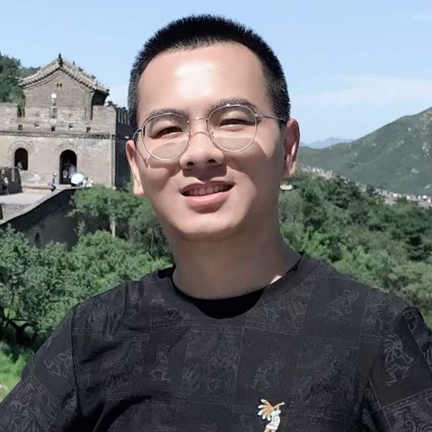
Guoyong Liu
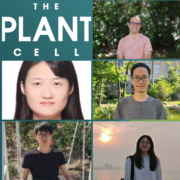
Guoyong Liu is the First Author of SOS2 phosphorylates FREE1 to regulate multi-vesicular body trafficking and vacuolar dynamics under salt stress published 10 January 2025. Liu is a Postdoctoral researcher at China Agricultural University. Education background includes: 2022 Ph.D College of Biological Science at China Agricultural University; 2015 BSc in School of Agronomy at Anhui Agricultural University. Research interests include Cell biology and abiotic stress. Personal interests include walking.
“Prof. Yan Guo is my supervisor, and he has given me a lot of encouragement and guidance.”

Sai Wang
Sai Wang(she/her) is the First Author of A regulatory network involving calmodulin controls phytosulfokine peptide processing during drought-induced flower abscission published 10 January 2025. Wang is a Doctoral candidate at Shenyang Agricultural University.
Education background includes: 2017 Doctoral candidate at Shenyang Agricultural University; 2013-2017 Bachelor of Horticulture from Shenyang Agricultural University. Research interests include Calcium signal transduction and abiotic stress. Personal interests include baking and reading.
“After four years of undergraduate studies, I developed a strong interest in plants. In 2017, I began my graduate studies and work, mainly focusing on the molecular mechanisms of tomato flower drop. In this study, we found that the SlCaM2/6-SlSR3L-SlPI26 module regulates drought-induced tomato flower drop. In the future, I will continue to explore and hope to discover more interesting secrets of plants.”
 Guoxin Chen
Guoxin Chen (he) is the First Author of Synthetic photorespiratory bypass improves rice productivity by enhancing photosynthesis and nitrogen uptake published 16 January 2025. He is an Assistant Professor at Beijing Life Science Academy (BLSA).
Education background includes: 2024 Ph.D Biotecnology Research Institure, CAAS; 2019 MSc Biotecnology Research Institure, CAAS; 2016 BSc Shanxi Agricultural University. Research interests include Plant metabolism, synthetic biology, Hippo signalling pathway. Personal interests include Music and football.
“I love plant science because it offers endless opportunities to explore complex biological systems and develop innovative solutions for sustainable agriculture, biotechnology, and environmental challenges.”
Yun Huang
Yun Huang (she/her) is the First Author of COP9 SIGNALOSOME SUBUNIT 5A facilitates POLYAMINE OXIDASE 5 degradation to regulate strawberry plant growth and fruit ripening published 03 February 2025. She is currently at the Beijing University of Agriculture.
Education background includes: 2017 Ph.D Plant physiology at China Agriculture University; 2011 BSc Biology at Chongqing Normal University. Research interests include Fruit development, Phytohormone, Mineral nutrition. Personal interests include Reading, Travelling.
“I love plant science because understanding how plants grow, adapt, and even communicate is just amazing. Plants have many interesting properties that animals do not, such as flowering, photosynthesis, the growth of stolons, and delicious fruit.”
Yanni Li
Yanni Li is the First Author of Synthetic photorespiratory bypass improves rice productivity by enhancing photosynthesis and nitrogen uptake published 16 January 2025.
Li is a PhD candidate at the Biotechnology Research Institute, Chinese Academy of Agricultural Sciences. Education background includes: 2024 Ph.D candidate in Biochemistry and Molecular Biology at Biotechnology Research Institute, Chinese Academy of Agricultural Sciences, 2021 MSc in Chinese Pharmacy at Institute of Medicinal Plant Development, Chinese Academy of Medical Sciences and Peking Union Medical College (Tsinghua University School of Medicine), 2017 BSc of Chinese Pharmacy, Beijing University of Chinese Medicine.
Research interests include Plant Molecular Biology and Genetic Engineering, Biosynthesis, Plant metabolism. Personal interests include Photography, Painting
“I love plant science because understanding how plants grow, adapt, and even communicate is just amazing. Plants have many interesting properties that animals do not, such as flowering, photosynthesis, the growth of stolons, and delicious fruit.”

Kaining Jin
Kaining Jin (she/her) is the First Author of Synthetic photorespiratory bypass improves rice productivity by enhancing photosynthesis and nitrogen uptake published 16 January 2025. She is a PhD candidate at Wageningen University and Chinese Academy of Agricultural Sciences.
Education background includes: 2019 MSc in Plant Sciences at Wageningen University; 2017 BSc Horticulture Shenyang Agricultural University. Research interests include Plant photosynthesis. Personal interests include playing tennis.
“I earned a BSc degree in Agronomy, specializing in Horticulture, from Shenyang Agricultural University in China, which initiated my journey into the intriguing field of plant sciences. The experience of completing my undergraduate thesis significantly enriched my understanding and sparked a profound interest in plant science and biological experimentation. Subsequently, I advanced my studies with an MSc in Plant Science at Wageningen University in the Netherlands. During this program, I engaged in courses and research that centered on photosynthesis, which further deepened my appreciation for the physiological mechanisms and mathematical models associated with it. Currently, my PhD research is dedicated to validating model predictions concerning the yield potential of the C4 photosynthetic pathway within a C3 background.”
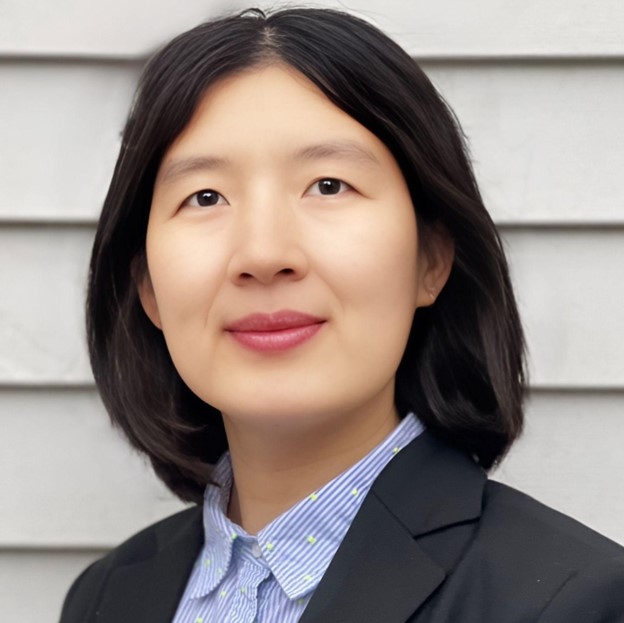
Jia Dong
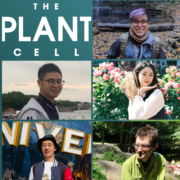
Jia Dong (she/her) is the First Author of Enhancing lipid production in plant cells through automated high-throughput genome editing and phenotyping published 03 Feb 2025.
She is a Research Scientist at the University of Illinois at Urbana-Champaign. Education background includes a 2016 Postdoctoral experience at the University of Illinois at Urbana-Champaign. Research interests include Plant Bioengineering, Automation, Synthetic Biology, Plant-Microbe Interaction, and Plant Physiology. Personal interests include Yoga, Hiking, and Gardening.
“Plant science holds the key to the future of agriculture by addressing some of the world’s most pressing challenges. First, advancements in plant science can significantly increase crop yields and production, ensuring a stable food supply to meet the demands of a growing global population. Second, it enables the development of crops with enhanced resilience to diseases and environmental stress, helping agriculture adapt to the impacts of climate change. Third, plant science can drive innovations in biofuel production, increasing oil yields to meet rising energy demands while reducing CO2 emissions. Through scientific innovation, I aim to contribute to solving global challenges such as food security, climate change, and sustainable energy.”

Dominika Bednarczyk
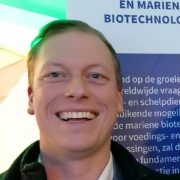
Dominika Bednarczyk (she/her) is the First Author of The homeotic gene PhDEF regulates production of volatiles in petunia flowers by activating EOBI and EOBII published 06 February 2025. She is a Senior Researcher in Metabolomic Center at Tel Aviv University.
Education background includes: 2010 PhD. degree in Plant Sciences, Max Planck Institute for Molecular Plant Physiology, Potsdam, Germany; 2005 MSc degree in Biotechnology, University of Wroclaw, Institute of Biochemistry and Molecular Biology, Wroclaw, Poland; 2003 BSc degree in Biotechnology, University of Wroclaw, Institute of Biochemistry and Molecular Biology, Wroclaw, Poland. Research interests include Plant secondary metabolism, photosynthesis, plant response to abiotic stresses. Personal interests include sport climbing, hiking, traveling, books, films.
“I love plant science since it connects me to nature, which I deeply value. Understanding plant physiology and metabolism under challenging environmental conditions gives me the possibility to imagine the “plants’ world” better. I’m inspired by knowledgeable and enthusiastic mentors and scientists.”

Huangjun Sheng
Huangjun Sheng (he) is the First Author of Maize COMPACT PLANT 3 regulates plant architecture and facilitates high-density planting published 10 February 2025.
He is a Research Assistant at Sun Yat-sen University (Shenzhen Campus). Education background includes: 2023 Ph.D Plant Architecture at Huazhong Agricultural University. Research interests include plant architecture. Personal interests include Piano, jazz drums.
“In 2017, after completing my undergraduate study at Yangtze University, I was honored to become a member of the team of Professor Yang Fang of Huazhong Agricultural University (now professor of the College of Agriculture and Biotechnology of Sun Yat-sen University), mainly engaged in the exploration of maize plant architecture regulatory genes and the exploration of molecular mechanisms. Leaf angle is a key factor in the formation of maize planta architecture. However, the research on leaf angle-related traits mainly focuses on plant height and ear, while the cloning and mechanism of the leaf angle gene and practical application in production are few. In addition, the mining of good alleles of maize leaf angle-related traits is limited, and there are still few gene loci that can be used for genetic improvement. Our study confirmed the biological functions of compact plant type genes CT3 and DIL1 during the development of maize auricle. The molecular mechanism of the CT3-DIL1 protein complex regulating ear development was analyzed. To develop and identify the allelic variation of CT3 and DIL1, evaluate their genetic effects in different hybrids, and explore their breeding value in the dense planting yield of maize hybrids. This study reveals a new molecular regulatory module for regulating the maize leaf angle, which not only provides available genetic resources for maize breeding practice but also provides a new regulatory pathway for the mechanism of auricle development in maize.
The success of any scientific research is the crystallization of teamwork and multi-party support. We would like to thank Professor Fazhan Qiu and Zuxin Zhang of the Corn Research team of Huazhong Agricultural University and Professor David Jackson of Cold Spring Harbor Laboratory for their constructive suggestions and important guidance.”
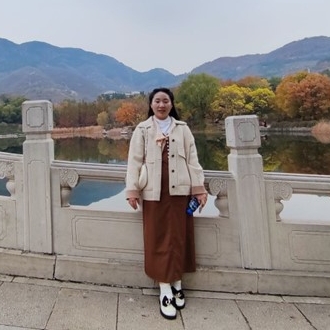
Liping Sun
Liping Sun (she) is the First Author of SALT OVERLY SENSITIVE2 and AMMONIUM TRANSPORTER1;1 contribute to plant salt tolerance by maintaining ammonium uptake published 18 February 2025. She is a Postdoctor at Beijing Academy of Agriculture and Forestry Science. Education background includes: 2024 Ph.D China Agricultural University
Research interests include Abiotic stress, Plant Growth and Development, and Fruit Ripening. Personal interests include Travel, Music, and Reading.
“The living being itself is a miraculous existence, and plants, occupying a relatively basic position in the biological world, are extremely important to our lives. My interest in plant science originated during my graduate studies and has persisted to this day. It’s a fascinating thing.”
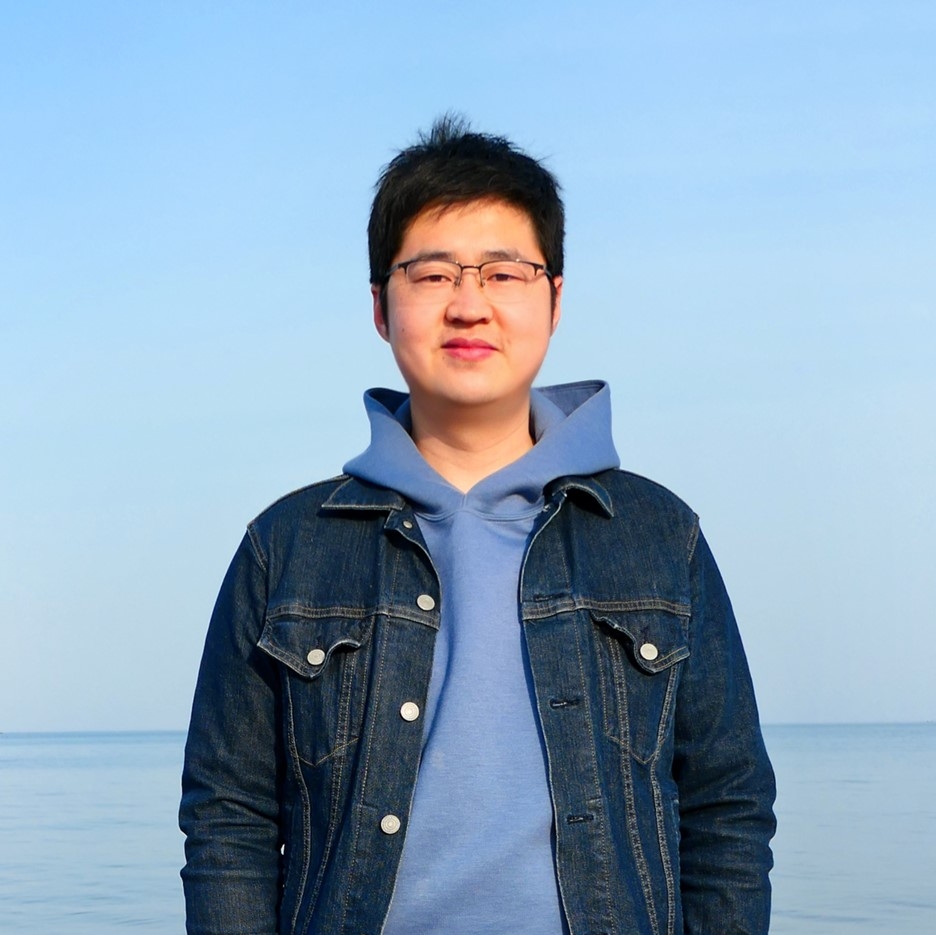
Debin Qin
Debin Qin(he/his) is the First Author of SALT OVERLY SENSITIVE2 and AMMONIUM TRANSPORTER1;1 contribute to plant salt tolerance by maintaining ammonium uptake published 18 February 2025. He is a Postdoctor at Beijing Academy of Agriculture and Forestry Science. Education background includes: 2024 Postdoc at Peking University 2020 Ph.D Plant Science at China Agricultural University. Research interests include Nitrogen assimilation,Nitrogen fixation, and Abiotic stress. Personal interests include Traveling and sports.
“During my Ph.D. studies, under the guidance of Professor Wu Weihua and Associate Professor Wang Yang, I mainly focused on the research of plant nitrogen nutrition absorption mechanisms. I revealed the molecular mechanism by which the protein kinase CPK32 phosphorylates AMT1;1 to promote ammonium uptake in nitrogen-deficient conditions. Subsequently, to explore the nutrient absorption mechanisms of plants under salt stress, I collaborated with Dr. Ma Liang on this research topic. We discovered that plants maintain ammonium nutrition uptake through the SOS2-AMT1;1 module under salt stress conditions. Moreover, the absorption of ammonium salts can alleviate salt stress damage in plants, providing a new perspective on plant nutrient absorption and salt tolerance mechanisms.”
Jing Liu
Jing Liu (she/her) is the First Author of Decoupling the pleiotropic effects of VRT-A2 during reproductive development enhances wheat grain length and weight published 14 February 2025. She is a Postdoctoral Researcher at China Agricultural University.
Education background includes: 2022 Ph.D Agriculture at China Agricultural University and 2017 MSc Agriculture at ShanXi University. Research interests include wheat yield, floral development. Personal interests include cooking, listening to music.
“I wondered how plants could be applied to complex systems in the real world. My PhD advisor has given me great guidance and encouragement in my research. In this study, we unveiled two antagonistic signaling modules, including the “TaMFS1-TaTPL-TaHD2A” repression module and the “TaSSRP1-TaMED6-RNA Pol II” activation module, in fine-tuning the expression of VRT-A2. By tipping the TaMFS1-TaSSRP1 balance towards elevated TaSSRP1 activity through the knockout of TaMFS1, we enabled a moderate and tightly controlled activation of VRT-A2, leading to the increase of grain weight and final yield without causing any obvious yield penalties.”