

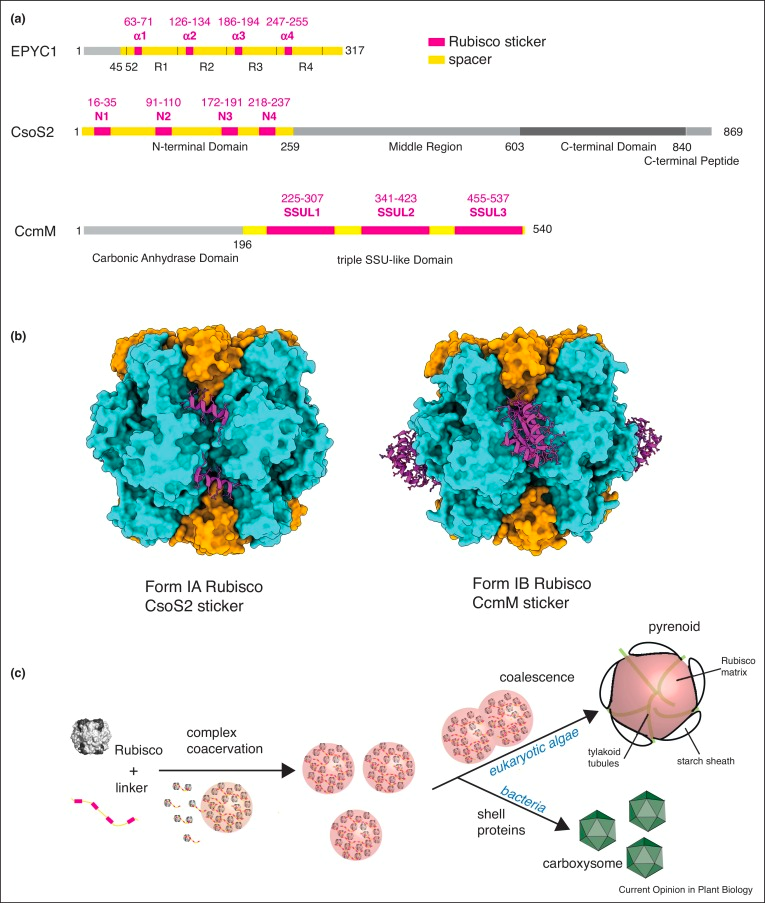
Review: Biomolecular condensates in photosynthesis and metabolism ($) (Curr. Opin. Plant Biol.)
Plant Science Research WeeklyBiomolecular condensates are membraneless organelles with the capacity to spatially concentrate biomolecules. Liquid-liquid phase separation (LLPS) is one mechanism of condensate formation in which demixing of macromolecules leads to separation into dense and light phases. Photosynthetic organisms like…

Small subunits can determine enzyme kinetics of tobacco Rubisco expressed in Escherichia coli (Nature Plants)
Plant Science Research Weekly
Rubisco is the enzyme responsible for the fixation of CO2 to ribulose-1,5-bisphosphate (RuBP) during photosynthetic reactions. However, this enzyme has some functional issues, such as a slow catalytic turnover rate and sensitivity to temperature and CO2, and it catalyzes a competing oxygenation process…

Back to where it came from: chloroplast expression of both Rubisco subunits helps functional enzyme analysis
Blog, Research, The Plant Cell, The Plant Cell: In BriefRubisco catalyzes the key carboxylation step in photosynthetic CO2 fixation and is probably the most abundant protein on Earth. The enzyme is famous for inefficient catalysis and the habit of binding oxygen instead of CO2 in one out of every four binding events, leading to photorespiration reactions…

Stimulating photosynthetic processes increases productivity and water-use efficiency in the field (Nature Plants)
Plant Science Research WeeklyYield potential in crops is determined by the efficiency of photosynthetic rates, which is a critical target for improvement. Previous studies have shown that photosynthetic carbon assimilation and plant biomass can be improved by the stimulation of either regeneration of RuBP (the five-carbon sugar…

Back to the Future for Plant Rubisco Bioengineering
Blog, Research, The Plant Cell, The Plant Cell: In a NutshellMartin-Avila et al. use synthetic biology to improve photosynthesis in tobacco by swapping out the endogenous small subunits of Rubisco for one coming from potato, among other things. Plant Cell https://doi.org/10.1105/tpc.20.00288
By Spencer Whitney, Elena Martin-Avila, Sally Buck, Timothy Rhodes,…

Rubisco accumulation factor 1 and carboxysome biogenesis (PNAS)
Plant Science Research Weekly
Carbon concentration mechanisms (CCMs) refer to a diverse set of strategies by which photosynthetic organisms increase the amount of carbon dioxide available to the carbon-fixing enzyme Rubisco. The cyanobacterial CCM relies on the carboxysome, a membraneless microcompartment with a core of densely…
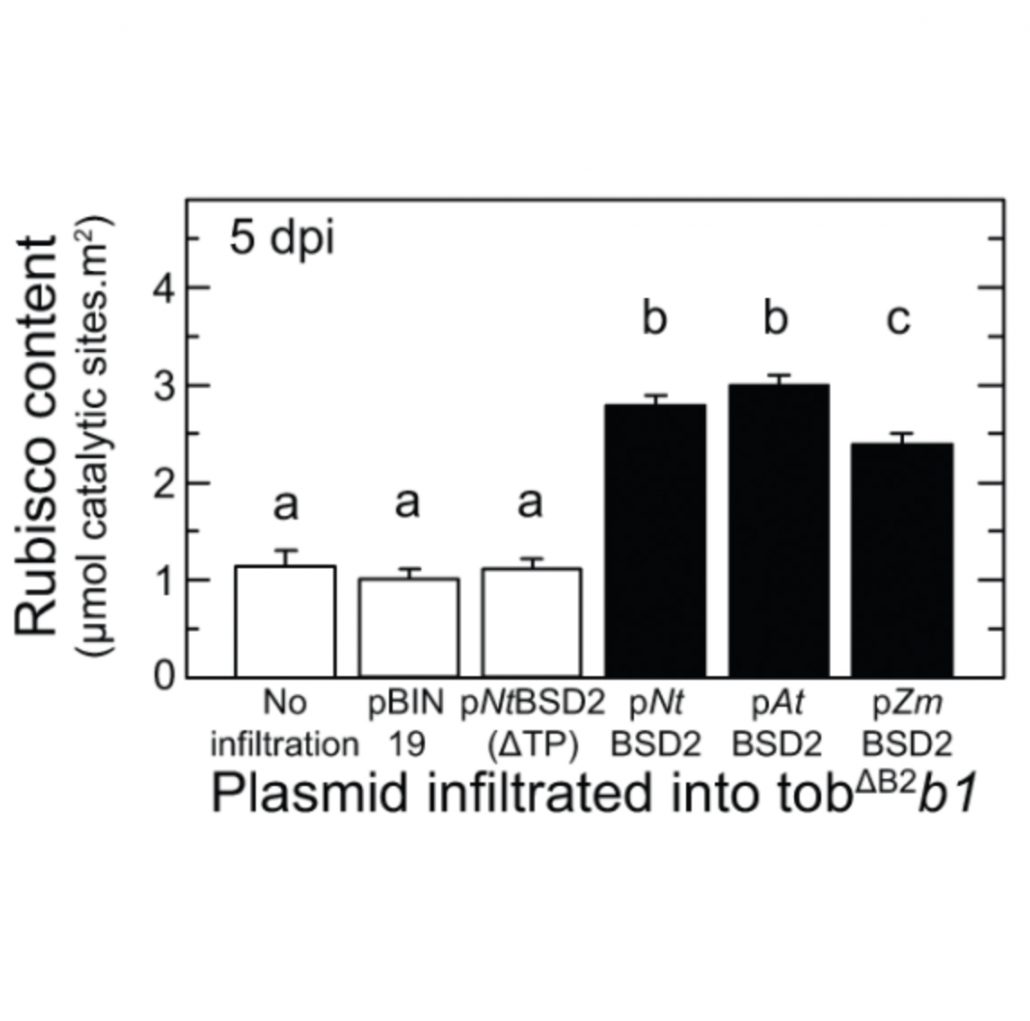
BSD2 is a Rubisco specific assembly chaperone, forms intermediary hetero‐oligomeric complexes and is non‐limiting to growth in tobacco (Plant Cell Environ)
Plant Science Research WeeklyThe rubisco holoenzyme is comprised of eight large subunits and eight small subunits (L8S8). Several auxiliary proteins are required to correctly assemble the functional protein. In this manuscript, Conlan et al investigate the chaperone function of one of these proteins, BSD2, in tobacco. The authors…
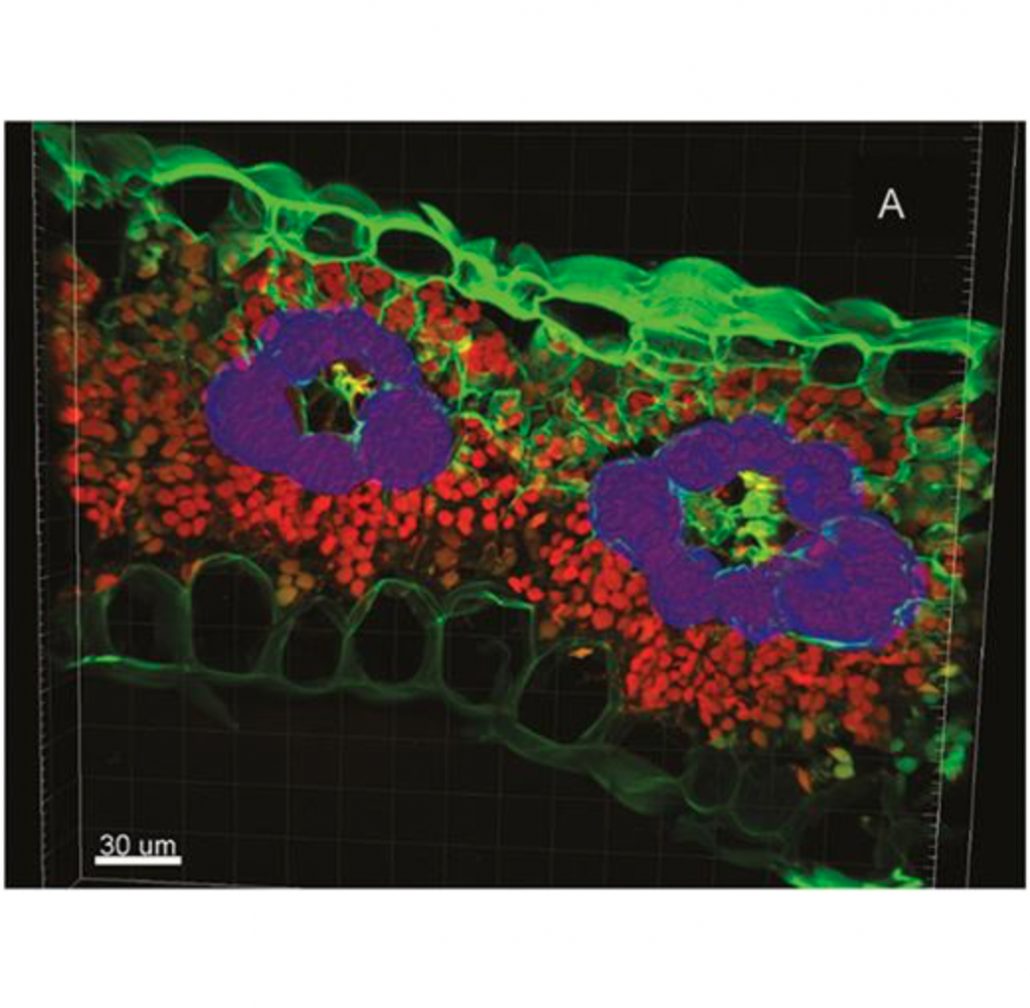
Bundle sheath chloroplast volume can house sufficient Rubisco to avoid limiting C4 photosynthesis during chilling (J Exp Bot)
Plant Science Research WeeklyIt has long been thought that C4 species generally perform less well than C3 species in cold environments as a consequence of a physical space restriction. C3 species tend to accumulate more rubisco under chilling stress to avoid limiting photosynthesis, but there is less capacity for this in C4 species…
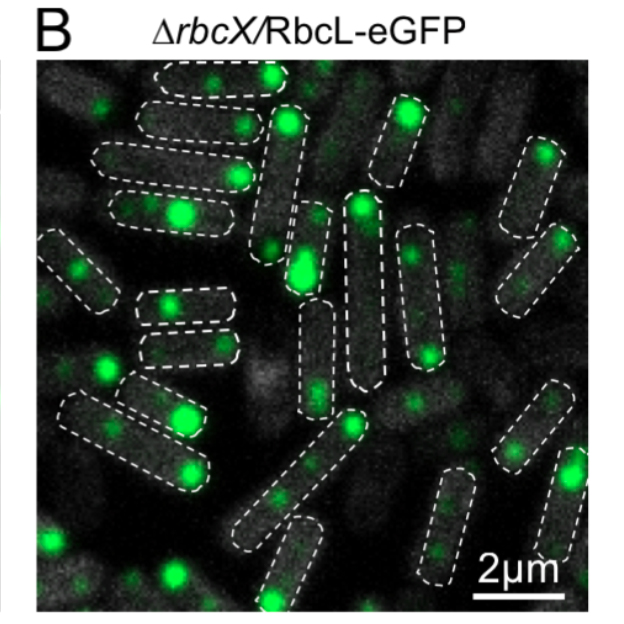
Roles of RbcX in carboxysome biosynthesis in the cyanobacterium Synechococcus elongates PCC 7942 (Plant Physiol)
Plant Science Research WeeklyIntroduction of the cyanobacterial carboxysome into C3 crops represents a viable strategy to increase photosynthetic conversion efficiency and boost crop yield. Key to this challenge is gaining a full understanding of the carboxysome system in cyanobacteria, including how these microcompartments assemble…