


Nectary Development in Petunia and Arabidopsis, a Sweet Story!
Research, The Plant Cell, The Plant Cell: In a NutshellMorel et al. study the nectar-producing organs in flowers and identify major regulators of nectary size https://doi.org/10.1105/tpc.18.00425
By Patrice Morel and Michiel Vandenbussche
Background: Nectaries are the organs that produce nectar, a sugary substance that motivates pollinators such as…

Proteins that Function in Lipid Droplets
Research, The Plant Cell, The Plant Cell: In a NutshellKretzschmar et al. study the proteome of lipid droplets and identify a protein that functions in protein degradation during germination https://doi.org/10.1105/tpc.18.00276
Background: Lipid droplets (LDs) are structures inside cells that store oil or fat, for example, in oil seeds. They were once…

Gatekeepers of Storage Lipids in Seeds: The Switch-Off Mechanism
Research, The Plant Cell, The Plant Cell: In a NutshellDeruyffelaere et al. investigate lipid mobilization during seed germination. Plant Cell https://doi.org/10.1105/tpc.18.00275
By Sabine D’ANDREA and Corine ENARD
Background: In cells, storage lipids are compartmentalized in specialized organelles called lipid droplets (LDs). The structure…
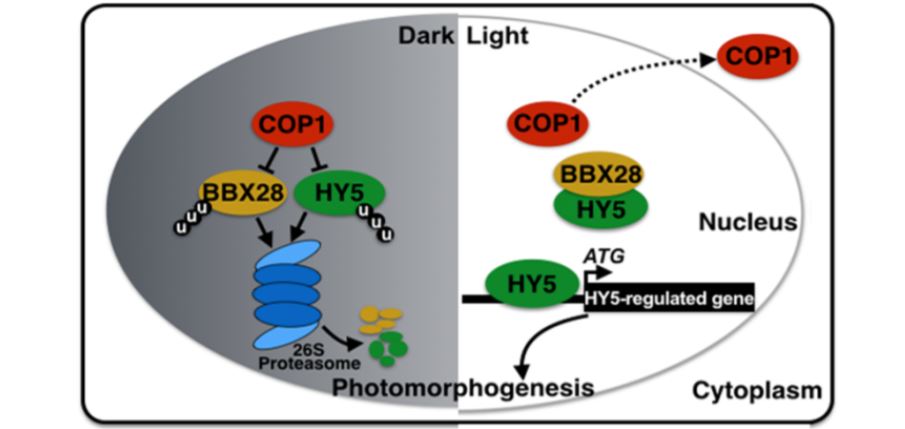
BBX28 Negatively Regulates Photomorphogenesis
Research, The Plant Cell, The Plant Cell: In a NutshellLin et al. show that B-BOX DOMAIN PROTEIN28 plays a role in regulating plant development in response to light signals. Plant Cell https://doi.org/10.1105/tpc.18.00226.
By Dongqing Xu and Xing Wang Deng
Background: Sunlight is one of the key environmental cues influencing plant growth and development.…

Auxin Function in a Brown Alga
Plant Physiology, Plant Physiology: On The InsideAuxin controls body plan patterning in land plants and it has been proposed to play a similar role in the development of brown algae (Phaeophyta) despite their distant evolutionary relationship with land plants. In flowering plants and many multicellular brown algae, the establishment of the apical-basal…

Re-establishment of PIN2 polarity after cell division (Nature Plants)
Plant Science Research WeeklyPlant cells have polarity, with the distribution of the auxin transporter protein PIN2 being a well-described example. Glanc et al. investigated how polarity is re-established following cell division. The authors showed that during cytokinesis, protein trafficking is directed towards the central cell…
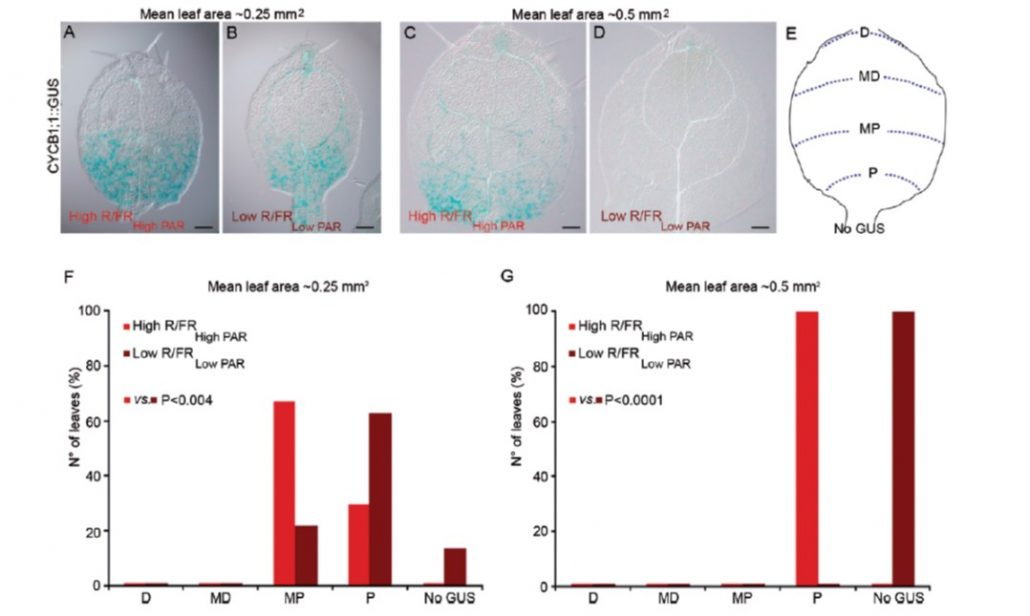
Leaf development in canopy shade (J. Exp. Bot)
Plant Science Research WeeklyVegetative shade affects the ratio of red (R) and far-red (FR) light; relative to sunlight, the R/FR ratio is decreased due to absorbance of photosynthetically-active R light by other leaves. Low R/FR ratios cause increased elongation of shaded plant stems and petioles, as the plants strive to raise…

Differential growth and shape formation in plant organs (PNAS)
Plant Science Research WeeklyThis paper is kind of fun because it explores plant leaf and petal shape from an engineering perspective, identifying “fundamental mechanistic insights into how nature invokes mechanics in the evolution of commonly found shapes in plant organs by differential growth.” For each organ, the authors…

Expert View. Merging genotypes: Scion/rootstock interactions (J Exp Bot)
Plant Science Research WeeklyGrafting is an ancient technology and still extremely important in horticulture and food production, including grapes for wine. Although much is known about what scion/shoot combinations work, less is known at the molecular and cellular level about successful grafts. How do two genetically different…