

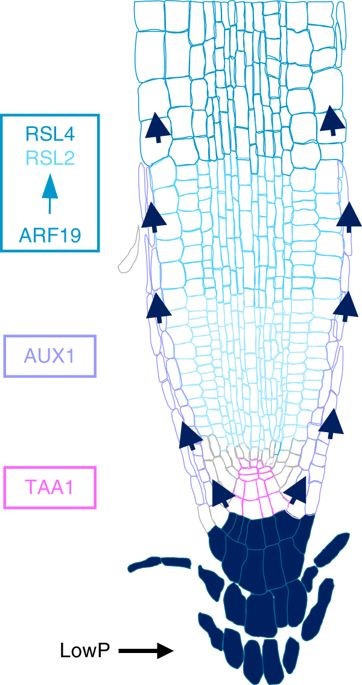
A mechanistic framework for auxin dependent Arabidopsis root hair elongation to low external phosphate (Nature Comms)
Plant Science Research WeeklyPlants respond to a low phosphate environment through increased elongation of root hairs. Bhosale et al. showed that low external P increases levels of the auxin (IAA) in Arabidopsis roots through the TAA1 (TRYPTOPHAN AMINO TRANSFERASE 1)-mediated auxin biosynthesis pathway. At the same time, the auxin…

Auxin Affects Capitulum Pattern Formation
Plant Physiology, Plant Physiology: On The InsideThe flower head (capitulum) is a morphological feature that defines the family Asteraceae (the daisy or sunflower family). A typical capitulum consists of many flowers (florets) and phyllaries (modified bracts) compressed into a single structure that mimics a single flower. Capitula commonly have two…
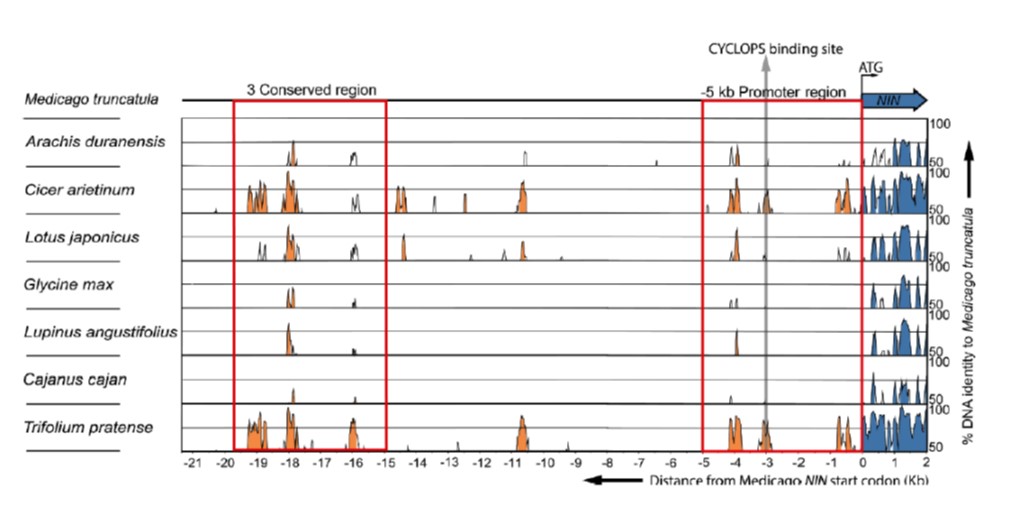
The secret of NIN (Nodule Inception) ($) (Plant Cell)
Plant Science Research WeeklyTwenty years ago, a genetic screen of Lotus japonicas identified NIN (NODULE INCEPTION), a transcription factor required for both early (infection thread) and late (nodule primordium development) stages of nodule formation. In daphne (a weak allele of NIN), infection threads form but not nodule primordia,…
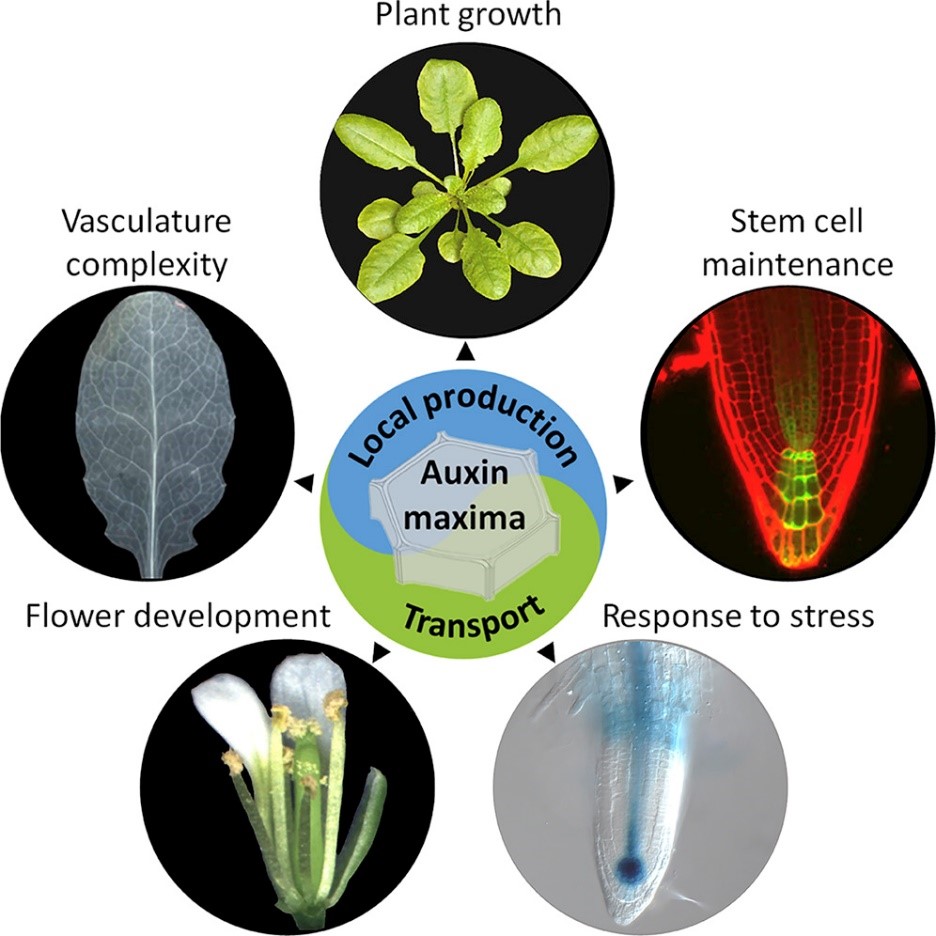
Local auxin biosynthesis is a key regulator of plant development ($) (Devel Cell)
Plant Science Research WeeklyMorphogenic gradients of auxin are essential for plant phenotypic plasticity. Polar auxin transport plays a central role in auxin maxima generation. The exquisite spatiotemporal expression patterns of auxin biosynthesis genes suggested that local sources of auxin may contribute to the formation of auxin…
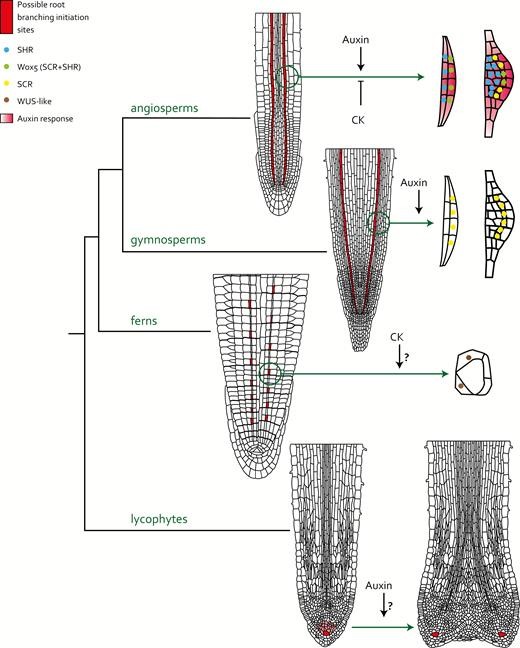
Review: The evolution of root branching: increasing the level of plasticity (J Exp Bot) ($)
Plant Science Research WeeklyWithout roots, plants are unable to gain height due to poor anchorage and are less fit for survival outside of humid environments. Root branching allows plants to better adapt to their environmental conditions and improves their capability to forage for water and nutrients. In this review, Motte and…
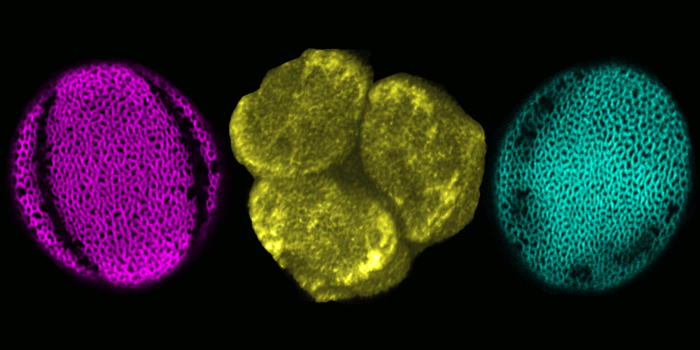
Exploring Pollen Patterns to Learn How Cells Create Distinct Domains
Research, The Plant Cell, The Plant Cell: In a NutshellLee et al. identify a protein involved in pollen aperture development and the formation of distinct membrane domains in microspores. https://doi.org/10.1105/tpc.18.00442
By Byung Ha Lee and Anna Dobritsa
Background: Pollen grains are famous for their ability to develop various intricate patterns…
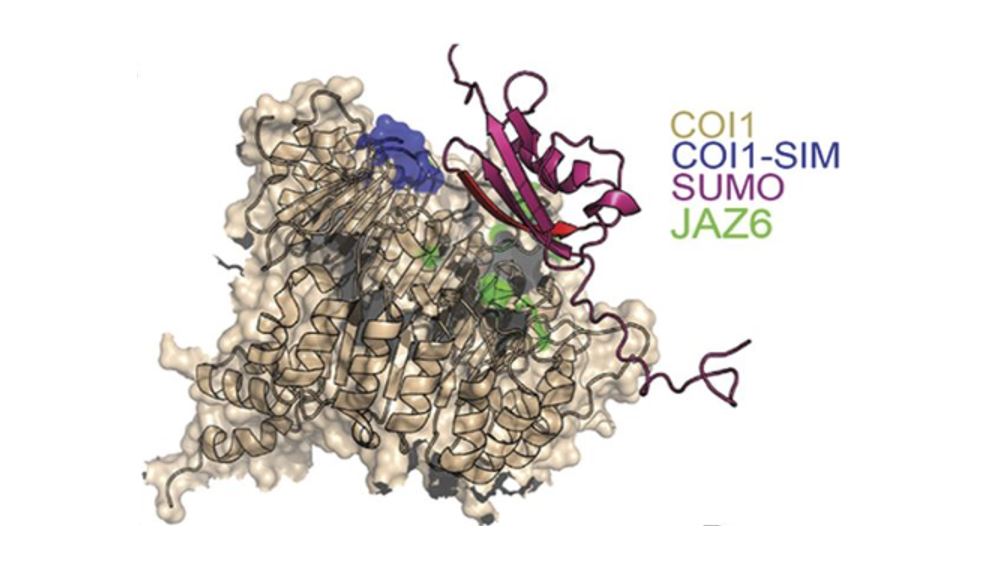
SUMO Aids Rapid Regulation of Hormone Responses
Research, The Plant Cell, The Plant Cell: In a NutshellSrivastava et al. identify a mechanism for rapid regulation of jasmonic acid signaling. Plant Cell https://doi.org/10.1105/tpc.18.00036
Background: The sessile nature of plants dictates that growth must be integrated with changes in the natural environment. Modulation of hormone signalling pathways…

Programmed Cell Death in the Root Cap
Research, The Plant Cell, The Plant Cell: In a NutshellHuysmans et al. identify cell death regulatory proteins in root cap cells. Plant Cell https://doi.org/10.1105/tpc.18.00293
Background: Some plants, such as giant sequoia trees, can grow into the “Largest Living Things on Earth.” Ironically, most of a tree’s biomass is actually not alive but…

PGI1 is a Determinant of Seed Yield
Research, The Plant Cell, The Plant Cell: In a NutshellBahaji et al. identify an important player determining seed yield in Arabidopsis. https://doi.org/10.1105/tpc.18.00312
Background: Oilseeds are major sources of calories for human consumption and have a significant agricultural and industrial value. Seed number and weight are the two main components…