

Plant Science Research Weekly: January 30, 2026
Review: Epidermis-derived secretory structures
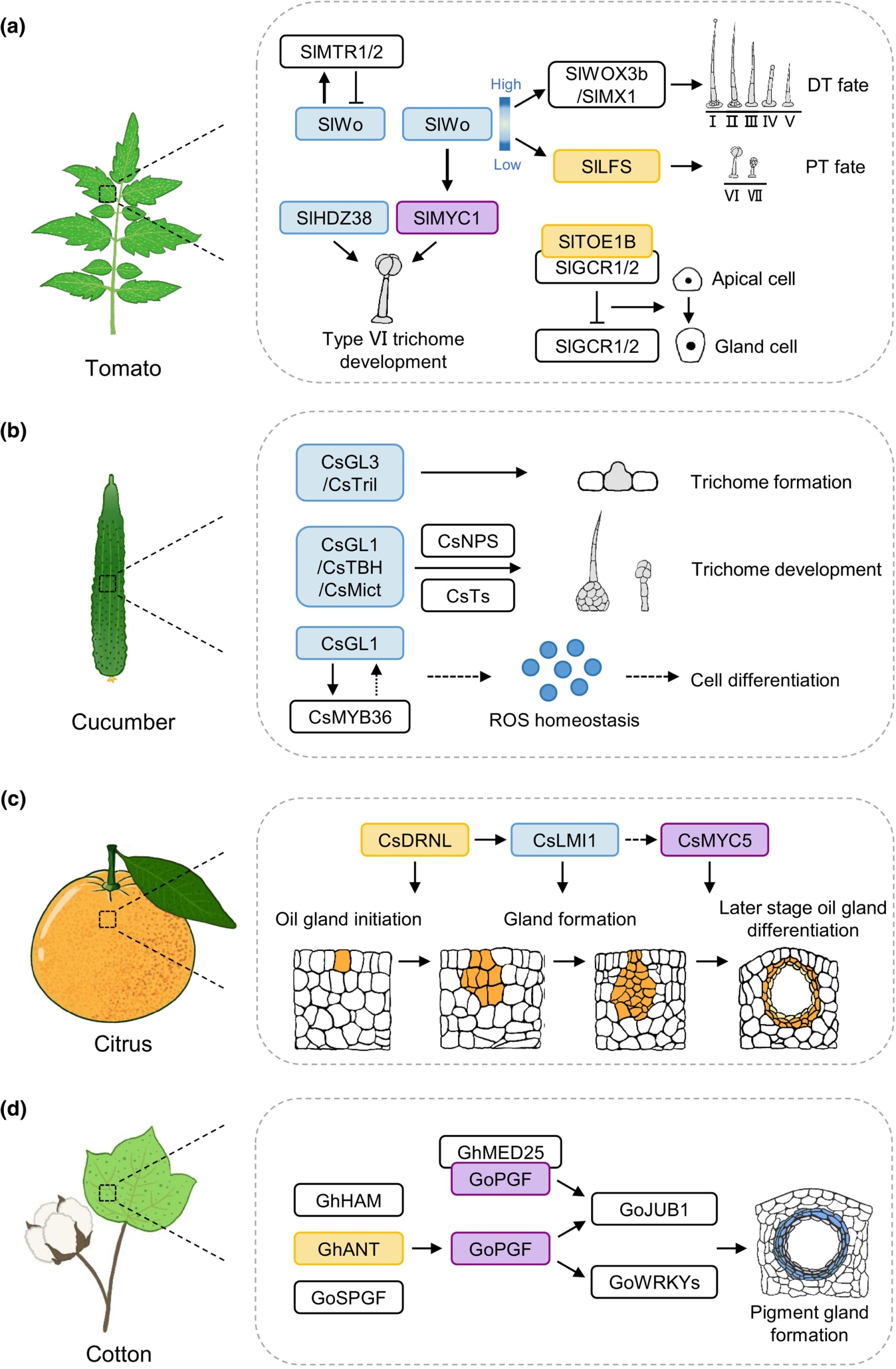 I’d never thought about the fact that there are two distinct types of epidermal-derived secretory structures, both mainly involved in stress responses and defense. Glandular trichomes (GTs) are well known structures that protrude outwards, but they are joined by subcutaneous secretory cavities (SCs) that also produce, store, and secrete substances, such as citrus oil glands. This interesting review by Xiang et al. describes these structures in terms of development and function, focusing on four species: tomato and cucumber (GT), and citrus and cotton (SC). As the authors summarize, their developmental pathways are similar, with some common gene families required for the formation of both structures. Similarly, jasmonic acid (JA) and its downstream MYC transcription factors are involved in the production of the specialized metabolites in both GT and SC. The authors conclude that understanding these unique “chemical factories” provides opportunities to engineer them for enhanced production of target metabolites. (Summary by Mary Williams @PlantTeaching.bsky.social) New Phytologist 10.1111/nph.70892
Commentary. Peptide-based biostimulants in sustainable agriculture: opportunities and innovations
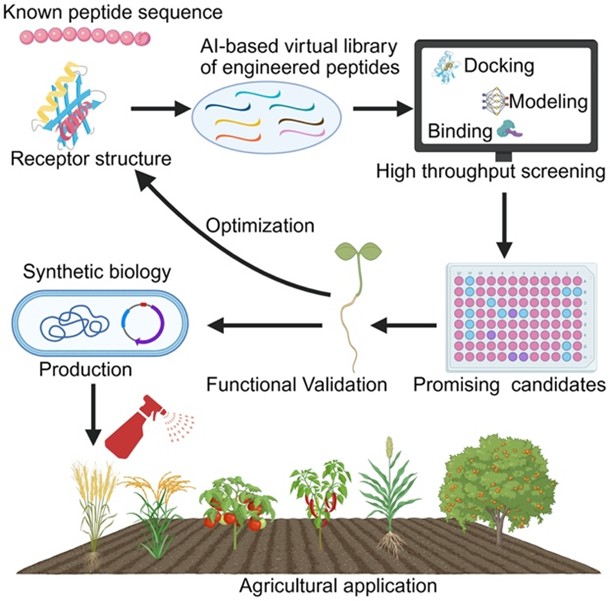 Naturally occurring biostimulants have emerged as promising tools for promoting sustainable agriculture and horticulture by enhancing plant performance while reducing reliance on chemical inputs. Among these, peptide-based biostimulants stand out for their high specificity, biodegradability, and overall environmental friendliness, making them attractive candidates for next-generation crop management strategies. Hu and colleagues highlight the remarkable flexibility of engineered peptides using CLAVATA3 (CLV3) and EMBRYO SURROUNDING REGION RELATED (CLE) peptides as a showcase. Through rational reconstruction via mutation, insertion, deletion, or the creation of peptide chimeras, CLV3/CLE peptides can be tailored to elicit diverse and highly targeted biological outcomes. For example, arabinosylation-modified CLV3/CLE peptides act as agonists that promote root growth inhibition. In contrast, substituting the conserved glycine residue within the CLE motif generates antagonistic peptides that enhance primary root elongation and increase lateral root density. Notably, a chimera between CLV3 and CLE25 can be perceived by both receptors, enabling simultaneous regulation of stem cell homeostasis in the apical meristem and the cambium. Despite these advantages, peptide-based biostimulants face limitations, including instability and poor cellular permeability. Looking ahead, the integration of advanced machine learning tools for high-throughput peptide design and screening promises to accelerate innovation, paving the way for more robust, precise, and scalable peptide biostimulants in sustainable plant production systems. (Summary by Ching Chan @ntnuchanlab @ntnuchanlab.bsky.social) J. Integr. Plant Biol. 10.1111/jipb.70093
Local CLE peptides promotes rapid, ABA-independent stomatal closure
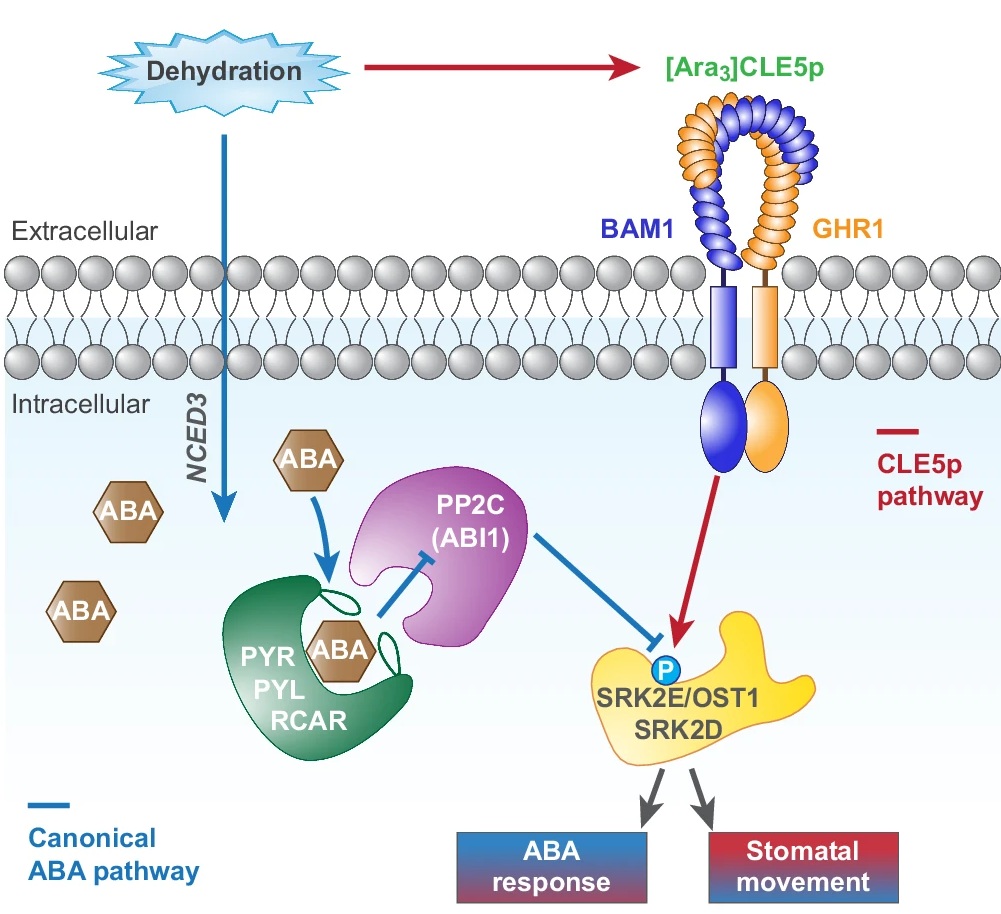 Guard cells might be some of the most well-characterized plant cells due to their accessibility, their importance in land plant survival, and their easily measured responses. Guard cells respond to several signals including light, CO2, vapor pressure deficit, ROS, and abscisic acid (ABA), which acts through a conserved a signaling cascade involving PYRs, PP2Cs, and SnRKs. Recently, the peptide CLE25p was identified that is produced in drought-stressed roots and is transported to leaves to promote guard cell closure. Following up on this work, Shimotohno et al. looked at stomatal responses across mutants of several other CLE peptides. They found that loss-of-function mutants of CLE5 show very high drought sensitivity, and that the CLE5 gene is rapidly induced by drought stress in leaves and guard cells. Interestingly, plants over- or under-expressing CLE5 have normal ABA levels, indicating that CLE5 does not act through ABA, although it does induce ABA-inducible genes. This signaling pathway is in contrast to that of the root-borne CLE25p signal, which acts by inducing ABA synthesis. Thus, CLE5 is a rapid, local drought-responsive signal that induces stomatal closure. (Summary by Mary Williams @PlantTeaching.bsky.social) Nature Comms. 10.1038/s41467-025-66392-6
The last one standing: A point mutation that suppresses the lazy quadruple mutant phenotype
Gravity is perceived by amyloplast sedimentation in gravity-sensing cells, a process relying on the relocalization of LAZY proteins from the amyloplast to the plasma membrane. Increasing evidence has emerged on this new aspect of gravity sensing, and in this recent publication, Yoshihara and Spalding highlight a new component of the pathway. The lazy1234 quadruple mutant shows an antigravitropic phenotype, where the shoot grows downward and the root grows upward relative to the gravity vector. A suppressor screen therefore is quite straightforward, selecting for shoots growing straight upward. This screen identified suppressor of lazy quadruple mutant 1 (slq1), in which the asymmetric auxin distribution, quantified by the expression of IAA5 in the upper and lower sides of the stem, was partially restored. Introducing a point mutation (S149F) disrupts SLQ1’s subcellular localization, dimerization, and supramolecular structure. A homologous protein, SETH6, colocalizes with SLQ1 and is required for proper supramolecular assembly of SLQ1. Another piece of the LAZY puzzle found! (Summary by Sophie Zoe Farkas @sophiezoe.bsky.social) PNAS 10.1073/pnas.2510934122
When plants feel the bite: Mechanoperception and systemic defense signaling
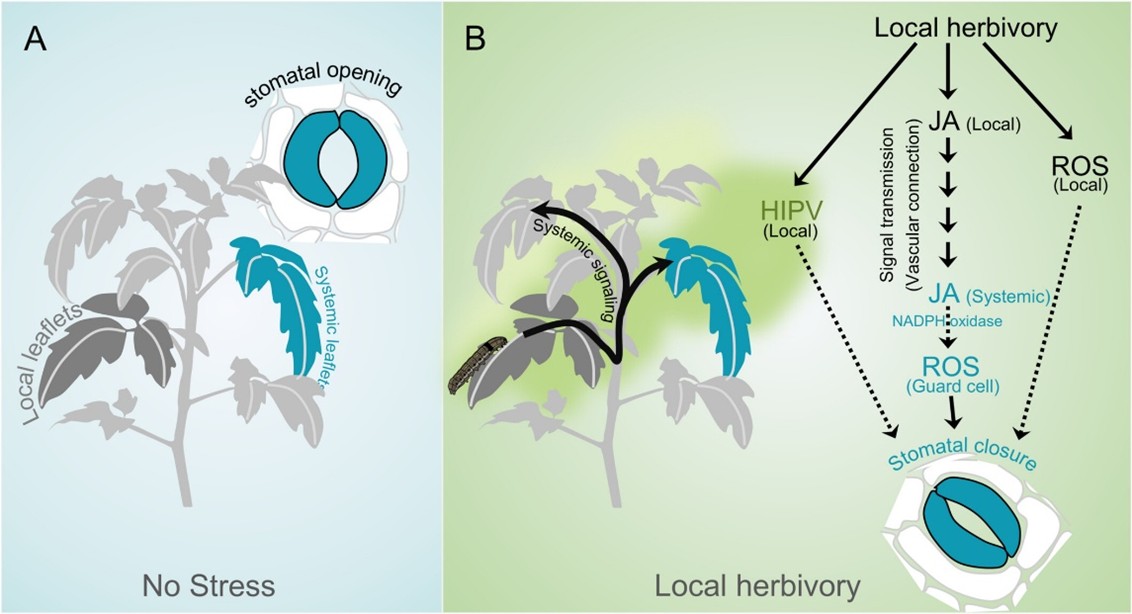 Plants may appear silent, yet they can rapidly perceive and respond to environmental challenges. Despite lacking sensory nerve cells like animals, plants rely on mechanoperception to detect stimuli such as touch, wind, and herbivore attack. This framework has led researchers to uncover how mechanical cues are perceived, integrated into defense signaling networks, and transmitted over long distances via molecular sensors and electrical signaling processes. A rapid, systemic downregulation of photosynthesis is a well-known hallmark of herbivore attack. Lin and colleagues reveal that this response is largely driven by stomatal closure, triggered by insect-derived cues combining wounding and oral secretions (WOS). To dissect the underlying mechanisms, the authors evaluated several potential causal factors, including herbivore-induced plant volatiles (HIPVs), hydrogen peroxide (H₂O₂), jasmonic acid (JA), and abscisic acid (ABA). WOS treatment not only elicited strong local JA burst in attacked leaflets, but also in adjacent and distal leaflets. Mutant analyses demonstrated that impairments in JA or ABA biosynthesis, as well as disrupted ROS signaling, compromise systemic stomatal closure. These findings were further supported by grafting and microscopy-based imaging experiments. Collectively, this work positions JA as a central integrator of mechanosensory and chemical signals, promoting coordinated systemic stomatal closure through H₂O₂ signaling in guard cells. Looking ahead, such insights deepen our understanding of plant “sensory” biology and open new avenues for enhancing crop resilience against herbivory by targeting long-distance defense signaling pathways. (Summary by Ching Chan @ntnuchanlab @ntnuchanlab.bsky.social) Plant, Cell & Environment 10.1111/pce.70404
Rapid shifts in the patterns of gene expression shapes flowering plant diversity
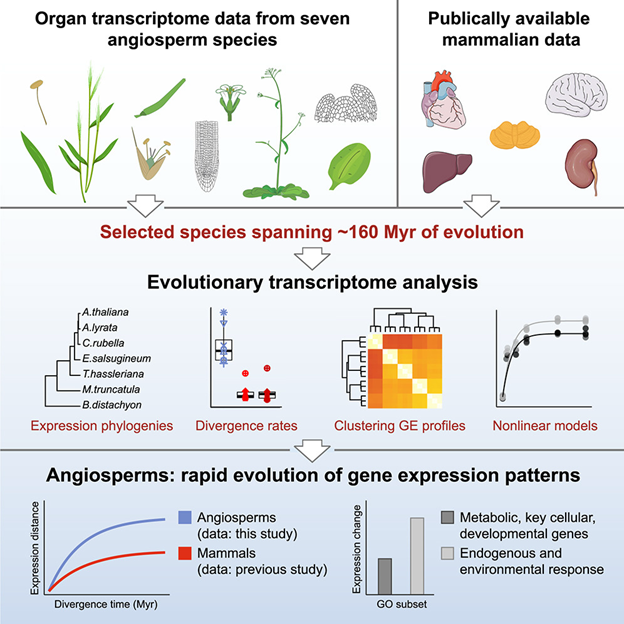 Flowering plants are the most widespread group of plants, occupying almost every environment on our planet. They play important roles in maintaining the earth’s biodiversity and have a remarkably high rate of diversification. What’s always puzzled scientists is how they became so incredibly diverse. To explore this Schuster and colleagues looked at how gene activity changes across different plant organs and across species, instead of focusing on changes in DNA sequence. What they found is striking: gene expression in plant organs evolves much faster than in mammalian organs. Even organs that look similar, like leaves or flowers, can have very different expression patterns. It’s interesting to note that different portions of the plant exhibit different behaviors. Reproductive tissues such as stamens and pollen show especially rapid changes in gene expression, while on the other hand tissue takes part in growth and maintenance, like leaves and meristems, are much more stable. When they looked at gene function, they found that genes that change the most are those involved in responding to the environment, things like stress, signals, and external cues, whereas genes required for basic cellular functions and development are less flexible. Together, these findings highlight the angiosperm gene expression patterns have evolved quickly, which may be one of the reasons flowering plants have been so successful and so diverse. Since plants can’t move, this kind of rapid evolution is probably crucial part of their survival strategy. This ability to rapidly fluctuate gene expression might help plants adapt to new habitat quickly, survive climate changes, and ultimately diversify into many species and spread rapidly. Overall, this study offers a conceptual framework and practical tools for understanding plant adaptation, conservation, and even crop improvement in the future. (Summary by Kavita Joshi @JoshiKvita) Cell 10.1016/j.cell.2025.12.015
Infected parents confer nematode resistance to offspring via epigenetic modifications
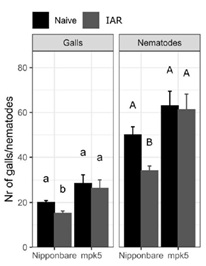 Can the stress experienced by parents enhance the resilience of their offspring? In this study, Atighi et al. investigated whether rice plants can inherit resistance against the root-knot nematode Meloidogyne graminicola from their infected parents. Their research demonstrates that offspring of nematode-infected plants exhibit significantly higher resistance to the pathogen compared to offspring of control healthy plants. This phenomenon, known as Intergenerational Acquired Resistance (IAR), is not driven by changes in the DNA sequence, but by epigenetic modifications. Focusing their molecular analyses on root tissues, the authors observed that, upon nematode attack, IAR plants display a faster and stronger transcriptional defense response compared to control plants. Comparative analysis of the epigenetic landscape reveals that the genome of IAR plants is maintained in a poised state. Specifically, this priming effect is partially linked to elevated levels of H3K4me3, a histone methylation mark associated with gene activation, on genes involved in ET and ABA signaling. A central player identified in this pathway is the kinase OsMPK5. The study reveals that OsMPK5 locus is epigenetically marked for rapid activation in primed plants. Notably, using an OsMPK5 RNAi line, the intergenerational protective effect was abolished, demonstrating the key role of this enzyme in stress memory. (Summary by Emma Olmi @olmiemma.bsky.social) J. Exp. Bot. 10.1093/jxb/erag020
Not a Fungi after all: New clues to the identity of Prototaxites
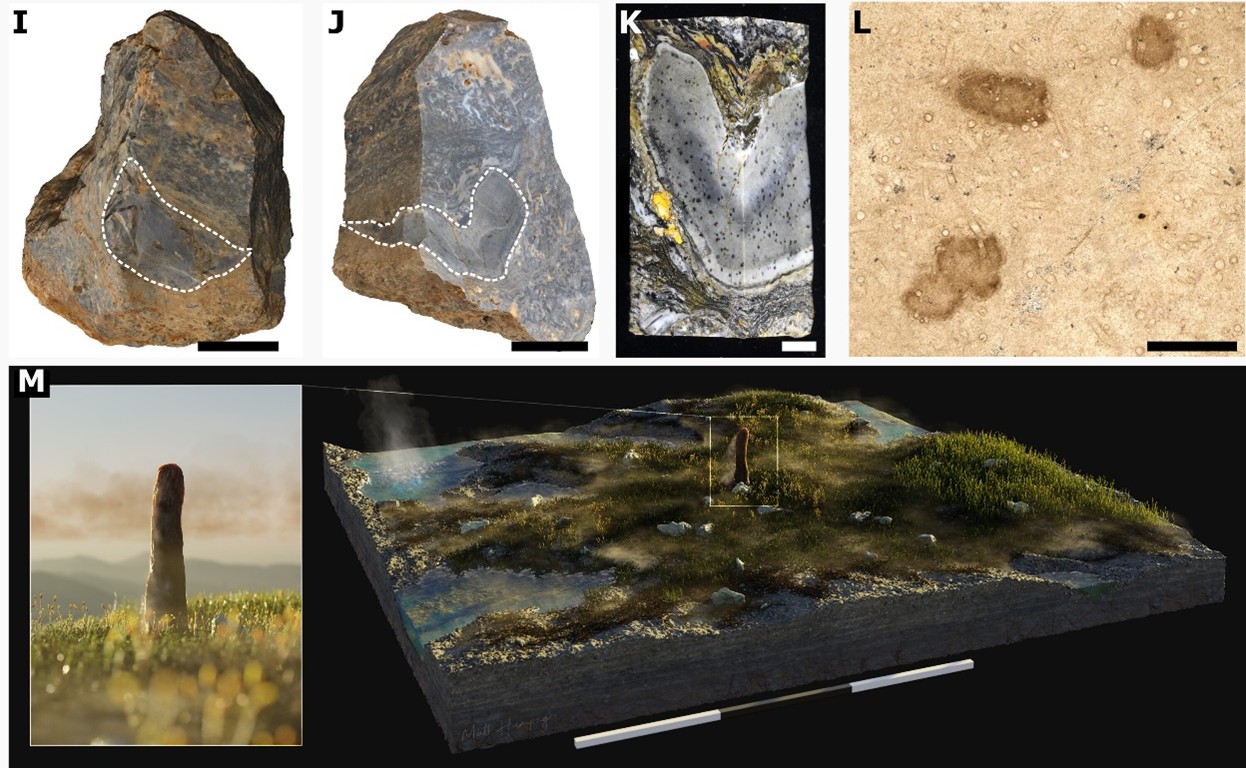 The colonization of land by plants was a crucial event in Earth’s history that fundamentally transformed our planet’s surface. Early plants were small and structurally simple, but terrestrial ecosystems also included other, non-plant organisms. Among the most striking were enigmatic organisms known as Prototaxites, which appear in the fossil record around ~ 420 million years ago and reached several meters in height, making them among the largest known terrestrial organisms of their time. Since their discovery over 165 years ago, the taxonomic identity of Prototaxites has been debated, with being a member of Fungi long considered the leading hypothesis. In a new study, Loron et al. challenge this view using exceptionally preserved Prototaxites taiti fossils from the Rhynie chert. By directly comparing P. taiti with contemporaneous fossil fungi from the same site, the authors provide rare insights into the morphology and molecular composition of this mysterious organism. Using advanced imaging approaches, including CLSM, Airyscan microscopy, and 3D reconstruction, they reveal banded arrangements of large tubes and branched “medullary spots” that are distinct from both fossil and modern fungi. Strikingly, the authors also identify annular thickenings reminiscent of plant vasculature, suggesting convergent evolution of structures involved in water transport and mechanical support. Molecular fingerprinting further shows that, unlike fungal fossils, P. taiti lacks chitin or related compounds, indicating a fundamentally different cell wall composition derived from now-extinct components. Together, these findings position Prototaxites as an independent lineage that likely played a key role in shaping early terrestrial ecosystems. (Summary by Katarina Kurtović, katarinakurtovic.bsky.social) Science Advances 10.1126/sciadv.aec6277

