


Peripheral? Not Really! The Extracellular Arabinogalactan Proteins Function in Calcium Signaling
Blog, Research, The Plant Cell, The Plant Cell: In BriefArabinogalactan proteins (AGPs) are a family of extracellular proteoglycans that existed in land plants and algae (Johnson et al., 2017). AGPs are part of the hydroxyproline-rich glycoprotein (HRGP) superfamily that also includes extensins and proline-rich proteins. Based on the protein sequence, a glycosylphosphatidylinositol…

Chemical labeling of proteins in live plant cells
Blog, Research, The Plant Cell, The Plant Cell: In a NutshellIwatate et al. demonstrate that SNAP-tag technology can be used to label plant cell proteins.
Plant Cell https://doi.org/10.1105/tpc.20.00439
By Ryu J. Iwatatea,b, Akira Yoshinaria, Noriyoshi Yagia, Wolf B. Frommera,c, and Masayoshi Nakamuraa
a Institute of Transformative Bio-Molecules (WPI-ITbM),…
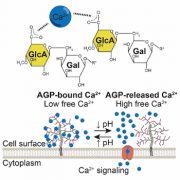
The role of arabinogalactans in plant development
Blog, Research, The Plant Cell, The Plant Cell: In a NutshellLópez-Hernández et al. reveal that arabinogalactans function in calcium signaling from outside to inside the cell.
Plant Cell https://doi.org/10.1105/tpc.20.00027
Federico López Hernández and Paul Dupree
University of Cambridge, Department of Biochemistry, Tennis Court Road, Cambridge,…
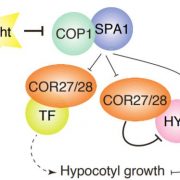
How COR27 and COR28 Promote Hypocotyl Growth: Bind to COP1 And Suppress HY5 Activity
Blog, Research, The Plant Cell, The Plant Cell: In BriefSeedling growth and development rely on the successful integration of information from external signals, such as light and temperature, and endogenous processes, such as the rhythmic ticking of the circadian clock. Together, these signaling pathways tune hypocotyl elongation to allow seedlings to escape…
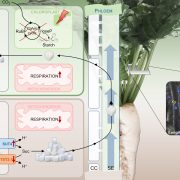
Chilling Lessons from Sugar Beets: Switching Sources
Blog, Research, The Plant Cell, The Plant Cell: In a NutshellRodrigues et al. found that the source and sink identities of sugar beet shoots vs. taproots are switched upon vernalization (chilling) due to a cold-induced reversal of the phloem stream. Plant Cell https://doi.org/10.1105/tpc.20.00072
By Cristina Martins Rodriguesa, Christina Müdsamb and Benjamin…
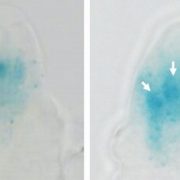
The Sounds of Silence: Cell Fate Restriction and RNA Silencing in Plant Ovules
Blog, Research, The Plant Cell, The Plant Cell: In BriefGamete formation in sexually reproducing plants begins with formation of a “mother cell” that undergoes meiosis to generate haploid spores. Haploid spores further develop into gametophytes within which gametes differentiate. In flowering plants (angiosperms), including crop systems, the female mother…
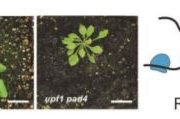
On UPF Proteins, Baking Cookies, and the Many Targets of Nonsense-Mediated RNA Decay
Blog, Research, The Plant Cell, The Plant Cell: In BriefWhen we cut out cookies from rolled-out dough, we often end up with unwanted dough scraps, and sometimes the dough sticks to the cookie-cutter, resulting in misshapen cookies. Just like these misshapen cookies, faulty or aberrant RNAs can arise in cells due to mistakes during transcription, RNA processing,…
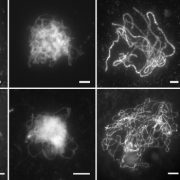
Oryza sativa RNA-dependent RNA polymerase 6 modulates rice meiosis
Blog, Research, The Plant Cell, The Plant Cell: In a NutshellLiu et al. connect small RNA biogenesis and meiotic recombination by examining RNA-dependent RNA polymerase 6. The Plant Cell https://doi.org/10.1105/tpc.20.00213
By Changzhen Liu, Yi Shen and Zhukuan Cheng
Background: Meiosis is a specialized cell division that takes place in sexually…
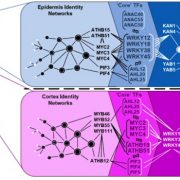
Back to the Roots of Plant Immunity
Blog, Research, The Plant Cell, The Plant Cell: In a NutshellRich-Griffin et al. uncover cell type-specific gene networks that function in plant immunity in Arabidopsis roots. The Plant Cell (2020) https://doi.org/10.1105/tpc.20.00154
By Charlotte Rich-Griffin1, Ruth Eichmann1,2, Sascha Ott3,4,5 & Patrick Schäfer1,2
1School of Life Sciences,…