

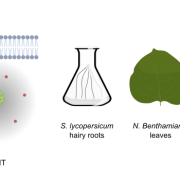
A Toolkit for Proximity-Dependent Biotinylation in Plants
Blog, Research, The Plant Cell, The Plant Cell: In a NutshellIn a systematic multi-lab study, Arora et al. apply a variety of proximity-dependent biotin labelling approaches using several different plant systems and bait proteins, to demonstrate its wide applicability for the plant community. Plant Cell https://doi.org/10.1105/tpc.20.00235.
Background: Protein-protein…

Recognizing Plant Cell authors: Nan Nan
The Plant Cell, The Plant Cell: Author ProfilesNan Nan, co-first author of A DNA Methylation Reader-Chaperone Regulator-Transcription Factor Complex Activates OsHKT1;5 Expression during Salinity Stress
Current position: Work in College of Plant Protection, Jilin Agriculture University
Education: PhD at Key Laboratory of Molecular Epigenetics…

Recognizing Plant Cell authors: Jie Wang
The Plant Cell, The Plant Cell: Author ProfilesJie Wang, co-first author of A DNA Methylation Reader-Chaperone Regulator-Transcription Factor Complex Activates OsHKT1;5 Expression during Salinity Stress
Current Position: Ph.D. candidate
Education: Key Laboratory of Molecular Epigenetics of the Ministry of Education (MOE), Northeast Normal University,…
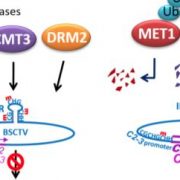
The Great Escape: How a Plant DNA Virus Hijacks an Imprinted Host Gene to Avoid Silencing
Blog, Research, The Plant Cell, The Plant Cell: In BriefPlant viruses are a major threat to global food security. The large family of geminiviruses has a broad pathogenic impact on economically important crops such as maize, tomato, and cassava and causes millions of tons of losses per year worldwide (Rojas et al., 2005). Geminiviruses possess a circular…
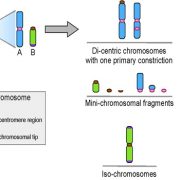
How do Chromosomes Evolve via Unstable Intermediates?
Blog, Research, The Plant Cell, The Plant Cell: In a NutshellYalin Liu, Handong Su, Jing Zhang, et al. explore centromere birth and death by inducing rearrangements via pollen irradiation in maize. Plant Cell https://doi.org/10.1105/tpc.20.00389
Background: The centromere is one of the most important components of chromosomes. Every normal chromosome has one…

More Than Just a FAD(5): Unsaturated Fatty Acids in Chloroplasts Elicit Protective Autoimmunity
Blog, Research, The Plant Cell, The Plant Cell: In BriefArabidopsis (Arabidopsis thaliana) chloroplast-division mutants that have abnormally large chloroplasts have been around for quite some time, not only because they can be identified relatively easily through screening (Pyke & Leech 1991) and because their spectacular morphology sparks intrigue, but…

Plant Metabolic Redox Dynamics–Live!
Blog, Research, The Plant Cell, The Plant Cell: In a NutshellSteinbeck et al. investigate in vivo NAD redox dynamics in Arabidopsis. Plant Cell https://doi.org/10.1105/tpc.20.00241
By Janina Steinbeck and Markus Schwarzländer
Background: All organisms rely on their cellular metabolism to live, develop, grow, and procreate. Metabolism provides the energy,…
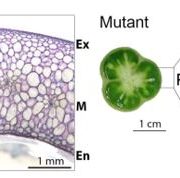
Tempting Fate: A Guanylate-Binding Protein Maintains Tomato Fruit Cell Differentiation
Blog, Research, The Plant Cell, The Plant Cell: In BriefTissues are composed of specialized cell types. As a cell matures, it acquires the characteristics associated with a specific identity, or fate. This process is called cell differentiation and is crucial for proper organ development. However, after a differentiation program is initiated, the mechanisms…
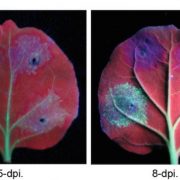
A Geminivirus Exploits the Host Machinery to Inhibit Methylation-mediated Defense Responses
Blog, Research, The Plant Cell, The Plant Cell: In a NutshellChen et al. uncover a strategy used by a DNA geminivirus to exploit the host machinery in order to inhibit methylation-mediated defense responses when establishing infection. The Plant Cell (2020) https://doi.org/10.1105/tpc.20.00249.
Background: Geminiviruses belong to one of the largest and most…