

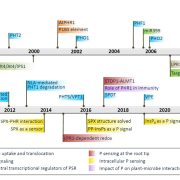
Review. Milestones in understanding phosphorus uptake, transport, sensing, use, and signaling
Plant Science Research WeeklyPhosphorus (P) is an essential nutrient and critical component of nucleic acids, phospholipids, and other molecules. Yang et al. provide a historical (since 1996) overview of the processes controlling its uptake and use. Plants take up P from the rhizosphere primarily in the form of orthophosphate (Pi).…
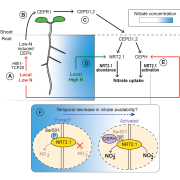
Review: CEP hormones at the nexus of nutrient acquisition and allocation, root development, and plant–microbe interactions
Plant Science Research WeeklyC-TERMINALLY ENCODED PEPTIDE (CEP) is a multigene family of peptide hormones originally described as systemic long-distance signals in response to nitrogen limitation. Over the years since the discovery of these peptide hormones, the literature on CEP biology has expanded the repertoire of developmental…

Review: Stem cells for crop improvement
Plant Science Research WeeklyPlants, like animals, have small populations of stem cells capable of differentiating into other tissues, but in plants these stem cell populations are even more long-lived and versatile. Stem cells in plants include the meristems (shoot and root apical meristems, inflorescence and axillary meristems)…

Review: Salicylic acid in plant immunity and beyond
Plant Science Research WeeklySalicylic acid (SA) is a pivotal natural compound in plant science and finds applications in herbal medicine; specifically, aspirin, the renowned anti-inflammatory drug and pain reliever, is a derivative of SA. As summarized in this review by Spoel and Dong, within plants SA serves as a crucial phytohormone…
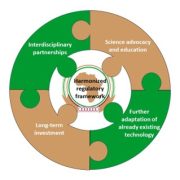
Comment: Unlocking the potential of agricultural biotechnology in Africa
Plant Science Research WeeklyAgricultural Biotechnology has the potential to significantly increase production, alleviate hunger, and improve global food security. However, its adoption in Africa lags behind other regions, facing challenges rooted in strict and varying policies, inadequate infrastructure, and insufficient economic…
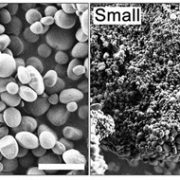
A novel starch granule size distribution in Arabidopsis thaliana is associated with differences in phosphorylation
Plant Science Research WeeklyDuring the day, starch is synthesized in the chloroplasts of leaves and stored as starch granules, before being degraded in the subsequent night. In Arabidopsis thaliana, starch granules are discoid in shape. Some mutants have round or elongated granules, yet all these mutants have a homogenous starch…
Shooting yourself in the foot: Obligate biotrophic pathogen induces protective microbiome in Arabidopsis
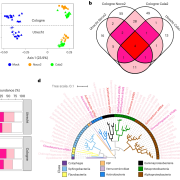
Plant Science Research WeeklyObligate plant pathogens cannot survive without their host plant. Therefore, understanding how the plant and its microbiome respond to the obligate biotrophs has real challenges in making sure that the response that is being monitored is not an artifact of the experimental step up. A recent study by…
PSKR1 balances the plant growth–defence trade-off in the rhizosphere microbiome
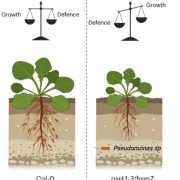
Plant Science Research WeeklyPlants are colonized by numerous beneficial microorganisms in the rhizosphere, including Pseudomonas fluorescens, that provide benefits including nutrient acquisition and pathogen protection. Host plants must tune their immune systems to restrict microbial overgrowth, while avoiding overstimulation of…

PLANTdataHUB- One plant research data platform to rule them all
Plant Science Research WeeklyResearch Data Management for plant scientists just got easier with the newly released PLANTdataHub. In this platform, you can register your data which will be organized in Annotated Research Contexts (ARCs). ARCS are Findable Accessible Interoperable Reproducible (FAIR) digital Objects which are the…