

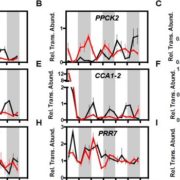
Silencing phosphoenolpyruvate carboxylase phosphorylation in a CAM plant
Blog, Plant Science Research Weekly, Research, Research BlogMany plants living in arid environments conserve water by taking up CO2 at night through the action of the enzyme phosphoenolpyruvate carboxylase (PPC); this process, which is widespread in the Crassulaceae family, is known as Crassulacean acid metabolism (CAM). The nocturnal activity of PPC is regulated…
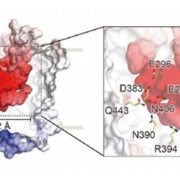
A plant protein structure from the MATE family, an important family of transporters ($)
Blog, Plant Science Research Weekly, Research, Research BlogThe MATE (multidrug and toxic compound extrusion) family is found in all three domains of life. Proteins in this family are secondary transporters, functioning as sodium or proton/organic cation antiporters. This family has diverse functions in plants, including vacuolar sequestration of alkaloids,…
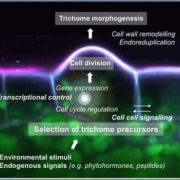
Update: Plant Glandular Trichomes: Natural Cell Factories of High Biotechnological Interest
Blog, Plant Physiology, Plant Physiology: Updates, Research, Research BlogBy Alexandre Huchelmann, Marc Boutry, and Charles Hachez
Abstract
Multicellular glandular trichomes are epidermal outgrowths characterized by the presence of a head made of cells that have the ability to secrete or store large quantities of specialized metabolites. Our understanding of the transcriptional…
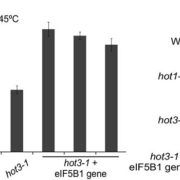
Some Like it HOT: Protein Translation and Heat Stress in Plants
Blog, Research, The Plant Cell: In BriefThe ability to acclimate to high temperatures that are normally lethal is common to virtually all organisms on the planet. A short exposure to milder heat stress informs organisms that they should ready themselves in case they experience even warmer conditions. Acquired thermo-tolerance in plants is…
Opinion: Beyond editing to writing large genomes ($)
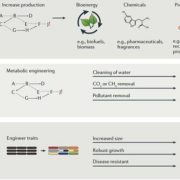
Blog, Plant Science Research Weekly, Research, Research BlogThis is an era of rapid acceleration of our ability to both read and write genomes. Chari and Church point to a future in which making a small number of changes in a genome (editing) is supplanted by making hundreds or thousands or more of changes, essentially whole-genome editing. Basically, the authors…
Review: Promiscuity, impersonation and accommodation: Evolution of plant specialized metabolism ($)
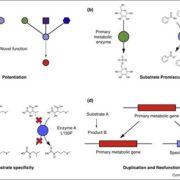
Plant Science Research Weekly, Research, Research BlogThe huge set of chemical pathways beyond the conserved primary metabolic network is described as specialized metabolism (formerly known as secondary metabolism). The diversity of specialized metabolites is due to recent evolutionary innovations in enzyme function, as reviewed by Leong and Last. Key processes…
Review: Cutin from agro-waste as a raw material for the production of bioplastic ($)
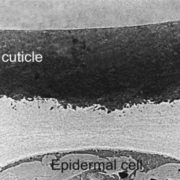
Blog, Plant Science Research Weekly, Research, Research BlogWhen we think about making things from plant biopolymers, we often think about cellulose, the “most common natural polymer on Earth, with an estimated annual biomass production between 1011 and 1012 tons” or ligin, with a biomass production on the order of 107 tons per year. Heredia-Guerrero et al.…

Review: Senescence and nitrogen use efficiency in perennial grasses for forage and biofuel production ($)
Blog, Plant Science Research Weekly, Research, Research BlogMuch of our understanding of the molecular processes of senescence and nutrient remobilization comes from annual plants. Yang and Udvardi explore how these processes take place in perennial grasses including important biofuel grasses switchgrass (Panicum virgatum) and miscanthus (Miscanthus×giganteus).…
Review: The Chlamydomonas CO2-concentrating mechanism and its potential for engineering photosynthesis in plants
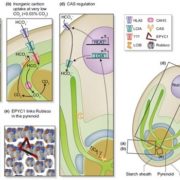
Blog, Plant Science Research Weekly, Research, Research BlogMany green algae have the ability to concentrate CO2 to enhance their photosynthetic performance. Mackinder reviews these algal CO2-concentrating mechanisms (CCMs) and what steps would be required to introduce them into higher plants. He also compares progress and pitfalls towards introducing algal CCMs…