


Review: Embracing the unknown: disentangling the complexities of the soil microbiome ($)
Blog, Plant Science Research Weekly, Research, Research BlogThe soils microbiome is of course hugely complex and immensely variable. Metagenomics tools allow us to describe the diversity of the soil microbiome, but what that diversity means is best grasped when the microbiome is considered in terms of its ecological functions, as described in this Tansley Insight…
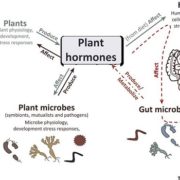
Opinion: Plant hormones: Key players in gut microbiota and human diseases?
Blog, Plant Science Research Weekly, Research, Research BlogChanclud and Lacombe have written an intriguing Opinion article asking to what extent plant hormones affect animal gut microbiota and human disease. In support of this question, they observe that many microbes and even some animals can perceive and respond to plant hormones, or produce plant-hormone…
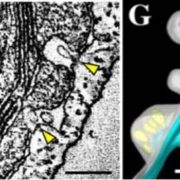
Three-dimensional analysis of chloroplast structures associated with virus infection
Blog, Plant Science Research Weekly, Research, Research BlogIt’s not uncommon for viruses to manipulate the host’s membrane system to create protected structures for viral replication. These viral replication complexes (VRCs) “are thought to shield viruses from host defense systems such as RNA silencing, and … provide a microenvironment for enriching…

Phototropin perceives temperature based on the lifetime of its photoactivated state
Blog, Plant Science Research Weekly, Research, Research BlogAlthough plants clearly perceive and respond to changes in temperature, it has not always been clear how they perceive temperature and its changes. Evidence for temperature sensing through membrane fluidity, protein stability and, more recently, the reversion of phytochrome to its inactive form has been…
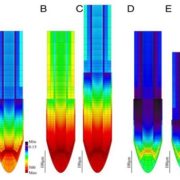
Auxin minimum triggers developmental switch in the Arabidopsis root ($)
Blog, Plant Science Research Weekly, Research, Research BlogThe root apex is an excellent tissue in which to study the mechanisms that control cell division and differentiation, as the cells produced by the root apical meristem form files of increasing age as they are moved away from the tip. In Arabidopsis, many mutant and reporter lines have contributed to…
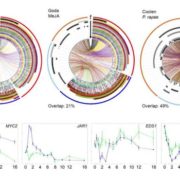
Architecture and dynamics of the jasmonic acid gene regulatory network
Blog, Plant Science Research Weekly, Research, Research BlogJasmonic acid (JA) and its derivatives including methyl jasmonate (MeJA) mediate diverse responses to wounding and herbivory and also help to control the growth-defense trade off. JA’s core signaling components have mainly been identified through genetics approaches in Arabidopsis, but gaps remain…
MicroRNAs from the parasitic plant Cuscuta campestris target host messenger RNAs
Blog, Plant Science Research Weekly, Research, Research BlogThere’s only one thing worse than having a parasite suck the life juices out of you, and that’s having a parasite suck the life juices out of you while simultaneously injecting you with miRNAs to increase your vulnerability. Shahid et al. looked at microRNAs isolated from dodder (Cuscuta campestris),…

Detection of nucleic acid–protein interactions in leaves using fluorescence lifetime imaging microscopy ($)
Blog, Plant Science Research Weekly, Research, Research BlogFRET-FLIM (Fluorescence Resonance Energy Transfer – Fluorescent Lifetime Imaging Microscopy) is a method that allows detection of interactions between two fluorescently-tagged molecules. Camborde and Jauneau et al. describe the use of FRET-FLIM to identify interactions in leaves between GFP-tagged…
What We're Reading: September 8th
Blog, Research, Research BlogReview: Promiscuity, impersonation and accommodation: Evolution of plant specialized metabolism ($)
The huge set of chemical pathways beyond the conserved primary metabolic network is described as specialized metabolism (formerly known as secondary metabolism). The diversity of specialized metabolites…