

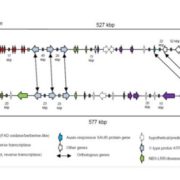
What We're Reading: November 10th
Blog, Research, Research Blog, WWR Full PostReview: Growth-mediated plant movements: hidden in plain sight ($)
Time-lapse imaging reveals the slow movements of plants, such as phototropism and gravitropism. Harmer and Brooks review the molecular bases for these growth-mediated movements. While auxin has long been known to be involved in photo-…
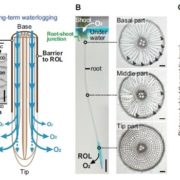
Update: Root plasticity and internal aeration
Blog, Plant Physiology: Updates, Research, Research BlogBy Takaki Yamauchi, Timothy D Colmer, Ole Pedersen, Mikio Nakazono
Introduction
Root acquisition of water and nutrients is essential for plant growth and crop productivity (Lynch, 2015). An improved understanding of root system development and functioning, to identify root traits contributing to…

Nanopore Sequencing Comes to Plant Genomes
Blog, Research, Research Blog, The Plant Cell, The Plant Cell: In BriefThe next generation of next-generation sequencing is upon us. Third-generation sequencing aims to provide long stretches of sequence – ultimately to the chromosome level – at bargain basement prices. Progress is being made toward those goals with the emergence of long-read sequencing techniques and…

Research Fellowship and Awards at the Arnold Arboretum of Harvard University
Funding OpportunitiesDescription
The Arnold Arboretum of Harvard University promotes and supports research consistent with its mission to discover and disseminate knowledge of the plant kingdom. To foster both independent and collaborative work, the Arboretum offers fellowships and awards to students, post-doctoral…
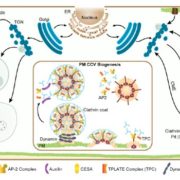
Update. Inroads into Internalization: Five Years of Endocytic Exploration
Blog, Plant Physiology, Plant Physiology: Updates, Research, Research BlogBy Gregory D. Reynolds, Chao Wang, Jianwei Pan, Sebastian Bednarek
Introduction
The plasma membrane (PM) serves as the interface between the cell and its environment. Accordingly, cells have the capacity to modulate their complement of PM-associated receptors, transporters, channels, lipids, and…
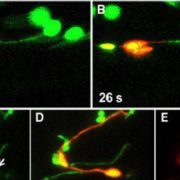
Update. Stromules: Probing formation and function
Blog, Plant Physiology, Plant Physiology: Updates, Research, Research BlogBy Maureen R Hanson, Kevin M Hines
ABSTRACT
Stromules are narrow tubular structures, comprised of stroma surrounded by the envelope membrane, which emanate from all types of plastids found in vascular plants. The mechanism for formation of stromules is not understood, but investigating how they arise…

Update: Signal dynamics and interactions during flooding stress
Blog, Plant Physiology, Plant Physiology: Updates, Research, Research BlogBy Rashmi Sasidharan, Sjon Hartman, Zeguang Liu, Shanice Martopawiro, Nikita Sajeev, Hans van Veen, Elaine Yeung, Laurentius A.C.J. Voesenek
Abstract
Flooding is detrimental for nearly all higher plants including crops. The compound stress elicited by slow gas exchange and low light levels under…

ASPB joins with other societies to launch the Scientific Society Publisher Alliance (SSPA)
Blog, Research, Research BlogWashington, D.C. – A group of prestigious not-for-profit scientific membership societies today announced the launch of the Scientific Society Publisher Alliance (SSPA) (byscientistsforscience.org), an initiative focused on building awareness of and support for publication of scientific research by…
Bridging the Gap between Science and the Field
Blog, Careers, Careers - Blog, Careers in Plant Science, Research, Research BlogMany journal articles in the plant sciences – including some of mine – finish with statements like “these findings can potentially contribute to solving the challenge of feeding the world’s growing population whilst saving the planet’s limited resources”. That is a noble ambition. Sadly,…