

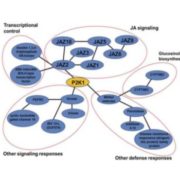
Extracellular ATP acts on jasmonate signaling to reinforce plant defense
Blog, Plant Science Research Weekly, Research, Research BlogPlant Physiol. Extracellular ATP induces plant defense responses but the mechanisms involved are largely unknown. The paper by Tripathi et al. shows how extracellular ATP serves as a danger signal in plant defense and its interaction with the signalling pathways of other stress hormones, e.g. jasmonate…

MicroRNAs from the parasitic plant Cuscuta campestris target host messenger RNAs
Blog, Plant Science Research Weekly, Research, Research BlogNature. Cuscuta sp. commonly known as dodder, is an obligate parasitic plant that colonizes a broad range of host plants and obtain water and nutrients by specialized feeding structure called haustorium. Literature suggests that this specialized structure is involved in bidirectional movement of viruses,…

Spatial and temporal patterns of mass bleaching of corals in the Anthropocene
Blog, Plant Science Research Weekly, Research, Research BlogScience. As our ecosystems are changing rapidly, more studies are needed to document them. One of these important events is “coral bleaching”, a phenomenon that occurs due to environmental stress and when coral hosts lose their algal symbionts or zooxanthellae (Symbiodinium spp.), showing the white…

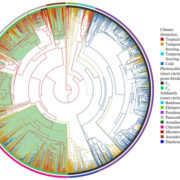
Genome downsizing, physiological novelty, and the global dominance of flowering plants
Blog, Plant Science Research Weekly, Research, Research BlogPLOS Biol. Guard cell size is, in general, inversely related to stomatal density. It is advantageous for plants to maximize their photosynthetic capabilities by generating higher rates of gas exchange, thereby incorporating more CO2 to help drive this pathway. However, the number of cells that can occupy…
What We're Reading: January 26th
Blog, Research, Research Blog, WWR Full PostGuest Editor: Dr. Amey Redkar
Amey is a postdoc at The Sainsbury Laboratory, Norwich, UK and has been a Plantae Fellow since September 2017. He is working to understand the interaction of plants and pathogens during disease development. His current research which is funded by EMBO Long Term Fellowship…
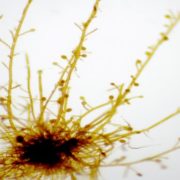
HOW TO BUILD A SEAWEED
Research, The Plant Cell, The Plant Cell: In a NutshellGodfroy et al investigate basal cell fate determination in the brown alga Ectocarpus https://doi.org/10.1105/tpc.17.00440
BACKGROUND: Brown algae are multicellular photosynthetic marine organisms living on rocky shores across the globe and representing one of the most developmentally complex groups…
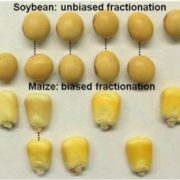
Duplicate Genomes Evolved Differently in Maize and Soybean
Research, The Plant Cell, The Plant Cell: In a NutshellZhao et al. demonstrate that duplicated genomes in maize and soybean followed distinct trajectories over millions of years https://doi.org/10.1105/tpc.17.00595
By Meixia Zhao, Biao Zhang, Damon Lisch, and Jianxin Ma
Background: Over evolutionary time, many organisms, particularly plants, have periodically…

Chloroplasts Use Bacterial Mechanism to Recognize Start Codons
Research, The Plant Cell, The Plant Cell: In a NutshellScharff et al. investigate function of anti-Shine-Dalgarno sequence in chloroplast ribosomes https://doi.org/10.1105/tpc.17.00524
By Lars B. Scharff
BACKGROUND: Cells of plants contain three different systems for protein synthesis: in the cytosol, in plastids, and in mitochondria. Proteins in the…
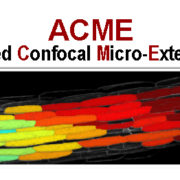
Stretching Plants with Cellular Resolution
Research, The Plant Cell, The Plant Cell: In a Nutshell
Robinson et al. develop a method to measure mechanical properties of plant tissue with cellular resolution https://doi.org/10.1105/tpc.17.00753
Background: Plant growth is controlled by the extensibility of the cell wall and the turgor pressure inside. The spatial regulation of these properties…