


Altering root system architecture in barley without impacting above-ground traits
Plant Science Research WeeklyRoots are important for acquiring water and nutrients from the soil; however root system architecture is poorly understood in cereal crops. Here Aldiss et al. used CRISPR/Cas9 to generate barley mutants in the auxin transporter PIN-FORMED2 (PIN2). Seedlings were grown in chambers and after four days…
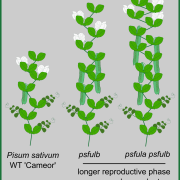
All fruit things come to an end: FRUITFULL controls end of flowering and seed yield in pea
Plant Science Research WeeklyThe onset of flowering is a tightly regulated process, as is the end of the reproductive phase in plants. In Arabidopsis thaliana, FRUITFULL (FUL) contributes to ending the reproductive cycle, as do signals derived from developing seeds. Here, Martínez-Fernández et al. explored to which extent that…
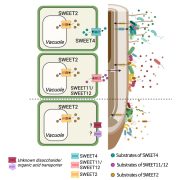
SWEET sugar transporters orchestrate distribution of microbiota along the root longitudinal axis
Plant Science Research WeeklyPlant roots are functionally distinct along the longitudinal axis due to different cell types and diverse metabolic states. Root-secreted metabolites are involved in the assembly of complex microbial communities, yet the relationships between root-metabolites and organization of root microbiota at the…
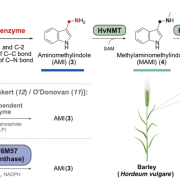
Unlocking nature’s arsenal: Engineering grasses for insect defense and livestock palatability
Plant Science Research WeeklyThe defensive alkaloid gramine, present in barley and other grass species, plays an important role in protecting the plant from insect damage but poses challenges for ruminant palatability. Breeding strategies balance these factors by maintaining the protective function and making the grain palatable…

Hidden influence: How microbial stress responses shape plant natural selection
Plant Science Research WeeklySoil microbial communities respond rapidly to stress, potentially leading to altered compositions in stressful environments and consequently impacting plant natural selection. Bolin and Lau investigated the influence of microbial responses to stress and persistent microbial legacy effects on plant selection.…
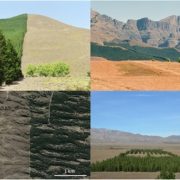
Unintended consequences of planting native and non- native trees in treeless ecosystems to mitigate climate change
Plant Science Research WeeklyAfforestation initiatives are globally underway to replace naturally treeless ecosystems with native and non-native trees. The primary objective is to enhance atmospheric carbon capture as a means to combat climate change. This review seeks to illuminate the diverse impacts of afforestation, both positive…
Plant Science Research Weekly: April 19, 2024
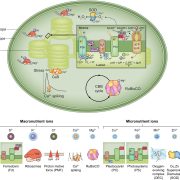
WWR Full PostReview: Chloroplast ion homeostasis
Healthy plants require access to several mineral nutrients, which are usually taken up in ionic form. The details of nutrient uptake, distribution, and function have been painstakingly revealed over several decades. In this excellent new Tansley Review, Kunz et…
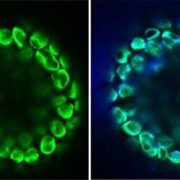
A key player in glutamate export from Arabidopsis chloroplasts
The Plant Cell: In a NutshellThe et al. identified a chloroplast glutamate exporter in Arabidopsis thaliana. The Plant Cell (2023).
By Samantha The and Mechthild Tegeder, School of Biological Sciences, Washington State University, Pullman, WA, 99164, USA
https://doi.org/10.1093/plcell/koad310
Background: Plants produce…
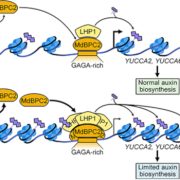
MdBPC2 regulates apple growth
The Plant Cell: In a NutshellZhao et al. discovered that MdYUC2a and MdYUC6b are targets of H3K27me3 modification mediated by MdBPC2-MdLHP1, which regulates auxin biosynthesis during apple growth.
https://doi.org/10.1093/plcell/koad297
Haiyan Zhao, Shuyuan Wan, Yanni Huang, Xiaoqiang Li, Tiantian Jiao, Zhijun Zhang, Baiquan…