

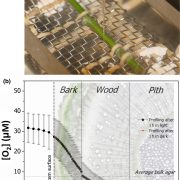
How stems breathe: Oxygen production in woody stems under different light conditions
Plant Science Research WeeklyIn woody plants, we know much less about how photosynthesis functions in stems than in leaves. This study by Natale et al. focused on how chloroplasts in Fraxinus ornus stems of different ages work. The authors looked at oxygen production rates in whole stems, bark, and wood using various methods like…
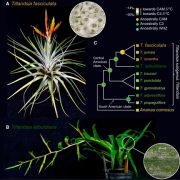
CAM evolution is associated with gene family expansion in an explosive bromeliad radiation
Plant Science Research WeeklyStudies on Crassulacean Acid Metabolism (CAM) plant genomes are scarse and CAM evolution is known to be an ecological driver of diversification. The subgenus Tillandsia (Bromeliaceae) is one of the fastest diversifying clades in the plant kingdom and is known for its adaptive CAM trait. It has recently…
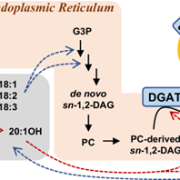
Triacylglycerol remodeling to synthesize unusual fatty acids in plants
Plant Science Research WeeklyPlant oils, composed of fatty acids, provide humans and animals with food, essential nutrients, chemicals, and biofuels. Plants accumulate over 450 “unusual” fatty acids, which could hold significant value if they achieve optimal production. Hydroxylated fatty acids (HFA) are unusual fatty acids…
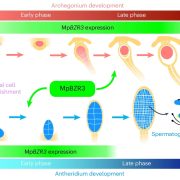
A novel BZR/BES transcription factor controls the development of haploid reproductive organs in Marchantia polymorpha
Plant Science Research WeeklyGametogenesis is essential for sexual reproduction. In bryophytes, lycophytes, and ferns, gametogenesis takes place in gametangia: antheridia for sperm production and archegonia for egg production. How these specialized reproductive organs develop at the molecular level remains unclear. Furuya et al.…
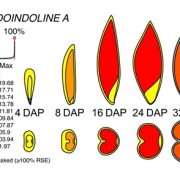
Transcriptional changes during barley grain development
Plant Science Research WeeklyBarley is a globally important cereal crop, so understanding barley grain development is of much interest. Here, Kovacik et al. investigated transcriptional changes in barley grains at five points across development, 4, 8, 16, 24 and 32 days after pollination. For each time point, grains were manually…
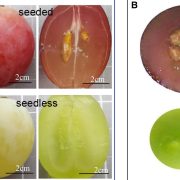
Antibody array-based proteome approach reveals proteins involved in grape seed development
Plant Science Research WeeklyGrape (Vitis vinifera) is a globally cultivated fruit for fresh or processed consumption, and seedless grapes are highly preferred for consumer convenience. In seedless grapes, fertilization occurs but the embryo subsequently aborts, although the molecular basis for this abortion is not understood. Zhang…
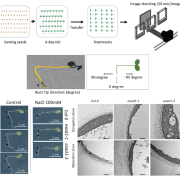
Gravitropism with a pinch of salt: Changes in cell wall composition modulate root growth direction in saline conditions
Plant Science Research WeeklySoil salinization causes massive yield losses in agriculture, and its impact on plants goes beyond what our eyes can see. Roots are immediately affected by the direct exposure to a salt-(NaCl) rich substrate. Here, Zou et al. investigate the salt-induced altered root gravitropic responses in Arabidopsis…
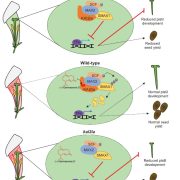
Volatile communication in plants relies on a KAI2-mediated signaling pathway
Plant Science Research WeeklyWhile it is recognized that plant communication, both within and between plants, can be achieved through emission and perception of volatile organic compounds (VOCs), it is unclear exactly how these signals are perceived and transmitted. Stirling et al. tease apart the components of within-plant VOC…
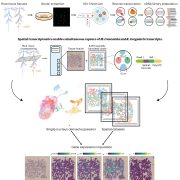
Spatial co-transcriptomics reveals discrete stages of the arbuscular mycorrhizal symbiosis
Plant Science Research WeeklyIn recent years, single-cell RNA sequencing (scRNA-seq) and single-nuclei RNA sequencing (snRNA-seq) techniques have revolutionized plant biology by enabling the identification of novel cell types, modeling developmental trajectories, and analyzing transcriptional activity at the cellular level. However,…