


AP2-like transcription factor SUPERNUMERARY BRACT controls rice seed shattering and seed size (Plant Cell)
Plant Science Research WeeklyNon-shattering seed, or seed that stays attached to the stem when mature, is a key domestication trait that makes harvesting easier. Previous studies have identified several domestication genes that suppress the formation of the seed's abscission zone, thus preventing shattering. Jiang et al. used a…
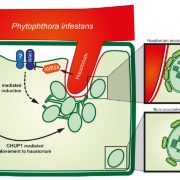
Chloroplasts navigate towards the pathogen interface to counteract Phytophthora infection (bioRxiv)
Plant Science Research WeeklyChloroplasts have diverse roles in plant defense, including contributing to the production of defense compounds. Toufexi, Duggan et al. show new data indicating the dynamic relocation of chloroplasts to the contact point of the oomycete pathogen Phytophthora infestans. Infection also causes an increase…
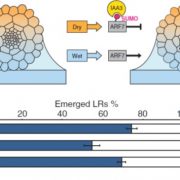
Root branching toward water involves posttranslational modification of transcription factor ARF7 ($) (Science)
Plant Science Research WeeklyRoots do amazing things, particularly in terms of how they optimize their growth in response to their very local environment including water, nutrients, microbes, and physical obstructions. Branching in regions of contact with water is called hydropatterning, and previous studies showed that an auxin…
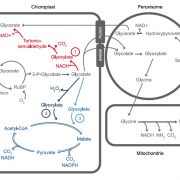
Synthetic glycolate metabolism pathways stimulate crop growth and productivity in the field ($) (Science)
Plant Science Research WeeklyRubisco uses CO2 from the air to carboxylate its substrate RuBP, resulting in an increase in fixed carbon. However, rubisco can also oxygenate RuBP and this leads to the production of glycolate. Plants must invest energy in recycling this toxic by-product in a process called photorespiration, resulting…
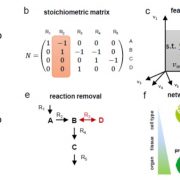
Review: Computational approaches to design and test plant synthetic metabolic pathways (Plant Physiol)
Plant Science Research WeeklyAs photosynthetic organisms, plants are desirable and potentially cost-effective chassis for the production of novel compounds, but they are also inherently metabolically complex. Synthetic metabolic pathways can also improve upon nature by making plants more metabolically efficient. Küken and Nikoloski…

Genome-scale fluxome of Synechococcus elongatus UTEX 2973 using transient 13C-labeling data (Plant Physiol)
Plant Science Research WeeklySynechococcus elongates UTEX 2973 (also known as Synechococcus 2973) has the fastest doubling time of known cyanobacteria, completely replicating itself in just over two hours. This fast growth rate makes it an interesting platform for industrial applications. Hendry et al set out to understand what…
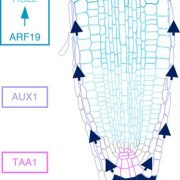
A mechanistic framework for auxin dependent Arabidopsis root hair elongation to low external phosphate (Nature Comms)
Plant Science Research WeeklyPlants respond to a low phosphate environment through increased elongation of root hairs. Bhosale et al. showed that low external P increases levels of the auxin (IAA) in Arabidopsis roots through the TAA1 (TRYPTOPHAN AMINO TRANSFERASE 1)-mediated auxin biosynthesis pathway. At the same time, the auxin…

Cytokinin modulates context-dependent chromatin accessibility through the type-B response regulators ($) (Nature Plants)
Plant Science Research WeeklyThe cytokinin-based response is assumed to be achieved through context-dependent transcriptional regulatory mechanisms. Potter et al. analyzed cytokinin-induced alterations in chromatin accessibility using ATAC-seq (Assay for Transposase-Accessible Chromatin using Sequencing) and combined these results…
What We're Reading: January 18th
WWR Full PostPhysiologia Plantarum Special Issue: Root Biology
The year 2019 kicks off with a special issue on root biology, with all articles free to access for six months. Topics include interactions of roots with parasites and symbionts, root branching, transport in the root system, and roots of woody species.…