


Recognizing Plant Physiology first authors: Jingjing Hou
Plant Physiology, Plant Physiology: Author ProfilesJingjing Hou, first author of ESA1 is involved in embryo sac abortion in interspecific hybrid progeny of rice
Current Position: Ph.D. candidate, Department of Plant Genetics and Breeding, China Agricultural University, Beijing, China
Education:
2013-M.S., Agronomy, China Agricultural…

Petunia Battlefield in Style: S-RNases vs. SLF proteins
Research, The Plant Cell, The Plant Cell: In a NutshellSun et al. use CRISPR/Cas9 in Petunia to establish the essential role of SLF proteins in self-compatibility and reveal their complex interactions with S-RNases. Plant Cell https://doi.org/10.1105/tpc.18.00615.
By Linhan Sun and Teh-hui Kao, The Pennsylvania State University
Background: Plant…

Seed size is regulated by siRNAs from Arabidopsis maternal tissue in a spatial-temporal manner ($)(PNAS)
Plant Science Research WeeklyStudying seed development is important for understanding plant evolution and engineering food production. Previous discoveries have shown that maternal small interfering RNAs (siRNAs), which induce RNA-directed DNA methylation (RdDM) through NRPD1-mediated pathway, regulate seed development in Arabidopsis.…

The Arabidopsis thaliana pan-NLRome; towards exploring NLR diversity in plants (bioRxiv)
Plant Science Research WeeklyNucleotide-binding leucine-rich repeat (NLRs) receptors are involved in the intracellular recognition of pathogen effectors. Hundreds of genes encode these NLRs, and the genes are highly polymorphic. So far, a limited number of NLRs were characterized, and three mechanisms of effector recognition have…
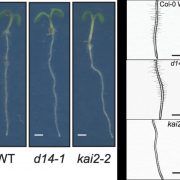
KAI2 regulates root and root hair development by modulating auxin distribution (bioRxiv)
Plant Science Research WeeklyTo optimize growth, plant development is regulated by environmental information. Root morphology is adaptable to stimuli due to a network of phytohormone signalling pathways. Here Villaecija et al. studied the roles of strigolactones (SL) and karrikins (KL) signalling in controlling root and root hair…
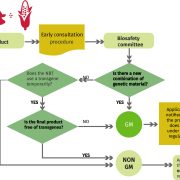
EU regulatory approach to directed mutagenesis: consequences for international trade and potential steps forward (New Phytol)
Plant Science Research WeeklyThe seed sector, and particularly plant breeders, are responsible for providing farmers with new plant varieties able to overcome challenges such as climate change, water restrictions or plant pests. In order to do their job, breeders have a collection of tools at their disposal. Among these are traditional…
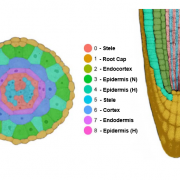
Single-cell RNA sequencing resolves molecular relationships among individual plant cells (Plant Physiol)
Plant Science Research WeeklySingle cell RNA sequencing (scRNA-seq) has transformed our understanding of gene expression within and amongst individual cells. These techniques have been applied extensively to animal cell populations to discover the development of specific cell lines and identify rare cell types but are not commonly…
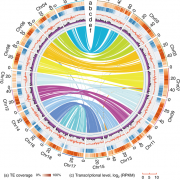
The genome of broomcorn millet: The fourth millet to be sequenced (Nature Comms)
Plant Science Research WeeklyWhole genome sequencing (WGS) unlocks the repertoire of genes encoded within the genome. From a structural genomics aspect, the sequence data enables the development of molecular markers and maps, and identification of novel QTLs/genes/alleles regulating the trait-of-interest. From a functional genomics…
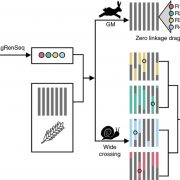
Tapping into the genetic diversity of wild crops for engineering disease resistance (Nature Biotech)
Plant Science Research WeeklyLack of sequence information makes harnessing the diversity of disease resistance (R) genes in wild crops highly challenging. Arora and Steuernagel et al. report AgRenSeq, a reference genome-free technique, for rapid cloning of nucleotide binding/Leucine-rich repeat (NLR) resistance genes from wild…