

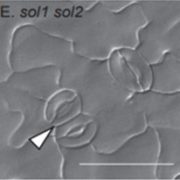
SOL1 and SOL2 regulate fate transition and cell division in stomatal lineage ($) (Development)
Plant Science Research WeeklyStomata and pavement cell development in the leaves occur through programmed asymmetric cell division. In this paper the authors demonstrated the role of two CHC domain proteins, SOL1 and SOL2 that were identified previously by the same group to be downstream targets of a bHLH transcriptional factor…
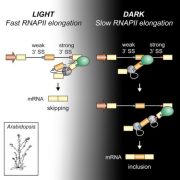
Light regulates plant alternative splicing through the control of transcriptional elongation (Mol Plant)
Plant Science Research WeeklyLight perception in plants generates a plethora of gene expression changes. Among them, it has been shown that light affects alternative splicing mediated by a chloroplast retrograde signal. Here, Godoy Herz et al. explore the different possible mechanisms possible involved in this regulation. Using…
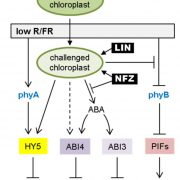
Chloroplast status can affect shade avoidance in plants ($) (Plant Cell)
Plant Science Research WeeklyFor optimal photosynthetic performance, plants utilize multiple strategies to compete with their neighbors. Especially when light supply is limited in the canopy, plants promote their own elongation to overgrow neighboring plants. This occurs as a response to a low ratio of Red to Far-Red light (R/FR),…

Lateral inhibition by a peptide hormone-receptor cascade during Arabidopsis lateral root founder cell formation (Devel. Cell)
Plant Science Research Weekly
The plant hormone auxin acts as a general coordinator of growth and development, transferring information over both long and short ranges. Among other roles, it promotes the formation of the founder cells in roots and it triggers the position of the lateral roots (LR). LR founder cells are determined…
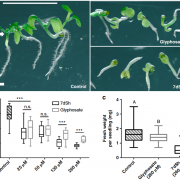
Natural Herbicide: Cyanobacterial antimetabolite inhibits the growth of prototrophic organisms (Nature Comms)
Plant Science Research WeeklyThe shikimate pathway synthesizes aromatic amino acids in microorganisms and plants, and its absence in animals makes the shikimate pathway a common target for the development of herbicides. Brilisauer et al. 2019 isolated a novel compound from the cyanobacterium Synechococcus elongatus—7-deoxy-sedoheptulose…
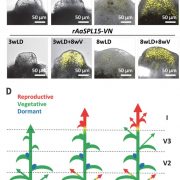
A regulatory circuit conferring varied flowering response to cold in annual and perennial plants ($) (Science)
Plant Science Research WeeklyRegulation of flowering in time and space in perennials like Arabis alpina involves two systems. One uses orthologs to FLOWERING LOCUS C (FLC) from A. thaliana; in A. alpine is called PERPETUAL FLOWERING 1 (PEP1) and its repression enables flowering after vernalization. The other system uses microRNA156…

Plant Science Research Weekly: February 15th
WWR Full PostA comparison of the EU regulatory approach to directed mutagenesis with that of other jurisdictions, consequences for international trade and potential steps forward
The seed sector, and particularly plant breeders, are responsible for providing farmers with new plant varieties able to overcome challenges…
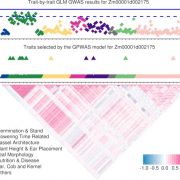
Distinct characteristics of genes associated with phenome-wide variation in maize (Zea mays) (bioRxiv)
Plant Science Research WeeklyHigh-throughput plant phenotyping is growing rapidly and enables the collection of dozens or hundreds of traits of the same plant genotype efficiently. The development of this technology expands the diversity of plant phenotypes and brings an opportunity for reexamining the connections between genotype…

Recognizing Plant Cell first authors: Meng Ye
The Plant Cell, The Plant Cell: Author ProfilesMeng Ye, first author of Molecular dissection of early defense signaling underlying volatile-mediated defense regulation and herbivore resistance in rice
Current Position: Associate Professor in Tea Research Institute, Chinese Academy of Agricultural Sciences
Education: PhD in Entomology (2016),…