

Ethylene and ABA Regulate Ascorbic Acid and Reactive Oxygen Species
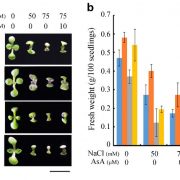
Plant Physiology, Plant Physiology: On The InsideThe phytohormones ethylene and abscisic acid (ABA) often interact in controlling plant growth and development processes as well as plant responses to stress. The detailed mechanisms underlying the interaction of these two phytohormones, which may act synergistically or antagonistically with each other,…
Convergent gene loss in aquatic plants predicts new components of plant immunity and drought response (bioRxiv)
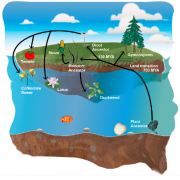
Plant Science Research WeeklyPlants transitioned from water to land around 450 Million years ago. Since their emergence onto land, there have been at least a few reversion events to aquatic environments (e.g., duckweed, humped bladderwort). These big evolutionary events imply adaptation to completely different kinds of biotic and…
Review: Molecular networks of seed size control in plants ($) (Annu Rev Plant Biol)
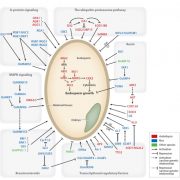
Plant Science Research WeeklyCrop yield is largely determined by the size of seeds, and studies are being conducted to understand the complex molecular network controlling the seed size. Li et al. review the possible molecular mechanisms and regulatory networks underlying seed size control and growth, including the factors originating…
Nanomaterials enable delivery of functional genetic material without DNA integration (Nature Nanotech)
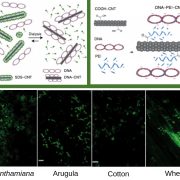
Plant Science Research WeeklyKey to success of crop improvement is the development of easier, faster and safer biomolecules-delivery systems. Here, the main limitation is the cell wall, which compromises the yield of exogenic material transfer to plant cells. In this study, Demirer et al demonstrate the advantages of infiltrated…
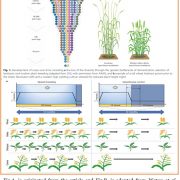
Q&A: Modern crop breeding for future food security (BMC Biology)
Plant Science Research WeeklyThe demand for plant-based products will increase and must be doubled in the near future. Therefore, there is need for technological advancements and skillsets in all fields related to agriculture to successfully produce more efficiently than now. What could be done to speed up production to meet the…
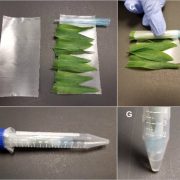
Life between the cells: measuring apoplast hydration and content (Plant Phys)
Plant Science Research WeeklyThe extracellular space within the leaves, or apoplast, has an active role in many aspects of plant physiology; since water from transpiration, sucrose from photosynthesis and other metabolites pass through the apoplast. Since abiotic and biotic factors (i.e., pathogens) modify the composition of the…
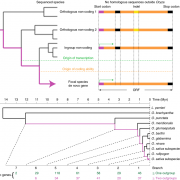
Rapid evolution of protein diversity by de novo origination in Oryza (Nature Ecol Evol)
Plant Science Research WeeklyThe de-novo origin of new protein-coding genes from non-coding regions of plant genomes is a contributor to protein diversity, although it has been difficult to quantify to what extent this process occurs. High quality reference genome maps, deep transcriptome and targeted proteome sequencing are requisite…
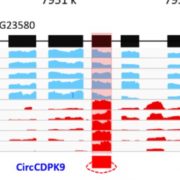
A large‐scale circular RNA profiling reveals universal molecular mechanisms responsive to drought stress in maize and Arabidopsis ($)
Plant Science Research WeeklyRecently, a novel class of noncoding RNAs named circular RNA (circRNA) has been shown to play roles in transcriptional regulation of gene expression in plants. However, a complete picture of circRNAome and their regulatory roles in controlling the stress response of plants was lacking. To address this,…
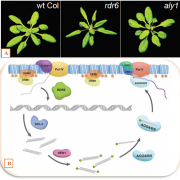
The RNA export factor ALY1 enables genome-wide RNA-directed DNA methylation (Plant Cell)
Plant Science Research WeeklyThe epigenetic control of gene expression is crucial for genomic stability and allows the defence against invading DNA that for instance could be derived from viruses or transposable elements. In this context, the RNA-directed DNA methylation (RdDM) plays an essential role in silencing of genes via epigenetically…