

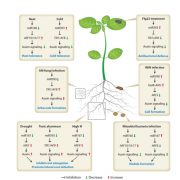
Review: MicroRNAs and their regulatory roles in plant–environment interactions (Annu Rev Plant Bio) ($)
Plant Science Research WeeklyMicroRNAs (miRNAs) are endogenous small noncoding RNAs that negatively regulate the expression of target genes through mRNA cleavage, translational repression and DNA methylation. The last decade has seen an exponential increase in the studies performed to understand the biogenesis of plant miRNAs, their…

Plant Science Research Weekly: March 29th
WWR Full PostReview: Exploiting natural variation and genetic manipulation of stomatal conductance for crop improvement
Identifying methods to improve crop productivity is vital considering the devastating consequences of climate change (e.g., frequent droughts). Stomatal conductance influences photosynthesis…
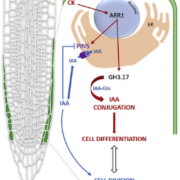
The lateral root cap acts as an auxin sink that controls meristem size (Curr Biol)
Plant Science Research WeeklyDuring root growth, cellular activities need to be coordinated across tissues. Mambro et al. have identified molecular mechanisms involved in root apical meristem maintenance by auxin homeostasis regulation in lateral root cap (LRC) cells. The cytokinin response regulator ARR1 regulates expression of…

Tandem fluorescent protein timers for non-invasive relative protein lifetime measurement in plants (Plant Physiol)
Plant Science Research WeeklyProteins are in a dynamic state of synthesis and degradation and their half-lives can be adjusted under various circumstances. Many rapidly degraded proteins function as regulatory molecules, such as transcription factors. The rapid turnover of these proteins is necessary to allow their levels to change…
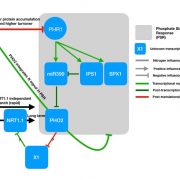
Nitrogen actively controls phosphate starvation response in plants (Plant Cell) ($)
Plant Science Research WeeklyPhosphate and nitrogen are two essential macronutrients for growth of plants. The homeostasis and sensing pathways for these two macronutrients have been investigated extensively, but independently. Recently, -omics approaches have enabled finding interlinks and cross talks between two or more macronutrients.…
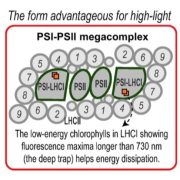
A direct connection between PSI & PSII systems in green plants (Plant Cell Physiol)
Plant Science Research WeeklyPlants often optimize their development according to the prevailing environmental conditions, of which light is one of the most important. Arabidopsis uses a PSI-PSII megacomplex as the photosystem reaction center, to transfer the excessive energy from PSII to PSI rapidly. Recently, Yokono et al. proposed…
Review: Brassinosteroid signaling in plant development and adaptation to stress ($) (Development)
Plant Science Research WeeklyIn this new review, Riverola et al. highlight the significance of the phytohormone brassinosteroid in plant development and responses to stress. The authors discuss BRL1, LRR-RLK receptor mediated signaling mechanism that is crucial for root development and stress response. This signaling mechanism varies…

Recognizing Plant Physiology first authors: Zhubing Hu
Plant Physiology, Plant Physiology: Author ProfilesZhubing Hu, first author of Genome-Editing Based Engineering of CESA3 Dual Cellulose Inhibitor Resistant Plants
Current Position: Principal Investigator, Key Laboratory of Plant Stress Biology, State Key Laboratory of Cotton Biology, School of Life Sciences, Henan University, Kaifeng, China
Education:…

Recognizing Plant Cell first authors: Pawel Mikulski
The Plant Cell, The Plant Cell: Author ProfilesPawel Mikulski, first author of The chromatin-associated protein PWO1 interacts with plant nuclear lamin-like components to regulate nuclear size
Current position: Postdoc; Cell and Developmental Biology, John Innes Centre, Norwich, UK
Education: PhD, Free University Berlin; Msc, University of Warsaw;…