


Recognizing Plant Physiology first authors: Jennifer Schoberer
Plant Physiology, Plant Physiology: Author ProfilesJennifer Schoberer, first author of Golgi localization of GnTI requires a polar amino acid residue within its transmembrane domain
Current Position: Senior PostDoc, University of Natural Resources and Life Sciences (BOKU), Vienna, Austria
Education: Master’s in Biology at the University of Vienna,…
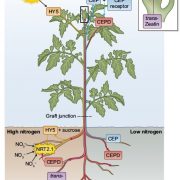
Review: Connecting the pieces: uncovering the molecular basis for long-distance communication through plant grafting (New Phytol)
Plant Science Research Weekly
Grafting is an ancient vegetative asexual plant propagation technique. It is characterized by the connection of two plant segments, the shoot piece known as ‘scion’ and the root piece called ‘rootstock’ or simply 'stock'. Grafting is widely used in agriculture to improve crop production and…
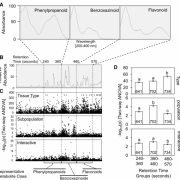
Diverse metabolites across maize GWAS panel for dissecting maize genetic architecture (Plant Cell)
Plant Science Research WeeklyPlants can produce metabolites that are directly involved in various biological pathways. Identifying variations of specific metabolites in different genotypes would facilitate the understanding underlying complex genetic architecture of maize. One of most representative natural diversity panels, the…
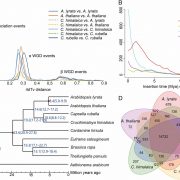
Dramatic changes in repeat element content and gene family sizes underlie the high-altitude adaptation of rock-cress (PNAS)
Plant Science Research WeeklyThe ability to grow on the ‘roof of the world’ - the Qinghai-Tibet Plateau, makes Crucihimalaya himalaica (Rock-cress) an important model for studying adaptive evolution. A draft genome sequence of C. himalaica reported by Zhang et al. now provides clues to its speciation and ecological adaptation.…
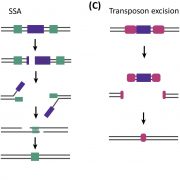
Review: Copy Number Variations shaping plant domestication (Trends Plant Sci)
Plant Science Research WeeklyHuman-associated plant domestication is a co-evolutionary process that began at least 12,000 years ago. However, the genetic variations underlying many domestication traits are still unknown. In this review, Lye and Purugganan discuss how copy number variations (CNVs) have played an important role in…
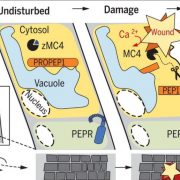
Ca2+-dependent processing of immunomodulatory peptides ($) (Science)
Plant Science Research WeeklyPlants are sessile organisms that have evolved an extraordinary immune system to optimally adapt to the risky environment, which includes hazards such as insect chewing, weather damaging, and pathogen invasion. But the signaling mechanism of how the physical damage of cells triggers the intracellular…
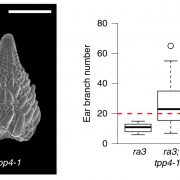
Moonlighting activities and control of meristem maintenance in maize ($) (Nature Plants)
Plant Science Research WeeklyThe phosphorylated disaccharide trehalose 6-phosphate (T6P) is a regulator of meristem fate. Mutations in enzymes related to T6P metabolism (such as TPS, the synthase, or the phosphatase trehalose 6-phosphate phosphatase TPP, i.e., RAMOSA3 that dephosphorylates T6P to trehalose), are linked to defects…

Flavor-cyber-agriculture: Metabolite optimization through surrogate modeling (PLOS One)
Plant Science Research WeeklyCyber-agriculture is a computer-controlled plant growing environment which regulates climatic conditions through machine learning, finding optimized variables (“recipes”) to maximize a specific plant trait. Here, Johnson et al. applied cyber-agriculture to chemotype optimization for flavor in basil…
Plant Science Research Weekly: April 12th
WWR Full PostReview: Copy Number Variations shaping plant domestication
Human-associated plant domestication is a co-evolutionary process that began at least 12,000 years ago. However, the genetic variations underlying many domestication traits are still unknown. In this review, Lye and Purugganan discuss how…