

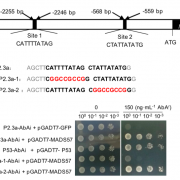
A Transcription Factor, OsMADS57, Regulates Long-Distance Nitrate Transport and Root Elongation (Plant Phys.)
Plant Science Research WeeklyNitrogen is a critical macronutrient for plant growth and reproduction, and it’s largely present as ammonium in flooded and acidic soils. However, structurally porous tissue in rice roots, called aerenchyma, transfer oxygen to the root system in flooded paddies, increasing nitrate abundance. Huang…
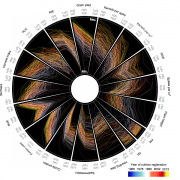
Breeding improves wheat productivity under contrasting agrochemical input levels (Nature Biotech.)
Plant Science Research WeeklyWheat breeding programs are releasing new cultivars almost every year for improved yield potential. But is this intensive breeding not compromising the plant performance under adverse environmental conditions? Voss-Fels et al. studied the elite cultivars of winter wheat released during the last 50 years,…
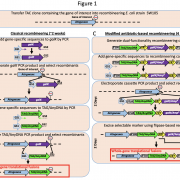
An Improved plant toolset for high-throughput recombineering (BioRxiv)
Plant Science Research WeeklyTo determine the role of any gene of interest it is necessary to understand the spatiotemporal expression pattern. This is accomplished by tagging the regulatory sequence(s) alone (transcriptional fusion) or regulatory sequence(s) with the coding region (translational fusion) of the gene of interest.…

Plant Science Research Weekly: June 21st
WWR Full PostGuest editor: Magdalena Julkowska
Magda is a PostDoc at King Abdullah University for Science and Technology (KAUST, Saudi Arabia) working with Prof. Mark Tester. Her main interests are (1) salt-induced changes in the root-to-shoot ratio in Arabidopsis, (2) study the expression patterns in plants with…

Sphingolipid biosynthesis modulates plasmodesmal ultrastructure and phloem unloading (Nature Plants)
Plant Science Research WeeklyRegulated transport of molecules from source to sink is essential for providing necessary molecules including photoassimilates to the required tissue. This mechanism is crucial for development and plant growth in response to stimuli and it occurs through plasmodesmata. In a previous report, CALLOSE SYNTHASE…
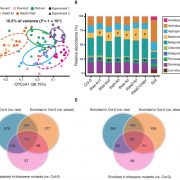
A specialized metabolic network selectively modulates Arabidopsis root microbiota (Science)
Plant Science Research WeeklyPlants have evolved to adapt to varied environmental niches. The ability to produce specialized metabolites is one of the evolved characteristics which help plants to thrive through varied biotic and abiotic conditions. Plant-associated microbes are always known to have a drastic impact on plant growth…
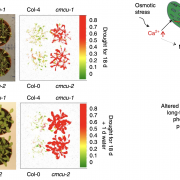
A chloroplast-localized mitochondrial calcium uniporter transduces osmotic stress in Arabidopsis (Nature Plants)
Plant Science Research WeeklyCalcium and chloroplasts are both at the heart of the signal transduction during environmental stress. Teardo et al. studied whether the chloroplast-localized mitochondrial calcium uniporter has a role in stress signaling. The group identified 6 homologs of mitochondrial calcium uniporter (MCU) in Arabidopsis,…

QTL × environment interactions underlie adaptive divergence in switchgrass across a large latitudinal gradient (PNAS)
Plant Science Research WeeklyThe main problem to elucidate the genetic basis in regards to a plant local adaptation is the geographic and climatic biased scope of the tests. Here, Lowry et al. overcame this by evaluating the contributions of individual genetic loci to the adaptation of outcrossing switchgrass (Panicum virgatum L.)…
Paleogenomic insights into the origins of French grapevine diversity (Nature Plants)
Plant Science Research WeeklyThe grapevine has it that some living varieties of Vitis vinifera were grown by the Romans, and maintained for over two millennia. Ramos-Madrigal et al. used target-enriched genome-wide sequencing for 28 grape seeds recovered from archeological sites dating to the Iron Age, Roman period and Middle Ages.…