

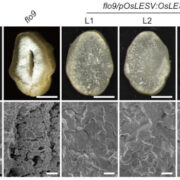
OsLESV cooperates with FLO6 to modulate starch biosynthesis and endosperm development
The Plant Cell: In a NutshellOsLESV cooperates with FLO6 to modulate starch biosynthesis and endosperm development
Yan, Zhang, Wang et al. identify OsLESV–FLO6 as a non-enzymatic molecular module responsible for starch biosynthesis and endosperm development.
https://doi.org/10.1093/plcell/koae006
By Haigang Yan, Wenwei…
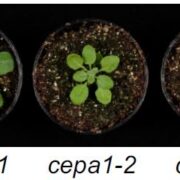
Putting it together: CEPA1 functions as a Photosystem I assembly factor
The Plant Cell: In a NutshellBackground:
Photosystem I (PSI) is a large pigment-protein complex that participates in photosynthetic electron transfer. While its structure is well resolved, its assembly pathway is less clear. A set of proteins mediating the step-wise assembly of PSI subunits, known as PSI assembly factors, has…
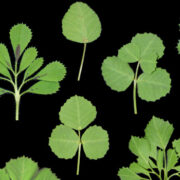
Regulation of leaflet number in compound leaves
The Plant Cell: In a NutshellHe et al. investigate the molecular mechanisms of compound leaf formation in Medicago truncatula
By Liangliang He and Jianghua Chen
https://doi.org/10.1093/plcell/koae033
Background: In the plant kingdom, leaves have different shapes, with the most noticeable difference being between simple…
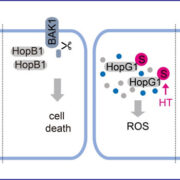
Hot and SUMOylated: Heat-induced SUMOylation controls effectors in plant cells
The Plant Cell: In a NutshellLi et al. examine heat-induced SUMOylation of bacteria effectors in Arabidopsis. (Plant Cell. 2024)
By Wenliang Li and Jianbin Lai (South China Normal University)
https://doi.org/10.1093/plcell/koae049
Background: Bacterial pathogens deliver effectors into plant cells to interfere with host…
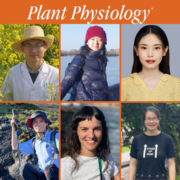
Plant Physiology Spotlights April 2024 First Authors
Blog, Community, Plant Physiology: Author ProfilesBehind the Plant Physiology manuscripts are researchers, professors, professionals and students dedicated to advancing the field of plant science. You’ve seen our First Authors on Twitter and Facebook— now, read more about why they chose to pursue plant sciences and click on the links below the pictures…
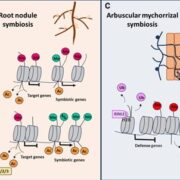
Review: Root development and symbiosis: an epigenetic perspective
Plant Science Research WeeklyRoots do not grow in isolation but occupy a space inhabited by a variety of organisms. With certain fungi and bacteria, they form partnerships or symbiotic relationships that increase the plant’s nutrient uptake and assimilation. While the knowledge on the genetic programs required to establish these…
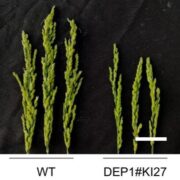
Gene knock-down using gene editing
Plant Science Research WeeklyAn efficient method of gene downregulation, where gene expression is reduced but not completely knocked out, is useful for crop improvement. Here, Shen et al. have developed a system to achieve this, by using CRISPR/Cas9 to insert an element containing a Kozak sequence and an ATG start codon just before…
Review: Back-of-the envelope Fermi calculations in plant science
Plant Science Research WeeklyI think one of the most important lessons a scientist learns is to cross-check their findings with a different approach in order to determine if the findings are reasonable. This interesting article by Oliveira-Filho and Campos-Silva et al. lays out several examples of using back-of-the envelope or Fermi…
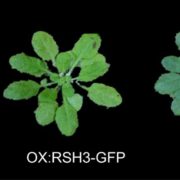
Posttranslational regulation of photosynthetic activity via the TOR kinase in plants
Plant Science Research WeeklyIn the dazzling dance of plant cellular life, chloroplasts must groove in harmony with growth to sidestep the perils of photooxidative damage. This harmony between photosynthesis and photooxidative damage is orchestrated by the guanosine tetraphosphate (ppGpp) signalling pathway which traces its roots…