

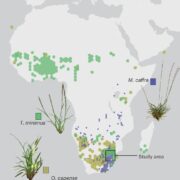
Convergent evolution of desiccation tolerance in grasses
Plant Science Research WeeklyMany bryophytes and other non-seed plants are tolerant to vegetative desiccation, which is thought to have been necessary for colonization of land. By contrast, most seed plants lack this capacity, although they retain desiccation tolerance in their pollen and seeds. However, some seed plants, known…

Using a historic wheat collection to revolutionize breeding
Plant Science Research WeeklyWheat (Triticum aestivum) is an important crop, making up ~20% of food consumed worldwide. As the population grows, wheat yields must increase to meet demand. To achieve this, genetically diverse wheat landraces (aka traditional varieties, which are locally adapted cultivars) can be utilized. Here, Cheng…
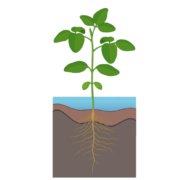
Shoot impairments upon root waterlogging
Plant Science Research WeeklyIn this article by Haverroth et al., the authors explore plant-water dynamics in the shoot during and after waterlogging, using as a model Phaseolus vulgaris, which is particularly sensitive to waterlogging. One of the interesting findings is that early after waterlogging and prior to leaf dehydration,…
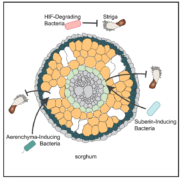
Harnessing the potential of soil microbial allies to combat Striga infection in sorghum roots
Plant Science Research WeeklyMicrobial neighbors of plants in the soil comprise of a vast array of bacteria and fungi, collectively known as the microbiome. This soil microbial community forms close associations with plants and regulates plant growth and development by inducing changes in the plant and soil metabolites. In this…
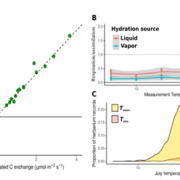
Hydration source determines carbon asymmetry and physiological activities in lichen-forming symbionts
Plant Science Research WeeklyMetabolic activities in symbionts are often described as physiologically synchronized, but sometimes, as in the case of coral bleaching, this synchrony can break down. This breakdown was observed in lichen by Meyer et al. when they examined the physiologies of Evernia mesomorpha fungal and algal components…
Plant Science Research Weekly: July 12, 2024
WWR Full PostReview: Root development and symbiosis: an epigenetic perspective
Roots do not grow in isolation but occupy a space inhabited by a variety of organisms. With certain fungi and bacteria, they form partnerships or symbiotic relationships that increase the plant’s nutrient uptake and assimilation.…
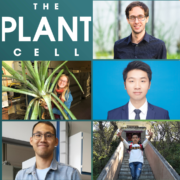
The Plant Cell Features April First Authors
Blog, Community, The Plant Cell: Author ProfilesBehind the manuscripts are researchers, professors, professionals and students dedicated to advancing the field of plant science. You’ve seen our First Authors on Twitter and Facebook— now, read more about why they chose to pursue plant sciences and click on the links to read their articles.
Yutao…
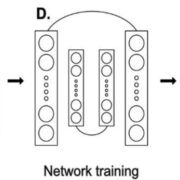
Review: Deep learning approaches to understanding stomatal function
Plant Science Research WeeklySydney Brenner famously said, “Progress in science depends on new techniques, new discoveries and new ideas, probably in that order.” Right now, we’re seeing how advancements and new techniques in artificial intelligence and deep learning are being applied in plant sciences, including in the analysis…
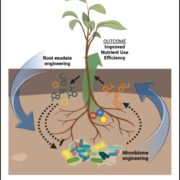
Review: Engineering plant–microbe communication for plant nutrient use efficiency
Plant Science Research WeeklyPlant nutrient use efficiency (NUE) has become a major concern in recent years as farmers and scientists strive to make agriculture more sustainable. To this end, the manipulation of plant-microbe interactions holds great potential. In this short review, Griffin et al. highlight recent findings, focusing…