


Mechanisms of RALF peptide perception by a heterotypic receptor complex (Nature) ($)
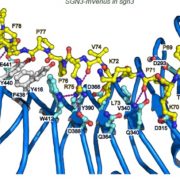
Plant Science Research WeeklyRALFs (Rapid Alkalinization Factors, based on historical observations that they induce alkalization of the extracellular space) are signaling peptides with diverse roles. RALFs have previously been shown to bind to the extracellular domain of (among others) FERONIA (FER), a member of the Catharanthus…
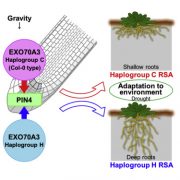
Root system depth is shaped by EXOCYST70A3 via modulation of auxin transport (Cell)
Plant Science Research Weekly
The angle at which roots grow into the soil is modulated by the interaction between genetics and environment, and involves the gravity perception and response pathways including auxin transporters. Ogura et al. did a GWAS analysis of the gravitropic response of different Arabidopsis accessions in…
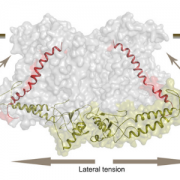
Cryo-EM structure of OSCA1.2 sheds light on the mechanical basis of membrane hyperosmolality gating (PNAS) ($)
Plant Science Research WeeklyOsmotic stress in plants elicits many responses, one of which is increased accumulation of Ca2+ in the cytosol. Genes involved in this response have been identified, yet the mechanism behind the Ca2+ transport remains unknown. Maity et al. investigated the structure and function of the osmolality-sensitive…
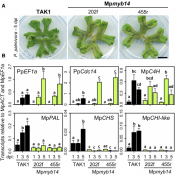
Conserved biochemical defenses underpin host responses to oomycete infection in liverwort (Curr Biol)
Plant Science Research WeeklyMarchantia polymorpha is an emerging model for plant molecular biology and has contributed to studies on development and plant-microbe interactions. Here, using RNA-seq and proteomics, Carella et al. present a detailed time-course analysis of Marchantia molecular responses to pathogen infection triggered…
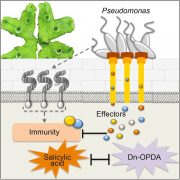
A liverwort-Pseudomonas interaction reveals an ancient plant defensive mechanism (Curr Biol)
Plant Science Research WeeklyPlants are sessile organisms that have evolved sophisticated immune systems in defense of pathogens, thus maximizing the chance of survival. Most of our understanding of plant defenses comes from studies in angiosperms. Evolutionary molecular plant-microbe interactions (EvoMPMI) can reveal the origins…

Forces required for Venus flytrap trigger hairs to detect small insect prey (Nature Plants) ($)
Plant Science Research WeeklyThe remarkable adaptations of Venus flytrap traps enable them to sense and respond to insects, snapping shut to capture and then digest the unfortunate meal. Previous studies showed that the sensors, trigger hairs on the inner surface of the leaves, need at least two touches to initiate trap closure.…
Plant Science Research Weekly: July 19th
Blog, WWR Full PostReview: Formal description of plant morphogenesis ($)
In recent years, a number of tools have been developed to describe and model plant morphogenesis, and these approaches have greatly informed our understanding of the molecular processes that underpin the control of growth. This excellent review…

Recognizing Plant Physiology first authors: Minxia Zou
Plant Physiology, Plant Physiology: Author ProfilesMinxia Zou, first author of The auxin transport inhibitor targets villin-mediated actin dynamics to inhibit auxin transport
Current Position: PhD candidate in College of Life Science, Beijing Normal University
Education: Sept 2019 – now, Ph.D. candidate in Beijing Normal University; Sept 2011 –…

Recognizing Plant Physiology first authors: Jeh Haur Wong
Plant Physiology, Plant Physiology: Author ProfilesJeh Haur Wong, first author of Mutation of a conserved motif of PP2C.D phosphatases confers SAUR immunity and constitutive activity
Current Position: Postdoctoral associate, University of Minnesota-Twin Cities
Education: PhD, Nara Institute of Science and Technology (NAIST), Japan
Non-scientific…