


Recognizing Plant Direct authors: María del Rosario Ramírez Flores
Plant Direct, Plant Direct: Author ProfilesMaría del Rosario Ramírez Flores, first author of Inoculation with the mycorrhizal fungus Rhizophagus irregularis modulates the relationship between root growth and nutrient content in maize (Zea mays ssp. mays L.)
Current Position: PhD student, Plant Biotechnology at Center of Research and Advances…

Recognizing Plant Physiology authors: Puneet Paul
Plant Physiology, Plant Physiology: Author ProfilesPuneet Paul, first author of MADS78 and MADS79 are essential regulators of early seed development in rice
Current Position: Post-Doctoral Research Associate at the Department of Agronomy and Horticulture, University of Nebraska-Lincoln
Education: Ph.D. in Plant Molecular Biology, Goethe University,…
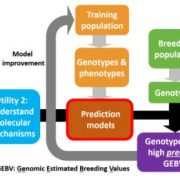
Predicting adult complex traits from early development transcript data in maize
Research, The Plant Cell, The Plant Cell: In BriefAn enduring goal of biologists is to link variation in the genome to phenotype. The discovery of easily measurable genetic markers in the recent past has led to the identification of variants controlling different traits through linkage analysis. Subsequently, advances in high-throughput sequencing have…
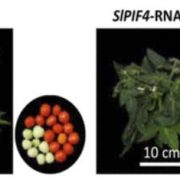
PIF4 plays a conserved role in Solanum lycopersicum
Plant Physiology, Plant Physiology: News and Views, ResearchScott Hayes, S.hayes@cnb.csic.es
The adoption of Arabidopsis thaliana as a model plant in the early 1980s led to a revolution in plant molecular genetics. Its diminutive size, rapid generation time and small genome made Arabidopsis a fantastic tool, allowing us to build a complex picture of the genetic…
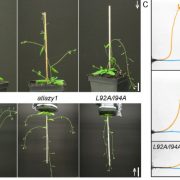
Switching the direction of stem gravitropism by altering two amino acids in AtLAZY1 (Plant Phys)
Plant Science Research WeeklyIn a fascinating twist to the gravitropism story, Yoshihara and Spalding have managed to make a plant with shoots that don’t ignore gravity, but actually respond in the entirely inappropriate away. The LAZY genes were first identified from a rice mutant with a decreased response to gravity. In Arabidopsis…
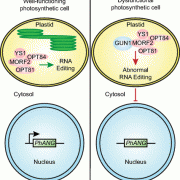
Research update: GUN1 hit the mark in 2019
Plant Science Research Weekly
Chloroplasts are able to sense and respond to environmental signals. They send retrograde signals that inform the nucleus about their developmental stage and integrity. In response, the nucleus adjusts gene expression to optimize chloroplast recovery and adaptation. Back in 1993, a screen for genotypes…
Plant Science Research Weekly: December 13
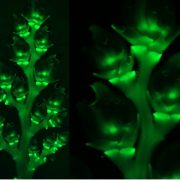
Blog, WWR Full PostThis week we start with a short summary contributed by Charlotte Gommers hghlighting several papers published in 2019 that revealed new insights into an enigmatic plant gene, GUN1.
Research update: GUN1 hit the mark in 2019
Chloroplasts are able to sense and respond to environmental signals. They…
RGF1 controls root meristem size through ROS signaling (Nature)
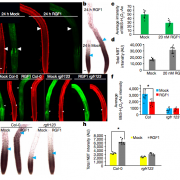
Plant Science Research WeeklyStem cells are maintained in the stem-cell niche by intercellular interactions and signaling networks in which a peptide hormone, the root meristem growth factor 1 (RGF1), is involved. RGF1 is also important in the control of the size of the meristematic zone and in the stability of the PLETHORA (PLT)…
CSN5 of COP9 signalosome modulates heat-response of Arabidopsis (biomolecules)
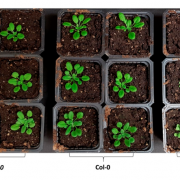
Plant Science Research WeeklyCOP9 signalosome (CSN) is a conserved multi-subunit complex in higher eukaryotes that was originally identified as a regulator of plant photomorphogenesis. It functions by regulating ubiquitin-mediated protein stability, through the deneddylase enzymatic acitivity of the CSN5 subunit. CSN5 is encoded…