

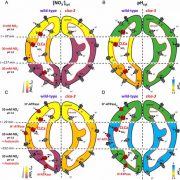
Vacuolar channel CLCa is involved in guard cell pH homeostasis (PNAS)
Plant Science Research WeeklyIn plants, stomata are involved in a host of responses, controlled by ion homeostasis in guard cells. In an attempt to understand the function of a plant chloride channel (CLC), CLCa, which transports chloride (Cl-) and nitrate (NO3-) in guard cells, Demes and colleagues sought to establish a relationship…
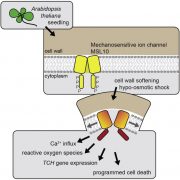
MscS-like 10 as a cell swelling sensor and promotes hypo-osmotic shock responses (Curr. Biol.)
Plant Science Research WeeklyOptimal volume and turgor in the plant cell is important for metabolism, development and growth. Excessive diffusion of water into the cell will cause extreme swelling and a loss of cellular integrity. Members of the plasma membrane MscS-like (MSL) family of mechanosensitive (MS) ion channels play a…

Reprogramming of stem cell activity to convert thorns into branches (Curr. Biol.)
Plant Science Research WeeklyThorns are modified axillary shoots with a sharp tip that helps in deterring herbivores and are found among several families of angiosperms. Thorns develop from their meristem-like tip to their base, but unlike branches they are determinate organs. The mechanism of their terminal differentiation into…
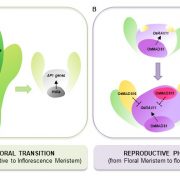
Genes of the RAV family control heading date and carpel development in rice (Plant Physiol)
Plant Science Research WeeklySeed-bearing annual plants essentially get one shot at getting their reproductive timing right; too early and there won’t be enough stored nutrients to produce healthy seeds, and too late and the seeds might not mature fully before bad weather or rot sets in. Previously, the RAV (RELATED TO ABI3 AND…
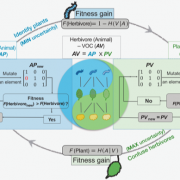
Plant-herbivore chemical communication decoded (Science)
Plant Science Research WeeklyChemical communications between species are prevalent in nature. For instance, herbivorous insects can spot their host plants by sensing volatile organic compounds (VOCs) emitted by plants. Despite our knowledge about interactions between individual plant and herbivore species, little is known about…
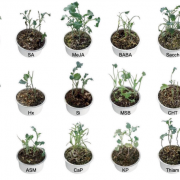
Induced tolerance to abiotic and biotic stresses of broccoli and Arabidopsis after treatment with elicitor molecules (Sci. Rep.)
Plant Science Research WeeklyPlant hormones such as jasmonates (JAs) and salicylic acid (SA) are known for their role in regulating plant growth under both abiotic and biotic stresses. These hormones, which are synthesized within the plant, can modulate cellular processes in targeted cells locally and can be moved to other parts…
Plant Science Research Weekly: July 3rd
WWR Full PostReview: Feedback mechanisms between membrane lipid homeostasis and plant development
Plant development is a regulated process of cell division, expansion, and differentiation. Membrane lipids are crucial to these processes, as illustrated in this review by Boutté and Jaillais. The authors discuss…
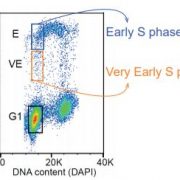
AT the Onset of DNA Replication in Arabidopsis
Plant Physiology, Plant Physiology: News and Views, ResearchAuthor
Anne-Sophie Fiorucci
Affiliation
Centre for Integrative Genomics, Faculty of Biology and Medicine, Génopode Building, University of Lausanne, CH-1015 Lausanne, Switzerland.
ORCID number
0000-0002-3254-5967
DNA replication allows doubling of the genomic content of a cell before…

It takes two to tango: two GNOMs have to activate ARF1 together
Research, The Plant Cell, The Plant Cell: In a NutshellBrumm et al. investigate how the protein GNOM activates dimers of the small GTPase ARF1 and inserts them very close to each other during vesicle formation. The Plant Cell (2020) https://doi.org/10.1105/tpc.20.00240
By Sabine Brumm 1,2 and Gerd Jürgens 1, ZMBP, University of Tübingen (1), Sainsbury…