

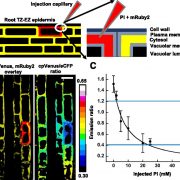
On the Inside: Spatial Dynamics of Pi Distribution in Roots
Plant Physiology, Plant Physiology: On The InsideThe availability of inorganic phosphate (Pi) often limits plant growth and crop productivity. The signaling mechanisms governing Pi starvation responses in plants include responses to external Pi concentrations to modify the root system architecture and responses to internal Pi concentrations to maintain…
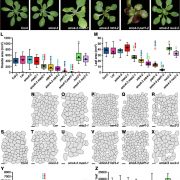
On the Inside: Characterization of a Ribosome Biogenesis Factor
Plant Physiology, Plant Physiology: On The InsideThe structure and biogenesis of the eukaryotic 80S ribosome are similar in all eukaryotes, as are the ribosomal RNAs (rRNAs) and ribosomal proteins involved in these processes. The biogenesis of the 80S ribosome in eukaryotes is best characterized in the yeast Saccharomyces cerevisiae. Indeed, the individual…
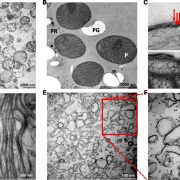
On the Inside: The Origins of Euglena gracilis’s Middle Plastid Envelope Membrane
Plant Physiology, Plant Physiology: On The InsideThe plastids of Euglena gracilis, a freshwater photosynthetic flagellate, are embedded by three membranes. These membranes are an evolutionary vestige of the secondary endosymbiotic event that occurred between a phagotrophic eukaryovorous euglenid and a Pyramimonas-related green alga. The plastids…
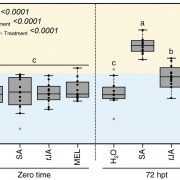
On the Inside: Citrus Greening Disease and Melatonin
Plant Physiology, Plant Physiology: On The InsideMelatonin has diverse effects on plant growth and development and has been implicated in tolerance to abiotic stresses such as drought, salinity, freezing, and high temperature. The protective role of melatonin against biotic stresses in plants, however, remains unclear. Huanglongbing (HLB), popularly…
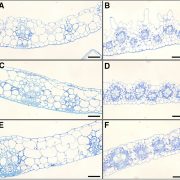
On the Inside: Sodium Sequestration by a Turfgrass
Plant Physiology, Plant Physiology: On The InsideAbout 20% of irrigated land is considered saline, with the amount of saline soils increasing worldwide. This trend is alarming due to the high salt sensitivity of most crop species. Yield reduction in crops in saline soils amounts to losses in the order of 12 to 27.3 billion US dollars annually. Thus,…
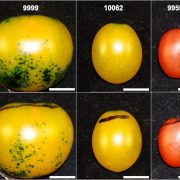
On the Inside: Non-Stomatal Water Loss by Tomato Fruits
Plant Physiology, Plant Physiology: On The InsideIn land plants, water is lost primarily by transpiration through stomata. However, when the aerial tissues begin to dry, the stomata close, and transpiration, much reduced, occurs mostly from the apoplast of epidermal cells. The hydrophobic cuticle that coats the epidermis of aerial organs provides the…
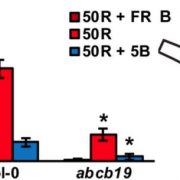
Leaf position makes a difference: the ABCB19 auxin transporter affects light perception
Blog, Plant Physiology, Plant Physiology: News and Views, ResearchAuthor: David S. Favero1 (ORCID: 0000-0002-6879-0323)
[email protected]
Affiliation:
1RIKEN Center for Sustainable Resource Science, Yokohama, Kanagawa, 230-0045 Japan
Main text:
As autotrophs, plants must maintain photosynthesis to thrive. In order for this to happen, a plant’s…
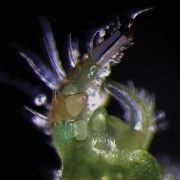
Gene expression signatures during leaf development
Blog, Research, The Plant Cell, The Plant Cell: In a NutshellMartinez et al. use laser capture microdissection and transcriptomic sequencing to explore how gene expression patterns regulate early morphogenesis of the compound tomato leaf. https://bit.ly/3nehiZu
By Ciera Martinez, University of California, Berkeley
Neelima Sinha, University of California,…
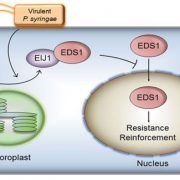
The Complex Process of Plant Innate Immunity
Blog, Research, The Plant Cell, The Plant Cell: In a NutshellLiu et al. demonstrate that EIJ1 acts as a key repressor of plant immunity. Plant Cell. https://bit.ly/37MF1tg
By Hailun Liu, Yuge Li and Xingliang Hou, South China Botanical Garden, Chinese Academy of Sciences
Background: Plants have evolved a complicated network to modulate the immune response.…