

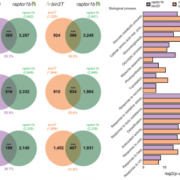
Multi-omics analysis reveals interplay between BR and TORC signaling (bioRxiv)
Plant Science Research WeeklyPlants have evolved well-coordinated crosstalk between different signaling pathways to respond and adapt to various environmental stresses. Brassinosteriods (BRs) and Target of Rapamycin Complex (TORC) have multiple roles, through transcription, translation and autophagy, to control the balance between…
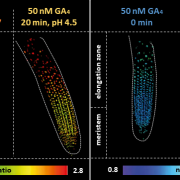
Differential biosynthesis and cellular permeability explain longitudinal gibberellin gradients in growing roots (PNAS)
Plant Science Research WeeklyGibberellin (GA) controls multiple developmental processes throughout the plant life cycle, from seed germination to flowering. In Arabidopsis, GA also regulates division of meristematic cells at the tip of the root and cell elongation in the growing zone. Despite its importance, little is known about…
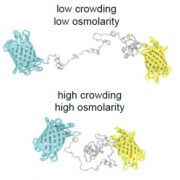
Measuring the physical-chemical effects of osmotic stress in living cells (bioRxiv)
Plant Science Research WeeklyThe osmotic state of a cell is affected by internal (metabolite content) and external (water availability) factors. Recent work by Cuevas-Velazquez and colleagues describes the design of a FRET-based biosensor that allows dynamic monitoring of osmotic stress in living cells. They exploited features of…
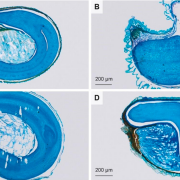
Evolution and ecology of seed internal morphology in relation to germination characteristics in Amaranthaceae ($) (Ann. Bot.)
Plant Science Research WeeklySeed germination, a critical life stage in a plant's life cycle, can be affected by internal seed morphology. In this exciting research, Vandelook and colleagues investigated the evolution of embryo and nutritive tissue characteristics and their relationship with the germination traits of 84 species…
Plant Science Research Weekly: Feb 26, 2021
Blog, WWR Full PostReview: Plant evolution driven by interactions with symbiotic and pathogenic microbes
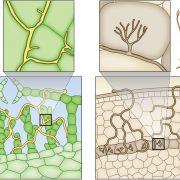
One of the great questions in plant science has been, “How do plants recognize friend from foe?” Like most great questions, this one benefits from a historical perspective. In their new review, Delaux and Schornack…

Recognizing Plant Physiology author Masaru Nakayasu
Plant Physiology: Author Profiles
Masaru Nakayasu, first author of Tomato roots secrete tomatine to modulate the bacterial assemblage of the rhizosphere
Current Position: Specially appointed assistant professor, Research Institute for Sustainable Humanosphere, Kyoto University, Japan
Education: BA, MS, and Ph.D., Kobe University,…

Recognizing Plant Physiology author Zhiwei (Luke) Luo
Plant Physiology: Author Profiles
Zhiwei Luo, first author of The molecular and genetic regulation of shoot branching
Current Position: Research Associate and Ph.D. candidate
Education: Currently enrolled in a doctoral degree at the University of Auckland; Master of Science at the University of Auckland, New Zealand; Bachelor of…
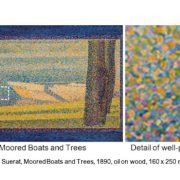
Membrane pointillism: Lipid nano-patterning controls distinct molecular pathways at the plasma membrane of pollen tubes
The Plant Cell: In a NutshellFratini et al. explore lipid patterns in the plasma membrane of the pollen tube. http://bit.ly/3uwYqsM
Ingo Heilmann and Marta Fratini
Department of Plant Biochemistry, Institute of Biochemistry and Biotechnology
Martin-Luther-University Halle-Wittenberg, Halle (Saale), Germany
Background:…

Recognizing Plant Cell authors: Anlong Jiang
The Plant Cell, The Plant Cell: Author ProfilesAnlong Jiang, first author of The PIF1-miR408-PLANTACYANIN Repression Cascade Regulates Light-Dependent Seed Germination
Current Position: Postdoc in Dr. Lei Li's Lab at Peking University
Education: Doctorate in Biology, Peking University
Non-scientific Interests: reading, movies
Brief bio:…