


Yi Zhang: The Plant Cell First Author
The Plant Cell: Author Profiles
Yi Zhang, co-first author of "The circadian-controlled PIF8-BBX28 module regulates petal senescence in rose flowers by governing mitochondrial ROS homeostasis at night"
Current Position:
Postdoctoral research in the joint project, FAFU-UCR Joint Centre, Haixia Institute of Science and Technology.…

Neha Rai: Plant Physiology First Author
Plant Physiology: Author Profiles
Neha Rai, first author of "Perception of solar UV radiation by plants: photoreceptors and mechanisms"
Current Position: Post Doc in Prof. Roman Ulm’s lab at the Department of Botany and Plant Biology, University of Geneva, Geneva, Switzerland
Education: Ph.D. in Plant Biology, University of…
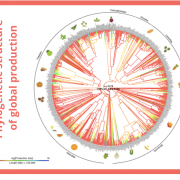
Crop origins explain variation in global agricultural relevance (Nature Plants)
Plant Science Research WeeklyAccording to FAO, only a hundred out of several thousands edible plants contribute to the global food system. Specifically, twelve species dominate food production worldwide; more than a half of our daily calorie intake comes from four seed crops (maize, soybean, rice and wheat). Although the agricultural…
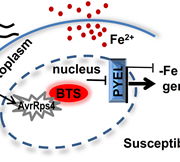
A bacterial effector targets a plant iron sensing protein, and benefits pathogen growth (Plant Cell)
Plant Science Research WeeklyPathogens often appropriate iron from their hosts, as acquisition of iron is vital to sustain life for most organisms. As demonstrated in this paper by Xing et al., an effector protein, AvrRps4, from a common bacterial plant pathogen, Pseudomonas syringae, directly interacts with BRUTUS (BTS), an iron…
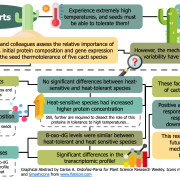
Comparative analyses of extreme dry seed thermotolerance in five Cactaceae species (Environ. Exp. Bot.)
Plant Science Research WeeklyDesert plants must produce seeds that can withstand incredibly high temperatures. Nevertheless, different species of cacti –one of the most emblematic plant groups of these ecosystems– exhibit variable responses to extreme temperatures. In this fascinating paper, Visscher and colleagues conduct a…
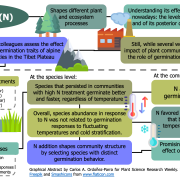
Effect of nitrogen addition on selection of germination trait in an alpine meadow on the Tibet Plateau (Front. Plant Sci.)
Plant Science Research WeeklyConsidering that atmospheric nitrogen (N) and N deposition have increased due to human activities, understanding the effects of this element in plant communities has become increasingly important. Still, the role of germination traits in these changes at the community level is poorly understood. Here,…
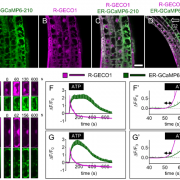
Waves of information: Simultaneous imaging of ER and cytosolic Ca2+ dynamics reveals long distance ER Ca2+ waves in plants (Plant Physiol.)
Plant Science Research WeeklyCalcium (Ca2+) signaling regulates a host of stress and developmental responses in plants. Apart from increases in cytosolic Ca2+ concentration ([Ca2+]Cyt.), organellar signals play a key role in shaping the cytosolic signaling events. In an attempt to understand the Ca2+ dynamics in the endoplasmic…
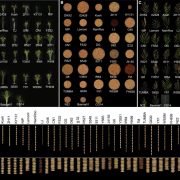
Pan-genome analysis of 33 genetically diverse rice accessions reveals hidden genomic variations (Cell)
Plant Science Research WeeklyIn spite of the considerable excitement that accompanies the first genomic sequence of a species, that sequence usually represents a single individual or inbred accession – the real excitement comes from comparisons between individuals or accessions. These pan-genomic analyses provide insights into…
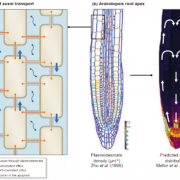
Review: Auxin fluxes through plasmodesmata (New Phytol)
Plant Science Research WeeklyPlasmodesmata, the tubular connections that form continua between neighboring cells in plants, play vital roles in long-distance transport of ions, RNA, proteins, and small molecules. While it is known that plasmodesmata are permeable to phytohormones, including auxin, the physiological significance…