


Miroslav Ovečka: Plant Physiology First Author
Plant Physiology: Author Profiles
Miroslav Ovečka, co-first author of "Imaging plant cells and organs with light-sheet and super-resolution microscopy"
Current Position: Professor, Department of Cell Biology CRH, Faculty of Science, Palacký University Olomouc, Czech Republic.
Education: MSc and PhD in Plant Physiology with Prof.…
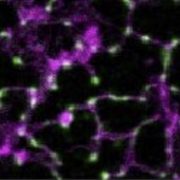
Maintaining membrane integrity in the face of abiotic stress
The Plant Cell: In a NutshellRuiz-López & Pérez-Sancho et al describe a mechanism that control the homeostasis of diacylglycerol at the plasma membrane in plants after abiotic stress. Plant Cell. https://doi.org/10.1093/plcell/koab122
Miguel Ángel Botella Mesa – IHSM-UMA-CSIC, Málaga, Spain
Jessica Pérez Sancho…

Too much of a good thing - nitrate inhibition of nodulation
The Plant Cell: In a NutshellNishida, Nosaki, et al. explore how nitrate inhibits nodulation through transcription factors. Plant Cell. https://doi.org/10.1093/plcell/koab103
Hanna Nishidaa, Shohei Nosakia,b,c, Takuya Suzakia,c
aFaculty of Life and Environmental Sciences, University of Tsukuba, Tsukuba, Ibaraki, Japan
bGraduate…
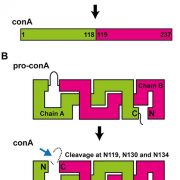
Structural and biochemical analyses of concanavalin A circular permutation (Plant Cell)
Plant Science Research WeeklyIf you have heard of concanavalin A (ConA), it probably is because it is a widely-used reagent in carbohydrate science and medical research. ConA is a lectin derived from jackbean (Canavalia ensiformis, hence the name) that binds assorted carbohydrates. It is also a fascinating protein that assembles…
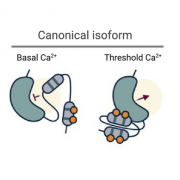
Review: Alternative splicing as conserved mechanism to regulate CDPKs? ($) (TIPS)
Plant Science Research WeeklyCalcium-dependent protein kinases (CDPKs/CPKs) are an interesting class of proteins present in plants, algae and some protists that are thought to “sense” and “respond” to spikes in intracellular Ca2+ signaling events. While multiple mechanisms have been proposed to be involved in the regulation…
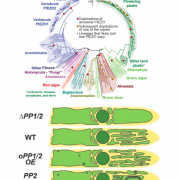
Plant PIEZO homologs modulate vacuole morphology during tip growth (Science)
Plant Science Research WeeklyThe ability to perceive and respond to mechanical stimuli and forces, such as gravity or touch, is an extremely well conserved property that is key for proper cellular function. This ability is fueled by mechanosensitive ion channels activated by mechanical disturbances in the membrane, which leads to…

The secret to leaf forever: Mechanisms controlling simple leaf development (Nature Plants)
Plant Science Research WeeklyThe final shape of a leaf is a consequence of differential growth at its margins. Simple (or lightly serrated) leaves result from limited growth in the margins, while compound leaves result from a constant initiation of leaflets. A recent work by Challa, Rath, and colleagues dissected the regulatory…
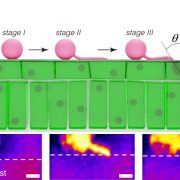
A slicing mechanism facilitates host entry by plant-pathogenic Phytophthora (Nature Microbiol)
Plant Science Research WeeklyA plant has many layers of defense against a pathogen. One of the first challenges a pathogen faces is how to get inside the plant. Some bacteria sneak in through open stomatal pores, and some fungi form high-pressure appressoria that burst through walls. Here, Bronkhorst et al. investigated how the…
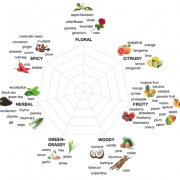
Relevance of hop terroir for beer flavor (J. Inst. Brew.)
Plant Science Research WeeklyBeer is a simple beverage, basically fermented barley sugars. But recently, it’s been all about the hops. Hops are buds of Humulus lupulus, a member of the Cannabaceae family, and from humble origins they have been carefully bred and selected, resulting in many varieties with different aroma and flavor…