

Twelve easy steps to embrace or avoid scientific petrification by Stephen Campana
Blog, Careers, Careers - Blog, Skills and AdviceLooking back on his 40-year career gives author Stephen Campana the opportunity to distill very useful career advice.
Very briefly, here are his 12 steps, but we recommend you real all of this interesting and useful article, found here, from the ICES Journal of Marine Science.
Read, read, read
…
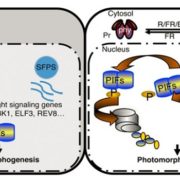
SPF45-related splicing factor for phytochrome signaling promotes photomorphogenesis by regulating pre-mRNA splicing in Arabidopsis ($)
Blog, Plant Science Research Weekly, Research, Research BlogLight is one of the environmental conditions which regulates plants’ development, but knowledge of how light-induced transcript accumulation occurs via transcriptional versus post-transcriptional mechanisms is limited. Xin et al. report Splicing Factor for Phytochrome Signaling (SFPS) as an interacting…
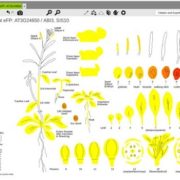
ePlant: Visualizing and exploring multiple levels of data for hypothesis generation ($)
Blog, Plant Science Research Weekly, Research, Research BlogThe application of systems biology is quite phenomenal these days for prediction-based modeling and interactive data visualization. Along with the genome sequencing of the model plant Arabidopsis thaliana, there has been a parallel increase in systems biology tools. Unfortunately, these tools have been…

Establishment of photosynthesis is controlled by two distinct regulatory phases ($)
Blog, Plant Science Research Weekly, Research, Research BlogChloroplast biogenesis and leaf development are closely linked processes that have been difficult to tease apart, until recently. Dubreuil et al. used a pluripotent inducible cell line from Arabidopsis, basically plant stem cells, which develop chloroplasts on demand when exposed to light. Using this…
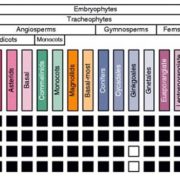
The evolution of CHROMOMETHYLASES and gene body DNA methylation in plants
Blog, Plant Science Research Weekly, Research, Research BlogIn land plant genomes, transposable elements (TEs) are ubiquitously methylated in CG and non-CG sequence contexts. Apart from methylation of TEs, DNA methylation also occurs on bodies of actively transcribed genes, typically in the CG context, with very low or no non-CG methylation, and is referred to…

Brassinosteroid signaling-dependent root responses to prolonged elevated ambient temperature
Blog, Plant Science Research Weekly, Research, Research BlogTemperature is one of the major factors affecting plant growth and development. Martins et al. showed that elevated temperature increases root growth through elongated cell size, but reduced both meristem size and number of meristematic cells. The elongation of root growth during elevated temperature…

The histone H3 variant H3.3 regulates gene body DNA methylation in Arabidopsis thaliana
Blog, Plant Science Research Weekly, Research, Research BlogThe histone H3 variant H3.3 is distinguished by its expression throughout the cell cycle, while H3.1 is expressed predominantly during DNA replication. Genome-wide ChIP studies in plants have shown that H3.3 is associated with actively transcribed genes, and enriched near the transcriptional end sites.…
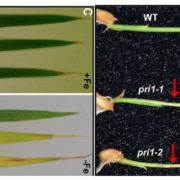
POSITIVE REGULATOR OF IRON HOMEOSTASIS 1, OsPRI1, facilitates iron homeostasis ($)
Blog, Plant Science Research Weekly, Research, Research BlogZhang et al. showed that POSITIVE REGULATOR OF IRON HOMEOSTASIS 1 (OsPRI1), a bHLH transcription factor, is an interacting partner of the iron-binding sensor OsHRZ1. A loss-of-function mutation of OsPRI1 is responsible for a hypersensitive response to Fe deficiency. OsPRI1 works downstream of OsHRZ1…
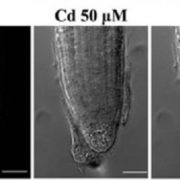
In Arabidopsis thaliana cadmium affects growth of the primary root by altering SCR expression and auxin-cytokinin crosstalk
Blog, Plant Science Research Weekly, Research, Research BlogCadmium is a toxic metal in our environment. Bruno et al. explored cadmium-mediated root-growth inhibition using the model plant Arabidopsis thaliana. Cadmium affects root growth longitudinally by reducing root meristem cell number and radially by controlling the number and width of stele cells. The…