

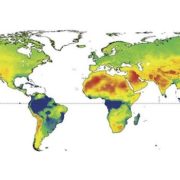
A worldwide-scale relationship between leaf size and climate ($)
Blog, Plant Science Research Weekly, Research, Research BlogLeaf size varies by over 100,000-fold across the plant kingdom. Leaf area has a direct impact on tissue temperature and thus directly affects photosynthetic efficiency. Empirical observations by 19th century plant geographers described that larger leaves are usually restricted to plants growing in wet…
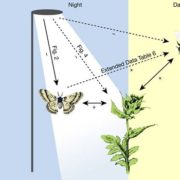
Artificial light at night as a new threat to pollination ($)
Blog, Plant Science Research Weekly, Research, Research BlogDuring our holidays, many of us plant scientists love to go to re-energize in remote places, ideally with no technology. Have you ever imagined how our “advanced” way of living is changing our environment? In a recent paper, Knop et al. show evidence that nocturnal pollinators are negatively affected…
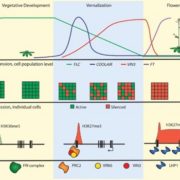
Review. Fine-tuning timing: Natural variation informs the switch to flowering in Arabidopsis thaliana ($)
Blog, Plant Science Research Weekly, Research, Research BlogThe transition from vegetative growth to a flower-producing reproductive state is highly regulated by environmental cues. The model plant Arabidopsis thaliana has a wide distribution throughout different habitats, so each accession has different adaptations strategies. One of the major factors that varies…
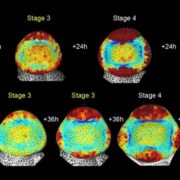
Seasonal regulation of petal number in Cardamine hirsute
Blog, Plant Science Research Weekly, Research, Research BlogFlower development, unlike flowering timing, is a robust process not much affected by seasonal variation, such that the number of floral organs in each flower can be predicted quite precisely for different plant families. Most Brasiccaceae family species have flowers with fours petals, however, Cardamine…
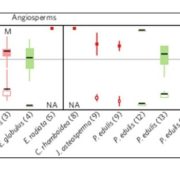
A multi-species synthesis of physiological mechanisms in drought-induced tree mortality
Blog, Plant Science Research Weekly, Research, Research BlogGlobal change forecasts include projections of severe droughts that could affect many forested biomes, largely influencing future energy and element fluxes. There are two physiological mechanisms associated with tree mortality in response to drought: hydraulic failure (inhibition of water transport)…

Phototropin perceives temperature based on the lifetime of its photoactivated state
Blog, Plant Science Research Weekly, Research, Research BlogFujii et al. studied the role that blue-light perceiving phototropins play in sensing temperature. They studied the temperature response in the liverwort Marchantia polymorpha, which has only one phototropin. At 5°C, blue-light perception by phototropins induces a cold-avoidance response in which chloroplasts…
What We're Reading: September 15th
BlogThanks for all the contributed paper summaries! If you'd like to summarize a paper for this series, contact Mary Williams ([email protected]).
Special Issue of Current Biology "The Making of a Plant"
Browsing the table of contents of the “The Making of a Plant” special issue of Current…

4D root gene expression
Blog, Plant Science Research Weekly, Research, Research BlogIt becomes more and more clear that regulation of complex traits and processes, such as root growth and lateral root growth, involves not only gene expression quality (which genes are expressed), quantity (how much transcript is present) and space (in which cell-type transcripts are accumulating) but…
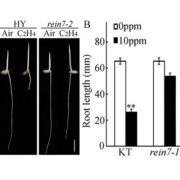
OsEIL1 affects auxin biosynthesis in ethylene-inhibited rice root elongation
Blog, Plant Science Research Weekly, Research, Research BlogThe role of crosstalk between auxin and ethylene in primary root development has been studied in the dicot model plant Arabidopsis thaliana, but is less well understood in monocots. Through a genetic screen for roots that elongate in the presence of ethylene , Qin, Zhang et al. identified a mutant rice…