

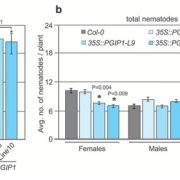
Damage-associated signals differentially impact nematode parasitism
Blog, Plant Science Research Weekly, Research, Research BlogRoots must protect themselves from a diverse range of microbial and animal pests. To accomplish this, plants have evolved sophisticated signalling machinery to detect the presence of these pests or to quickly react to the damage that they cause. In a recent study, Shah et al. identified host receptor…

Images for Impact – How-to tips. Created for the Plantae Seminar Series
Blog, Careers, Careers - Blog, Education, Education General, Science Communication, Skills and Advice, Writing/Reviewing/Publishing/Communicating
Earlier this year I gave a Plantae seminar on "Images for Impact" - simple, free tips about how to source and create images to use in your science writing and communicating.
Here is the text of the handout I created to accompany the seminar. You can get this as a PDF here. You can download the…
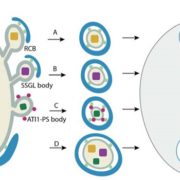
Update on autophagy: Dynamics of autophagosome formation
Blog, Plant Physiology, Plant Physiology: Updates, Research, Research BlogBy Junmarie Soto-Burgos, Xiao-Hong Zhuang, Liwen Jiang, and Diane C. Bassham
Autophagy, literally defined as “self-eating”, functions as a degradation process by recycling cytoplasmic contents under stress conditions or during development. Upon activation of autophagy, a membrane structure known…
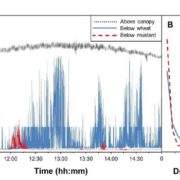
Update: Fluctuating light takes crop photosynthesis on a rollercoaster ride
Blog, Plant Physiology, Plant Physiology: Updates, Research, Research BlogBy Elias Kaiser, Alejandro Morales, Jeremy Harbinson
The environment of the natural world in which plants live, have evolved, and within which photosynthesis operates, is one characterised by change. The time scales over which change occurs can range from seconds (or less) all the way to the geological…
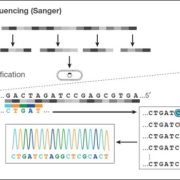
Review: DNA sequencing at 40: past, present and future ($)
Blog, Plant Science Research Weekly, Research, Research BlogShendure et al. provide a superb review of how DNA sequencing technology has changed over the years and how these changes open up new applications. They start with the Maxam and Gilbert chemical cleavage and the Sanger “chain-termination” methods developed in the 1970s, and describe the scale-ups…
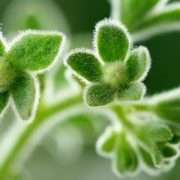
De novo assembly of a new Solanum pennellii accession using nanopore sequencing
Blog, Plant Science Research Weekly, Research, Research BlogChromosomes are long, and DNA sequencing reads have typically been short, meaning that it is necessary to assemble lots and lots of short reads by looking for overlapping sequences. This strategy is made more difficult in repeat-rich and transposon-rich regions of genomes, which characterize many plant…
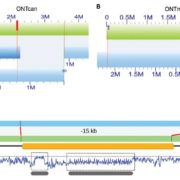
High contiguity Arabidopsis thaliana genome assembly with a single nanopore flow cell
Blog, Plant Science Research Weekly, Research, Research BlogThe current version of the Arabidopsis thaliana Col-0 reference genome, TAIR10, still has some gaps and mis-assemblies due to centromeres and repeat-rich regions. In another demonstration of the promise of single-molecule sequencing, Michael, Jupe et al. used a single nanopore flow cell to sequence the…
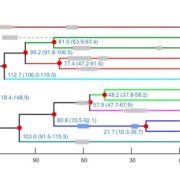
Genome of wild olive and the evolution of oil biosynthesis
Blog, Plant Science Research Weekly, Research, Research BlogOlive oil is a staple of the healthy “Mediterranean diet” and contains high levels of the monounsaturated fat oleic acid. Unver, Wu et al. present the genome of the wild olive tree (Olea europaea var. sylvestris) (draft sequences of domesticated olive trees without extensive functional annotation…

The Cys-Arg/N-end rule pathway is a general sensor of abiotic stress in flowering plants
Blog, Plant Science Research Weekly, Research, Research BlogThe N-end rule pathway is a conserved pathway for the control of protein turnover, through which the clipping or modification of amino acids from the amino-terminus of a protein leads to an interaction with PROTEOLYSIS 6 (PRT6; an N-recognin E3 ligase) and 26S proteasome-mediated proteolysis. Previously,…