


'Effective Scientist' - a must-have book for scientists
Blog0 Comments
/
A Plantae interview with Prof Corey Bradshaw about his new book
Professor Corey J.A. Bradshaw is a Matthew Flinders Fellow in Global Ecology at Flinders University, Australia. His research focuses on global-change ecology and has had over 10,000 citations since 2013.
His blog is www.conservationbytes.com,…
'Effective Scientist' - a must-have book for scientists
Blog Plantae interview with Prof Corey Bradshaw about his new book
Professor Corey J.A. Bradshaw is a Matthew Flinders Fellow in Global Ecology at Flinders University, Australia. His research focuses on global-change ecology and has had over 10,000 citations since 2013.
His blog is www.conservationbytes.com,…
Interview with Dr Brian Larkins – Maize Kernel Development book and career advice
BlogListen to an interview with Dr. Brian Larkins
In this interview, Kevin Folta interviewed Dr Brian Larkins, former ASPB President about his new book, Maize Kernel Development. Dr Larkins talks about the story behind the book, its uniqueness, his research with maize and in the last section, he shares…
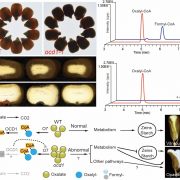
Studies have found that key enzymes of plant oxalate metabolism affect corn nutrition quality
Blog, The Plant Cell, The Plant Cell: News(From a press release written in Chinese - original here)
On September 10th , The Plant Cell published a research paper entitled Maize Oxalyl-CoA Decarboxylase1 Degrades Oxalate and Affects the Seed Metabolome and Nutritional Quality by the Wu Yongrui Research Group of the Institute of Plant and Plant…

Is This Newsworthy? How to Assess if a Press Release Might Become a Science News Story
Blog, Plantae Webinars, Science CommunicationIs This Newsworthy? How to Assess if a Press Release Might Become a Science News Story
Recorded September 2018
About This Webinar
To understand how to write a successful press release, we will put ourselves in the mind of a journalist trying to decide whether several press releases are…

The Healing Power of Light
Blog, Plant Physiology, Plant Physiology: News and ViewsLight is life, especially for plants. It fuels photosynthesis and, when perceived by photoreceptors, directs important developmental programs, including photomorphogenesis and shade avoidance. Red and blue light wavelengths activate phytochrome (phy) and cryptochrome (cry) photoreceptors, respectively,…

An Improved Tool for Mapping the Membrane-Associated Protein Interactome
Blog, Plant Physiology, Plant Physiology: News and ViewsProtein-protein interactions mediate fundamental biological processes. Yeast two-hybrid assays can be used to detect protein-protein interactions in a fast and large-scale manner. However, in traditional yeast-two hybrid assays, the prey and bait proteins must be located in the nucleus to activate reporter…

Recognizing Plant Physiology first authors: Yuki Yoshida
Blog, Plant Physiology, Plant Physiology: Author ProfilesYuki Yoshida, first author of The Arabidopsis phyB-9 mutant has a second-site mutation in the VENOSA4 gene that alters chloroplast size, photosynthetic traits, and leaf growth
Current Position: Postdoctoral researcher in Graduate School of Science at The University of Tokyo.
Education: PhD and…
What We're Reading: Sept 7th
Blog, WWR Full PostReview: Harnessing synthetic chemistry to probe and hijack auxin signaling
Auxin has been studied since Charles Darwin observed the phototropic response. More recently, chemical genetic approaches using auxin agonists and antagonists have been applied to studies of auxin. Torii et al. review how…